Roman chamomile Care (Chamaemelum nobile)

Also known as: Chamomile
Roman chamomile

About Roman chamomile

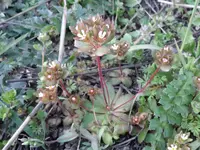
Roman chamomile (Chamaemelum nobile) is a low, mat-forming perennial herb often grown as a fragrant groundcover or edging plant. It produces fine, feathery green foliage and small, daisy-like white flowers with yellow centers.

This species is native to western Europe and thrives in cool, temperate climates with well-drained, moderately fertile soil. It prefers full sun in cooler regions and light shade where summers are hot.

Roman chamomile is generally undemanding once established, but dislikes waterlogged conditions and heavy foot traffic. Gardeners who care for Roman chamomile often value its pleasant scent, long flowering season, and suitability for lawns, herb gardens, and containers.

Main Plant Requirements

Care Difficulty

Moderate Care

Light Preference

Full Sun

Water Requirements

Moderate Water

Temperature Preference

Cool Climate

Hardiness Zone

4–9

Soil Texture

Sandy, Loamy, Organic-rich

Soil pH

Acidic (5.5–6.5), Slightly acidic (6.5–7.0)

Soil Drainage

Well-drained

Fertilization

Minimal (feed rarely)

Get Personalized Care Plan

Scan your plant to receive care tips personalized for your specific plant

Available on iOS and Android

How to Care for the Roman chamomile

This low, aromatic perennial prefers cool, bright conditions to flower and form a dense mat.

  • Provide 4–6 hours of direct sun, ideally morning sun with light afternoon shade, especially in hot summer regions for Roman chamomile lawns or groundcovers.
  • Tolerates partial shade, but flowering and fragrance drop if it receives less than about 3–4 hours of direct or strong filtered light per day.
  • In hot climates, protect from harsh afternoon sun to prevent leaf scorch and dry, brown patches, especially during late spring and midsummer.

This shallow‑rooted herb prefers evenly moist but not saturated soil, especially in its first growing season.

  • Water when the top 2–3 cm of soil feels dry; for in‑ground plants this often means deeper, less frequent watering that moistens the root zone, not just the surface.
  • In spring and fall, moderate rainfall often meets needs; in hot, dry summers increase watering but allow slight surface drying between soakings to reduce root rot risk.
  • Watch for wilting, crispy foliage, or slow growth as signs of underwatering, and yellowing, limp stems or a sour soil smell as signs of overwatering in Chamaemelum nobile.

This hardy perennial favors cool to mild conditions and tolerates considerable cold once established.

  • Ideal growing temperatures are 60–75°F (16–24°C), which support steady foliage growth and reliable flowering through spring and early summer.
  • Plants in the ground typically tolerate down to about 10–15°F (-12 to -9°C) with good drainage, though young plants benefit from mulch before hard frosts.
  • In hot climates, growth can stall above 85°F (29°C); provide afternoon shade and consistent moisture during heat waves to reduce stress and leaf scorch.

This species handles typical home and outdoor humidity well and rarely needs special humidity control.

  • Ideal humidity is 30–60%, which suits most homes and temperate outdoor conditions.
  • Tolerates fairly dry air; humidity stress usually appears as crispy leaf tips combined with underwatering or heat, rather than humidity alone.
  • In unusually hot, dry weather, group pots together and add a shallow pebble tray to slightly raise local humidity around Roman chamomile.

Chamaemelum nobile prefers light, well-drained soil that stays aerated and never waterlogged.

  • Use a sandy or loamy mix, for example 2 parts general potting mix with 1 part coarse sand or perlite for faster drainage.
  • Aim for slightly acidic to neutral pH, roughly 6.0–7.0, which supports nutrient availability without stressing roots.
  • In heavy or compact garden soils, incorporate coarse sand and fine gravel through the top 15–20 cm to improve structure and air spaces.
  • Avoid dense clay, peat-heavy mixes that stay wet, or any soil that forms puddles after watering, as this increases the risk of root rot.

This species is well suited to container growing on patios, balconies, or small gardens.

  • Choose a wide, shallow container so spreading roots have lateral space and foliage can form a low mat without crowding the center.
  • Use a heavier material such as terracotta when exposed to wind, which adds stability and slightly increases evaporation to prevent soggy roots.
  • Elevate the pot on feet or spacers so drainage holes stay clear and water can exit quickly after rain or irrigation, reducing root suffocation.

Chamaemelum nobile grows well in lean soils and needs only light feeding.

  • Apply a thin layer of compost or a low-dose balanced NPK fertilizer (around 5-5-5) in early spring to support new growth.
  • During the growing season, use a half-strength balanced liquid fertilizer every 4–6 weeks if growth appears weak or foliage pale.
  • Reduce or stop feeding in late fall and winter when growth slows, especially in cold climates.
  • For Roman chamomile in containers, choose a slow-release balanced fertilizer at planting, then monitor leaf color to avoid overfeeding.

Pruning Chamaemelum nobile maintains a dense, healthy mat and encourages flowering.

  • Trim lightly after the main flowering flush in late spring or early summer to keep plants compact and encourage new bloom stalks.
  • Remove dead, damaged, and overly woody stems at the base with clean scissors or hand pruners.
  • Shear back lightly by 2–5 cm if the center becomes sparse, which stimulates fresh, even regrowth.
  • Deadhead spent flower heads to reduce self-seeding and direct energy into foliage and root strength.

Chamaemelum nobile is usually grown as groundcover, so focus on careful transplanting rather than frequent repotting.

  • Transplant in spring or early fall, when temperatures are mild and soil moisture is consistent.
  • Move plants when growth slows, clumps outgrow their space, or container roots circle the pot and drain holes.
  • Lift clumps gently, keep as much root ball intact as possible, and replant at the same depth in well-drained soil.
  • Water thoroughly after transplanting, then keep soil slightly moist for 1–2 weeks to limit transplant shock.

Chamaemelum nobile is commonly propagated by division, seeds, and short stem cuttings.

  • Divide mature clumps in early spring or early fall, replanting small sections with healthy roots and several shoots.
  • Sow fresh seed in late winter–spring on the soil surface or very lightly covered, keeping it evenly moist and bright.
  • Take 5–8 cm non-flowering stem cuttings in late spring, insert into moist, free-draining mix, and maintain high humidity.
  • Provide bright, indirect light and moderate warmth (60–70°F) for best rooting and germination success.

Chamaemelum nobile is reasonably cold hardy but benefits from simple winter care in colder regions.

  • In USDA zones around 4–8, foliage may brown in winter yet roots usually survive and resprout in spring.
  • Apply a light mulch layer (2–5 cm) of leaves or compost over the root zone after ground cools, not before.
  • For containers, move pots to a sheltered, unheated but frost-free spot or insulate them to prevent root freezing.

Care Tips

Shear For Density

Lightly shear the plant back by 2–3 cm after the main flush of flowers to encourage a denser mat and more uniform regrowth, rather than letting stems grow long and open.


Foot-Traffic Management

If used as a lawn alternative, limit regular foot traffic to set paths or stepping stones and rotate high-use areas so the foliage can recover and avoid bare patches.

Flower Harvest Timing

Harvest flower heads when fully open but before they start to brown, in dry weather late morning after dew has evaporated, to maintain both plant vigor and good quality for drying or tea use.

Targeted Weed Control

Hand-weed shallowly and often between clumps, or use a narrow hoe kept just at the soil surface, to avoid damaging the shallow fibrous roots while keeping competition low.

Winter Drainage Check

Before winter rains, check that planting areas drain freely and lightly top-dress heavy spots with gritty compost or fine gravel to reduce crown rot risk when caring for Roman chamomile.

Common Pests and Diseases

Aphids

This pest feeds on tender shoots and flower stems, sucking sap and causing distortion, yellowing, and sticky honeydew on foliage. Symptoms include stunted growth and curling tips, especially on young Chamaemelum nobile plants.

Solution

Spray plants with a strong stream of water to dislodge colonies, then treat remaining aphids with insecticidal soap or a ready-to-use neem oil spray, covering stems and leaf undersides. Encourage natural predators such as ladybird beetles outdoors and avoid excess nitrogen fertiliser, which encourages soft, aphid-prone growth when growing Roman chamomile.

Powdery mildew

This disease forms white, powdery patches on leaves and stems, often starting on older foliage in dense plantings. Symptoms include leaf yellowing, reduced vigor, and premature leaf drop in humid, poorly ventilated conditions.

Solution

Improve air circulation by thinning crowded plants and avoid overhead watering so foliage dries quickly. Remove and dispose of heavily infected leaves and, if needed, apply a sulfur-based or potassium bicarbonate fungicide labelled for herbs, following label directions carefully.

Rust

This disease causes small yellow spots on the upper leaf surface and orange-brown pustules on the undersides. Symptoms include early leaf drop and gradual decline of dense or poorly ventilated chamomile patches.

Solution

Remove and destroy affected leaves as soon as pustules appear and keep foliage as dry as possible by watering at soil level. In recurrent cases, increase plant spacing, clean up plant debris at the end of the season, and use an appropriate copper or sulfur fungicide at the first signs of infection.

Leaf miners

These insects tunnel inside leaves, creating pale, winding trails that can merge into larger blotches. Symptoms include cosmetic damage and reduced photosynthesis, especially on young foliage.

Solution

Prune and discard affected leaves promptly to remove larvae from the plant. Use lightweight row covers on outdoor plantings to prevent adult flies from laying eggs, and consider applying a neem-based product to young foliage if damage continues.

Spider mites

This pest is more common in hot, dry conditions and feeds on leaf sap, causing tiny yellow speckles and a dull, stippled look. Symptoms include fine webbing on stems and leaf undersides and general decline if populations become high, especially in Roman chamomile indoor care or in dry outdoor sites.

Solution

Increase humidity around plants and regularly hose down foliage, focusing on leaf undersides, to physically remove mites. For persistent infestations, apply insecticidal soap or horticultural oil at 5–7 day intervals, rotating contact points and avoiding application during strong sun or high heat.

Interesting Facts

True perennial chamomile

Unlike the more commonly grown annual German chamomile, this species is a creeping perennial that can persist for many years and slowly expands into a low, fragrant mat.

Aromatic lawn former

Its dense, finely divided foliage and tolerance of light foot traffic allow it to be used as a low, scented lawn substitute, especially in cool, mild climates.

Applescent foliage chemistry

The characteristic apple-like scent of its leaves and flowers comes mainly from esters and terpenoids such as isobutyl angelate and chamazulene precursors in its essential oil.

Botan icon

Did you know?

In some historic English gardens, specially bred forms of this species were cultivated as so-called chamomile seats, where thick, springy cushions of living plants were trained over low benches so that sitting down released a strong, soothing fragrance.

FAQs about Roman chamomile

Yellowing leaves usually come from water stress, poor drainage, or nutrient imbalance, especially excess nitrogen. Check soil moisture, improve drainage, and avoid overfertilizing. Older leaves yellowing first is often normal aging rather than disease.

Grow Healthy Plants with Botan Care

Keep your plants happy and healthy with plant identification, disease detection, and easy care guidance.

Botan plant care app — identify plants on mobile

Explore More Plants