Boletus vermiculosoides Care

Boletus vermiculosoides

About Boletus vermiculosoides

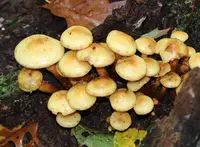
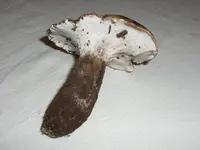
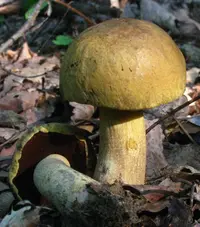
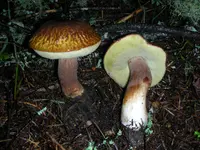
Boletus vermiculosoides is a small to medium bolete fungus, not a true plant, that forms fleshy, soft fruiting bodies on the ground in forests. Its cap is usually brownish, with pores instead of gills underneath, and a stout, pale stem. This species typically appears in association with trees in North American woodlands, where it forms mycorrhizae, a symbiotic root partnership that helps both fungus and tree access nutrients. Because it depends on this close tree relationship, it is difficult to cultivate at home, and attempts to care for Boletus vermiculosoides like a typical potted plant are rarely successful. It generally prefers undisturbed, moist, well-drained forest soil with moderate shade.

Main Plant Requirements

Care Difficulty

Hard Care

Light Preference

Partial Shade

Water Requirements

Keep Soil Moist

Temperature Preference

Cool Climate

Hardiness Zone

Unknown

Soil Texture

Loamy, Silty, Organic-rich

Soil pH

Acidic (5.5–6.5)

Soil Drainage

Moist but well-drained

Fertilization

Minimal (feed rarely)

Get Personalized Care Plan

Scan your plant to receive care tips personalized for your specific plant

Available on iOS and Android

How to Care for the Boletus vermiculosoides

This ectomycorrhizal fungus prefers stable forest light rather than direct, exposed sun.

  • Aim for dappled or filtered light under trees, roughly comparable to 1–3 hours of weak morning sun and bright shade the rest of the day.
  • Avoid strong direct midday or afternoon sun, which can dry the upper soil and leaf litter layer and inhibit Boletus vermiculosoides fruiting.
  • In summer, maintain shade from dense canopy or shade cloth; in early spring or late fall, slightly increased indirect light is acceptable as long as the ground does not dry out.

Moist, well‑drained soil and stable humidity around tree roots support reliable fruiting of this woodland fungus.

  • Keep the top 2–5 cm of soil and leaf litter evenly moist but never waterlogged, using slow, gentle watering that soaks into the root zone of the host tree.
  • Increase monitoring during hot, dry periods; water when the surface layer starts to feel barely damp, not fully dry or dusty.
  • Reduce supplemental watering in cool, rainy seasons to prevent standing water, sour odors, or slimy, decomposing litter that indicate poor drainage and excess moisture.

This species fruits best in cool to mild conditions typical of temperate forests.

  • Optimal temperatures for active growth and fruiting are about 55–70°F (13–21°C), with consistently moist soil and shaded conditions.
  • It tolerates cool weather down to around 40°F (4°C), but hard frost below 32°F (0°C) can damage fruiting bodies, so the productive season is usually spring to fall.
  • Sustained heat above 80°F (27°C), especially with dry soil, suppresses fruiting; deep shade, mulch, and adequate soil moisture help buffer short hot spells.

Humidity management is not relevant for Boletus vermiculosoides, which fruits outdoors in natural woodland conditions.

This ectomycorrhizal fungus relies on undisturbed forest soil rather than prepared mixes.

  • Fruiting typically occurs in moist, well‑drained, organic‑rich woodland soil with a thick leaf litter layer and decaying wood fragments.
  • Soil structure should be loose and crumbly, allowing air spaces around tree roots and fungal mycelium while never becoming waterlogged.
  • A slightly acidic pH around 5.0–6.0 is typical of native habitats under conifers or mixed hardwoods, and liming that raises pH much higher can reduce activity.
  • Avoid compacted, tilled, or heavily fertilized soils; instead, top-dress with shredded leaves or forest duff to enhance organic matter and surface aeration.

This species is not practical to grow in containers because it depends on complex mycorrhizal associations with tree roots in natural soil.

This mycorrhizal fungus grows in association with tree roots and does not benefit from direct fertilization.

Boletus vermiculosoides is a wild ectomycorrhizal fungus and does not require pruning in the horticultural sense.

This species is not suited to conventional repotting or transplanting, since it depends on a living tree host and complex soil biology.

  • Cultivation focuses on conserving its woodland habitat rather than moving individual specimens.
  • Disturbing the soil and tree root zone can damage the mycorrhizal network that supports the fungus.
  • If research growth is attempted in controlled settings, transplant only intact soil cores with minimal disturbance.
  • For home growers, the best approach is to leave natural colonies undisturbed instead of attempting to relocate them.

Propagation of this wild bolete is technically complex and not practical for home cultivation, so home-level methods are rarely used.

In its natural range, this woodland fungus is fully adapted to local winters and requires no specific winter care from gardeners.

Care Tips

Host tree matching

Survey the site for compatible ectomycorrhizal hosts such as oaks or pines and introduce spawn or plugs only within the dripline of established trees where fine feeder roots are dense.

Minimal soil disturbance

Avoid rototilling, heavy raking, or frequent digging in the fruiting zone so the underground mycelium network remains intact and can form stable mycorrhizae with tree roots.

Targeted mulching zone

Apply a thin, patchy layer of leaf litter or pine needles (1–3 cm) rather than a thick, uniform mulch ring, leaving some bare mineral soil to encourage fruiting bodies to emerge.

Foot traffic management

Mark and maintain narrow access paths through the site and keep people and pets off the main fruiting areas to reduce compaction and damage to developing mushrooms.

Selective harvest technique

Twist or cut fruiting bodies at the base with a clean knife and leave small, damaged, or overmature mushrooms in place to allow full spore release, which supports long-term success when growing Boletus vermiculosoides.

Common Pests and Diseases

Mycophagous fly larvae

This pest targets the developing fruiting bodies, with larvae tunneling through the caps and stems and leaving winding galleries and soft, water-soaked tissue. Symptoms include premature collapse of the mushroom and visible maggots in cut sections.

Solution

Remove and discard heavily infested fruiting bodies promptly to interrupt the life cycle and reduce egg-laying sites. In outdoor situations, harvest mushrooms as soon as caps expand, maintain good sanitation by clearing old or decaying specimens, and use fine mesh barriers over known fruiting spots if needing to limit adult fly access without chemicals.

Springtail feeding

These insects feed on the surface of young fruiting bodies and surrounding mycelium, leaving small pits, roughened patches, and sometimes deformed caps. This issue occurs mainly in very moist, organic-rich soils where populations can build up quickly.

Solution

Reduce excessive surface moisture and standing water around fruiting zones, and gently disturb or thin dense litter so the surface dries between rains. Avoid broad-spectrum insecticides; instead encourage natural predators and, if needed, use physical barriers such as fine mesh or collars around emerging fruiting bodies to limit access.

Slug and snail grazing

This pest leaves irregular holes, shredded margins on caps, and slime trails on and around mushrooms. Damage is often most visible overnight, especially during wet, mild weather.

Solution

Hand-pick slugs and snails in the evening and early morning, and use physical barriers such as copper tape, coarse sand, or rough grit rings around favored fruiting areas. Limit dense groundcover and thick debris that provide daytime hiding places, and deploy iron phosphate slug baits if needed, following label directions and keeping baits away from children and pets.

Moldy fruiting bodies

This disease appears as white, gray, or green fuzzy growth on caps and pores, often after prolonged wet periods, leading to soft, slimy, or misshapen mushrooms. Symptoms include rapid decay and off-odors as saprophytic molds colonize the tissue.

Solution

Remove and discard moldy mushrooms promptly to reduce local spore loads and discourage further colonization. Avoid handling or collecting fruiting bodies that stay waterlogged; in managed settings, improve air circulation near the ground by moderating thick leaf litter and avoid unnecessary irrigation where you grow Boletus vermiculosoides.

Parasitic bolete molds

This disease involves specialized fungal parasites that infect boletes, causing discolored patches, firm crusts, or uneven, warty growth on caps and tubes. Symptoms include stalled development, mottled pore surfaces, and early breakdown of infected fruiting bodies.

Solution

Collect and dispose of affected mushrooms to limit spread of spores in concentrated foraging or study areas. In managed habitats, maintain species-diverse ground flora and avoid creating overly dense, continuously wet litter layers that favor aggressive parasitic fungi, and monitor fruiting spots so infected specimens are removed before they sporulate heavily.

Interesting Facts

North American range

This bolete is known from eastern North America, especially in mixed hardwood and conifer forests, and is seldom reported outside this region in modern surveys.

Mycorrhizal specialist

It forms ectomycorrhizae with trees, creating a mutualistic association in which its fine fungal threads increase water and nutrient uptake for the host roots while receiving sugars produced by photosynthesis.

Worm‑eaten appearance

Mature fruiting bodies are often heavily tunneled by insect larvae, a feature so consistent that it is reflected in the species name vermiculosoides, which refers to a worm‑like or vermiculated look.

FAQs about Boletus vermiculosoides

Identification of wild boletes is complex and many similar species cause stomach upset. This species is not considered a recommended edible, so it is safest to regard it as non-edible and avoid consumption.

Grow Healthy Plants with Botan Care

Keep your plants happy and healthy with plant identification, disease detection, and easy care guidance.

Botan plant care app — identify plants on mobile

Explore More Plants