Boletellus chrysenteroides Care

Boletellus chrysenteroides

About Boletellus chrysenteroides

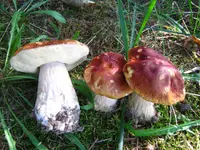
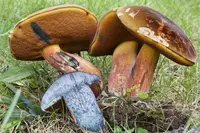
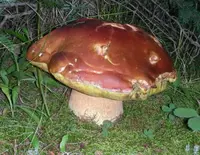
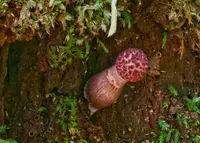
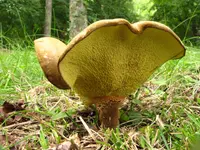
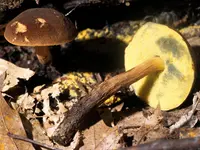
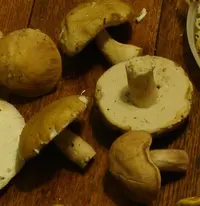
Boletellus chrysenteroides is a wild mushroom-forming fungus, not a traditional houseplant. It produces small to medium, often yellowish to brown caps with a textured or scaly surface and a stout stem. The pore surface under the cap is typically yellow and may bruise or change color with handling.

This species is usually found on the ground in forests, often associated with trees in warm or temperate regions. It is not commonly cultivated, so how to care for Boletellus chrysenteroides is mostly relevant to field observation rather than home growing. In nature, it favors moist, well-drained soil and areas with leaf litter or organic debris.

Main Plant Requirements

Care Difficulty

Moderate Care

Light Preference

Partial Shade

Water Requirements

Regular Water

Temperature Preference

Warm Climate

Hardiness Zone

Unknown

Soil Texture

Loamy, Sandy, Organic-rich

Soil pH

Acidic (5.5–6.5)

Soil Drainage

Moist but well-drained

Fertilization

Minimal (feed rarely)

Get Personalized Care Plan

Scan your plant to receive care tips personalized for your specific plant

Available on iOS and Android

How to Care for the Boletellus chrysenteroides

This mycorrhizal mushroom prefers dappled woodland light that mimics conditions under mixed forest canopy.

  • Provide bright, filtered light with 2–4 hours of gentle morning sun and shade or broken light for the rest of the day at the forest floor level.
  • Shelter Boletellus chrysenteroides from intense midday and afternoon sun, which can dry the substrate quickly and scorch exposed fruiting bodies.
  • Allow more open, partial shade in cool seasons and slightly heavier shade in summer, watching for paler, sparse caps as a sign of insufficient light.

This fungus relies on consistently moist but not stagnant soil around its tree partners to fruit well.

  • Aim for soil that stays evenly moist in the top 5–8 cm, never powder-dry and never waterlogged, especially around host tree roots.
  • Increase moisture in dry, hot periods by slow soaking, then let surface soil lose its sheen before adding more water to avoid rot and anaerobic soil.
  • Reduce supplemental watering in cool or wet seasons and watch for soggy, collapsing caps as overwatering signs and small, cracked caps as underwatering signs.

This species fruits best in mild to warm conditions typical of late spring to early autumn woodlands.

  • Target 65–80°F (18–27°C) as the main fruiting range, with short exposures down to about 55°F (13°C) having minimal impact on mycelium in the soil.
  • Avoid hard freezes; growth slows sharply below 45°F (7°C), and repeated frost can damage developing fruiting bodies even if the underground mycelium survives.
  • Tolerate brief warm spells up to 86°F (30°C) if humidity and shade are high, but prolonged heat and dry air greatly reduce Boletellus chrysenteroides fruiting.

This woodland fungus has modest humidity needs but reacts to extended dry air exposure.

  • Aim for ambient humidity around 50–70% in cultivation chambers or terraria.
  • Dry air causes caps to crack, pores to shrivel, and mycelium to stall in substrate blocks.
  • Increase humidity with a covered, ventilated chamber, damp perlite trays, or frequent fine misting that avoids leaving standing water.

This ectomycorrhizal bolete is not suited to conventional potting but can be supported by an appropriate substrate around host tree roots.

  • Use a loose, humus-rich, slightly sandy loam that mimics forest leaf litter, allowing fine roots and fungal threads to move freely.
  • Ensure rapid drainage with at least 30–40% coarse material such as sand, fine gravel, or shredded bark to prevent waterlogging.
  • Maintain slightly acidic conditions, roughly pH 5.0–6.5, by incorporating leaf mold, pine duff, or conifer needle compost rather than lime.
  • Avoid compacted clay, peat-only mixes, or fertilized bagged media, which reduce aeration and can disrupt the Boletellus chrysenteroides mycorrhizal association.

This species is generally unsuitable for container growing beyond experimental mycorrhizal culture with a compatible host tree seedling.

This wild ectomycorrhizal fungus usually thrives without supplemental feeding in natural soil conditions.

As a woodland mushroom, Boletellus chrysenteroides does not require structured pruning, only basic removal of spent fruiting bodies if needed.

This species is not suited to normal container culture, so management focuses on minimizing disturbance when relocating host trees or soil.

  • Avoid moving colonies unless essential, since the fungus depends on fine root associations with its host tree.
  • If transplanting a young host tree, keep a large, intact root ball and surrounding soil to preserve mycelium.
  • Plan moves for cool, moist periods in spring or fall to reduce stress on both roots and fungal tissue.
  • Water the transplanted tree deeply and maintain even soil moisture so the symbiotic roots can re-establish.

Propagation of this ectomycorrhizal mushroom is specialized and not practical for routine home culture, so deliberate propagation is rarely attempted.

In its natural range this fungus is adapted to seasonal cold and usually needs no targeted winter care.

Care Tips

Choose host trees

Survey existing trees and favor sites near mature oaks or pines with undisturbed leaf litter, since this ectomycorrhizal fungus needs compatible tree roots rather than a stand‑alone pot or bed.

Minimize soil disturbance

Avoid raking, tilling, or compacting soil where fruiting bodies appear, and instead mark the patch and keep foot traffic off it to protect the underground mycelium network.

Retain natural mulch

Leave a layer of mixed leaf litter, small twigs, and a little woody debris in place rather than using commercial bark mulch, which helps maintain the microhabitat and moisture this species relies on.

Monitor fruiting windows

Keep field notes on when and under what weather conditions mushrooms emerge at your site so you can better time surveys, photography, and any spore collection for future attempts to grow Boletellus chrysenteroides.

Targeted spore spreading

If spore collection is legal in your area, place mature caps gill‑side down on foil or paper to collect spores, then gently dust them around the dripline of compatible trees with similar soil conditions to encourage potential colonization over several seasons.

Common Pests and Diseases

Mycetophilid larvae

This pest targets the developing mushroom, with larvae tunneling through caps and stems and leaving brownish, water-soaked channels and deformed fruiting bodies. Symptoms include soft, collapsing tissue and sometimes visible small white maggots in the pores or stem base.

Solution

Remove and discard infested fruiting bodies promptly to reduce the local population, and avoid leaving old, decaying mushrooms on the substrate. If cultivating or monitoring in a controlled area, use fine mesh barriers, reduce excess moisture around the base, and apply sticky traps nearby to intercept adult fungus gnats before they lay eggs.

Slugs and snails

These insects feed on the surface of caps and stems, leaving irregular holes, ragged edges, and slime trails on or around the fruiting bodies. Damage often appears overnight, especially in damp, shaded habitats.

Solution

Hand-remove slugs and snails during evening or early morning and dispose of them away from the area. In managed sites, reduce dense ground cover, limit wet debris, and, if necessary, use physical barriers or iron phosphate bait placed away from non-target wildlife to limit feeding on fruiting bodies while still allowing normal fungal development.

Bolete parasitic mold

This disease appears as a white to grayish cottony mold on the pores or lower stem that can spread over the cap surface. Symptoms include rapid softening, discoloration, and collapse of affected tissue, often starting where insects or mechanical damage have broken the surface.

Solution

Collect and remove affected mushrooms and nearby heavily damaged fruiting bodies to reduce spore spread in the immediate area. Improve air movement around the ground layer by limiting thick surface litter where practical and avoid piling fresh organic debris directly where you want to grow Boletellus chrysenteroides, as constantly wet, stagnant conditions favor mold development.

Interesting Facts

Distinctive scaly cap

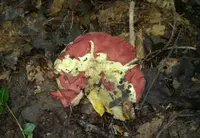
The cap is covered with coarse, yellow to orange scales on a reddish background, creating a rough, almost shaggy texture that distinguishes it from many smoother-capped boletes.

Bluing pore reaction

When the yellow pores or exposed flesh are bruised or cut, they often stain bluish, a chemical oxidation reaction that is common in some boletes but occurs in a characteristic pattern and intensity in this species.

Hardwood forest specialist

This species is typically associated with oaks and other hardwoods in eastern North American forests, forming ectomycorrhizal partnerships with tree roots that help both partners exchange nutrients.

FAQs about Boletellus chrysenteroides

This mushroom is not a well-established edible species and should not be collected for food. Identification of boletes is complex, and some similar species cause gastrointestinal upset. For safety, treat it as inedible and avoid consumption.

Grow Healthy Plants with Botan Care

Keep your plants happy and healthy with plant identification, disease detection, and easy care guidance.

Botan plant care app — identify plants on mobile

Explore More Plants