purple mountain saxifrage Care (Saxifraga oppositifolia)

Also known as: Purple Saxifrage
purple mountain saxifrage

About purple mountain saxifrage

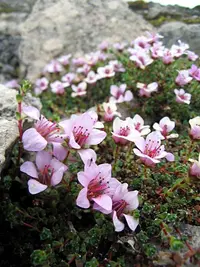
Purple mountain saxifrage, Saxifraga oppositifolia, is a compact, mat-forming alpine perennial known for its very early, vivid purple spring flowers. It forms tight cushions of small, evergreen leaves that hug rocks and crevices, giving it a low, ground-hugging profile.

This species naturally occurs in arctic and high mountain regions, where it tolerates cold, wind, and poor, stony soils. It can be challenging in warm or humid climates, as it prefers cool conditions, sharp drainage, and consistent but not stagnant moisture.

Gardeners who learn how to care for purple mountain saxifrage usually focus on recreating its rocky, well-drained habitat in troughs, rock gardens, or crevice plantings.

Main Plant Requirements

Care Difficulty

Moderate Care

Light Preference

Full Sun

Water Requirements

Moderate Water

Temperature Preference

Cold Hardy

Hardiness Zone

2–7

Soil Texture

Sandy, Rocky, Loamy

Soil pH

Strongly acidic (4.5–5.5), Acidic (5.5–6.5)

Soil Drainage

Well-drained

Fertilization

Minimal (feed rarely)

Get Personalized Care Plan

Scan your plant to receive care tips personalized for your specific plant

Available on iOS and Android

How to Care for the purple mountain saxifrage

This alpine species prefers bright, cool conditions with strong light but some protection from intense heat.

  • Provide 4–6 hours of direct sun, ideally morning sun with afternoon light filtered by rocks or low shrubs, to support compact growth and flowering in purple mountain saxifrage.
  • Allow light partial shade in warmer regions, especially after midday; in hot summers, use dappled shade to prevent leaf scorch and drying of shallow roots.
  • In winter, full sun is beneficial, but in late spring and summer monitor foliage; pale, stretched growth indicates too little sun, crisp brown patches indicate excess exposure.

This plant prefers consistently fresh, cool moisture around the roots but reacts poorly to waterlogged soil.

  • Water when the top 2–3 cm of gritty soil feels barely damp rather than fully dry, letting excess drain quickly through the rock garden or crevices.
  • In spring and early summer, when growth and flowering peak, expect more frequent watering guided by soil feel and weather, not a fixed schedule for Saxifraga oppositifolia.
  • Watch for signs of stress: yellowing, soft foliage and algae on soil suggest overwatering, while drooping, shriveling leaves and pulling away from the soil indicate underwatering or drought.

This high-mountain species is strongly cold-tolerant but sensitive to prolonged heat, especially when combined with wet soil.

  • Active growth occurs best around 40–60°F (4–16°C), with cool nights; plants often slow or semi-dormant above about 70°F (21°C).
  • Saxifraga oppositifolia tolerates very low temperatures, often below 0°F (-18°C), provided drainage is excellent and crowns are not sitting in winter-wet soil.
  • In hot climates, protect from sustained heat above 80°F (27°C) with afternoon shade and mulch around, not over, the crown to keep roots cool and reduce temperature swings.

This alpine species handles low humidity and usually does not need special humidity management indoors or outdoors.

  • Target 30–50% humidity, which matches typical heated or air-conditioned homes, without deliberate boosting.
  • Expect the plant to tolerate drier air, but combine it with cool roots and sharply drained soil to prevent stress.
  • Watch for leaf edge browning and stalled growth as possible low-humidity stress, then reduce heat and improve soil moisture consistency rather than misting.

Saxifraga oppositifolia needs sharply drained, gritty soil that stays cool around the roots.

  • Use a sandy or gritty mix such as 50–60% coarse sand or grit, 20–30% small gravel, and 10–20% compost or leaf mold for light fertility.
  • Aim for slightly acidic to neutral pH, roughly 6.0–7.0, which suits most alpine plants and supports nutrient uptake.
  • Improve drainage and aeration by avoiding fine peat-heavy mixes that pack around the roots and by adding extra grit or perlite if water lingers.
  • Avoid compacted clay, waterlogged spots, and rich, heavy organic mixes, which increase root rot risk and shorten plant lifespan.

This species can grow in containers, especially troughs or shallow, wide pots that mimic alpine scree.

  • Choose a low, wide, heavy container to anchor spreading mats and keep shallow roots cool and stable in wind.
  • Fill the pot with a highly gritty alpine mix and top-dress with fine gravel to protect the crown from splashing and rot.
  • Raise the container slightly on feet or blocks so drainage holes clear the surface and excess water escapes immediately after rain or watering.

This alpine species grows on poor soils and usually needs only minimal feeding in cultivation.

  • If growth is weak in spring, apply a very light dressing of fine compost or low-strength balanced NPK fertilizer around, not on, the crown.
  • Use at 1⁄4–1⁄2 the label strength to avoid root burn, especially in containers of purple mountain saxifrage.
  • Feed once in early spring only; further fertilizer often encourages weak, lush growth that copes poorly with heat.
  • Do not apply fertilizer in late fall or winter, when the plant is semi-dormant and nutrient demand is low.

Saxifraga oppositifolia requires only light pruning to keep its mat tidy and healthy.

  • Best time for pruning is after main flowering in spring, when new growth is starting.
  • Snip off spent flower stems and any dead or winter-damaged shoots with clean scissors or small snips.
  • Thin out crowded or elongated stems slightly to maintain a low, compact cushion and encourage fresh shoots.
  • Avoid cutting back into old, woody centers; focus on healthy green tips to preserve flowering and coverage.

This species is more often transplanted in rock gardens than repotted, as it prefers stable, undisturbed conditions.

  • Transplant or shift container plants in early spring or early fall, avoiding hot, dry weather.
  • Look for signs such as roots circling the pot, drying out very quickly, or stalled growth before moving a plant.
  • Plan on repotting only every 3–4 years, stepping up just one pot size and using very free-draining gritty mix.
  • Handle the root ball gently, keep as much soil intact as possible, water lightly to settle, then shade from strong sun for several days to reduce stress.

Saxifraga oppositifolia is commonly propagated by division, short stem cuttings, or fresh seed under cool conditions.

  • Divide small sections of the mat in early spring, keeping each piece with healthy roots and firm shoots.
  • Take 2–4 in non-flowering tip cuttings in late spring, insert into gritty, barely moist mix, and keep cool and bright but not sunny.
  • Sow fresh seed on the surface of a gritty seed mix, barely cover, and expose to cool conditions; some batches benefit from 4–6 weeks of cold stratification in a fridge.
  • Maintain even, light moisture and good air movement; avoid overwatering, which quickly rots young divisions and cuttings.

This alpine is very cold hardy and usually needs little special winter care in the ground.

  • Established plants tolerate deep frost and snow cover, provided drainage is excellent and soil does not stay waterlogged.
  • In very wet climates, use a light gravel mulch around the crown to keep foliage off saturated soil.
  • For containers, move pots to a cold, sheltered spot with overhead protection from winter rain while still allowing near-freezing temperatures.

Care Tips

Rock crevice planting

Tuck plants into narrow rock crevices or between stable stones so roots stay cool and anchored, and the crown is protected from standing water and winter heave.

Snow cover management

In cold climates, allow natural snow to cover the mat through winter as insulation, but gently brush off heavy wet snow in late winter to prevent breakage and early rot.

Crown protection from mulch

Keep organic mulches and gravel a few cm back from the central crown so short flowering shoots are not smothered and the base can dry quickly after rain.

Alpine container setup

If using a trough or pot, use a shallow, wide container with large drainage holes and tilt it slightly so water consistently runs off the plant’s crown and over the rim.

Summer stress reduction

During unusually hot, bright spells, provide temporary shade from mid-afternoon sun and increase air movement around the plant to reduce heat stress when caring for purple mountain saxifrage.

Common Pests and Diseases

Aphids

This pest often colonizes young shoots and flower stems, sucking sap and causing distortion, sticky honeydew, and sooty mold on the tight cushions.

Solution

Rinse plants gently with a firm stream of water to dislodge colonies, then spot-treat remaining clusters with insecticidal soap or a dilute horticultural oil, taking care to reach into crevices of the mat. Improve air movement around the cushion and avoid excess nitrogen fertilization, which encourages soft, aphid-prone growth when trying to grow Saxifraga oppositifolia in milder gardens.

Vine weevils

These insects damage saxifrages in two stages: adults notch the leaf edges, while the white larvae feed on roots and the base of stems, causing sudden collapse, especially in containers and troughs.

Solution

Inspect foliage at night and hand-pick adult beetles, then treat the potting mix with beneficial nematodes specifically labeled for vine weevil control during the larvae’s active period. Avoid overly loose, peat-heavy mixes in long-term plantings and maintain firm, gritty, well-drained media that discourages larval development.

Red spider mites

This pest can appear on saxifrages grown in very dry, warm, sheltered spots, causing fine stippling, dull foliage color, and eventual leaf bronzing or webbing in the cushion center.

Solution

Increase humidity around the plant by using a gravel tray or occasional misting of the surrounding air, and hose down the foliage to physically remove mites. In persistent cases, apply a targeted miticide or insecticidal soap to the undersides of leaves and reduce heat buildup by providing light shade during the hottest part of the day.

Powdery mildew

This disease presents as white, powdery patches on leaves and stems, leading to yellowing, distortion, and weakened cushions, particularly in stagnant, humid microclimates around rock faces or troughs.

Solution

Remove and discard affected leaves to reduce spores, then improve spacing and airflow by trimming neighboring plants or repositioning containers. Water at the base rather than overhead and, if needed, use a sulfur-based or bicarbonate fungicide labeled for ornamentals, applied during dry, mild weather for best effect.

Crown rot (fungal)

Symptoms include browning and softening at the cushion center, with individual rosettes dying out from the crown, often after periods of winter wet combined with poor drainage or heavy soils.

Solution

Cut out and discard affected rosettes and any soft, discolored crown tissue, then top-dress with fresh, sharp grit to keep the crown dry. Long term, ensure very sharp drainage with a high proportion of grit or scree, avoid waterlogged conditions, and consider raising the plant on a rock ledge or in a crevice where excess water can run off quickly.

Interesting Facts

True Arctic pioneer

This species is one of the northernmost flowering plants on Earth, naturally occurring well inside the Arctic Circle on exposed rock and gravel where few other vascular plants survive.

Built-in thermal strategy

Its low, cushion-like growth form creates a sheltered microclimate that can trap warmth around the shoots and flowers, helping it function and set seed in freezing, wind-exposed habitats.

Early-season pollinator support

The deep purple flowers can open soon after snowmelt, providing an important early nectar and pollen source for cold-tolerant insects in high mountain and polar environments.

Botan icon

Did you know?

Fossilized and subfossil remains show that this species persisted close to retreating ice sheets after the last glaciation, making it a classic model organism for studying plant survival and migration in post-glacial landscapes.

FAQs about purple mountain saxifrage

This species forms tight, slowly spreading mats. It enlarges gradually by short, branching stems rather than runners. In rock gardens or crevices, it usually stays nicely contained and rarely becomes a problem in managed landscapes.

Grow Healthy Plants with Botan Care

Keep your plants happy and healthy with plant identification, disease detection, and easy care guidance.

Botan plant care app — identify plants on mobile

Explore More Plants