Salt-tolerant placement
In coastal areas, site plants where they are sheltered from direct salt spray but still benefit from good air movement, as this species tolerates some salinity yet foliage burns under constant wind-driven salt.

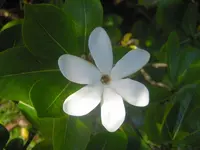
Tahitian gardenia, Gardenia taitensis, is a tropical evergreen shrub grown for its highly fragrant, waxy white flowers and glossy dark green leaves. It stays relatively compact and dense, making it suitable for containers and small gardens in warm climates.
This species is native to the Pacific Islands, where it thrives in humid, coastal conditions with warm temperatures year-round. In cultivation it prefers bright, filtered light, evenly moist but well-drained soil, and protection from cold or drying winds.
Its strong fragrance and need for stable warmth and humidity can make it slightly challenging in cooler or very dry homes. With attention to light and moisture, it is manageable to care for Tahitian Gardenia for enthusiasts who enjoy tropical plants.

Care Difficulty
Hard Care

Light Preference
Partial Sun

Water Requirements
Keep Soil Moist

Temperature Preference
Tropical / Frost Sensitive

Hardiness Zone
11–12

Soil Texture
Sandy, Loamy, Organic-rich

Soil pH
Strongly acidic (4.5–5.5), Acidic (5.5–6.5)

Soil Drainage
Moist but well-drained

Fertilization
Moderate (every 2–4 weeks)
Scan your plant to receive care tips personalized for your specific plant
Available on iOS and Android
This plant thrives in bright, warm conditions that mimic tropical coastal light.
Gardenia taitensis prefers evenly moist, well-drained soil and reacts quickly to excess or lack of water.
This species prefers warm, stable temperatures similar to lowland tropical climates.
This species needs consistently high humidity to flower and keep foliage healthy.
Gardenia taitensis prefers a light, acidic, aerated substrate that drains freely yet holds steady moisture.
This shrub adapts well to container growing when the pot supports its moisture needs and root system.
This tropical shrub benefits from consistent, light feeding during active growth for reliable flowering.
Pruning helps maintain compact shape and encourage new flowering wood on this shrub.
Repotting or transplanting maintains healthy roots and stable growth in container or landscape specimens.
Gardenia taitensis is most commonly propagated from semi-hardwood cuttings taken during warm months.
This species is frost-sensitive and needs careful winter management in cooler climates.

Plant Health Check
Not sure what's wrong with your plant? Check your plant's health inside the app.
Gardenia taitensis is native to lowland coastal areas of the tropical Pacific, especially Tahiti and surrounding islands, and does not occur naturally in continental Asia despite its popularity there in cultivation.
The highly fragrant white flowers are a traditional component of leis and floral adornments across Polynesia, where the plant has long cultural significance as a symbol of welcome and celebration.
This species naturally grows near shorelines and shows notable tolerance to salty air and wind, which helps it establish in sandy, nutrient-poor coastal soils where many other shrubs struggle.

Historical and linguistic studies suggest that humans intentionally spread Gardenia taitensis across the Pacific during early canoe voyages, making it one of several canoe plants carried and cultivated by Polynesian navigators as they colonized distant islands.
Lack of blooms usually comes from insufficient light, cool temperatures, or nutrient imbalance, especially low phosphorus or excess nitrogen. Avoid heavy pruning of flower buds, keep conditions stable, and follow balanced Gardenia taitensis care for reliable flowering.
Keep your plants happy and healthy with plant identification, disease detection, and easy care guidance.

-200x150.webp)