notable wattle Care (Acacia notabilis)

Also known as: Stiff Golden Wattle

About notable wattle

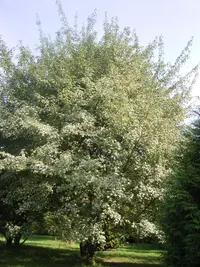
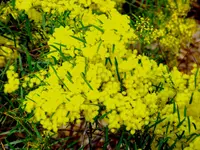
Notable wattle, Acacia notabilis, is an evergreen shrub or small tree from arid and semi-arid regions of southern Australia. It is part of the diverse wattle group valued for drought tolerance. Plants usually form an upright, open habit with flat, grey-green leaf-like phyllodes and bright golden-yellow globe flowers along the stems in late winter or spring. Its naturally sparse, airy canopy suits dry gardens and low-maintenance landscapes. This species adapts best to full sun, low to moderate water, and well-drained, often sandy or stony soils. Due to its hardiness and low water needs, it is considered relatively easy to care for notable wattle in suitable warm, dry climates.

Main Plant Requirements

Care Difficulty

Moderate Care

Light Preference

Full Sun

Water Requirements

Low Water

Temperature Preference

Warm Climate

Hardiness Zone

9–11

Soil Texture

Sandy, Loamy, Rocky

Soil pH

Slightly acidic (6.5–7.0), Neutral (7.0)

Soil Drainage

Well-drained

Fertilization

Minimal (feed rarely)

Get Personalized Care Plan

Scan your plant to receive care tips personalized for your specific plant

Available on iOS and Android

How to Care for the notable wattle

This Australian shrub prefers bright, open conditions with strong light exposure.

  • Provide 6–8 hours of direct sun daily; full sun suits mature notable wattle in most dry, frost-free climates.
  • Allow light afternoon shade in very hot regions to limit leaf scorch, especially on young or recently transplanted plants.
  • Ensure surrounding plants or structures do not cast dense shade; in prolonged low light, expect weak growth, fewer flowers, and a sparse canopy.

This species is drought-tolerant and prefers infrequent, deep watering once established.

  • Outdoors in the ground, water only when the top 5–8 cm of soil are dry and foliage starts to look slightly dull or limp.
  • Use sharply draining, sandy or gravelly soil; water until it soaks the root zone, then let it dry, avoiding standing water around the base.
  • In hot, dry summers, increase depth rather than frequency; yellowing soft foliage or dieback of new shoots often signals overwatering.

This shrub thrives in warm, dry climates with mild winters and hot summers.

  • Aim for 65–85°F (18–29°C) during the main growing season for strong shoot and flower development.
  • Mature plants can tolerate brief drops to about 25°F (-4°C), but young specimens are damaged by hard frost and prolonged freezes.
  • In heatwaves above 100°F (38°C), protect roots with mulch and avoid heat-reflecting walls that can scorch foliage and bark.

This species tolerates relatively dry air and generally does not need extra humidity management indoors or outdoors.

  • Aim for ambient humidity around 30–50% to prevent minor leaf-tip drying in confined indoor spaces.
  • Watch for curled, browning leaf margins as potential low-humidity stress when combined with high heat.
  • Increase local humidity only if needed by grouping plants or placing a tray of water and pebbles nearby, without misting notable wattle directly.

Acacia notabilis prefers mineral, free-draining soil that mimics light, dry native conditions.

  • Use a sandy or gravelly mix, for example 50–60% coarse sand or fine gravel with the rest loam-based potting mix.
  • Keep drainage very sharp; water must clear the root zone quickly to avoid root rot in prolonged wet conditions.
  • Aim for slightly acidic to neutral pH, around 6.0–7.2, avoiding strongly alkaline or saline substrates.
  • Improve aeration and stability by blending in coarse grit or pumice and avoiding heavy, peat-dominant mixes that stay wet.

This shrub can be grown in containers, but only where its eventual size and strong root system can be managed.

  • Choose a deep, heavy container that resists tipping as the woody canopy becomes taller and wind-exposed.
  • Select a pot material such as thick terracotta that allows moisture to evaporate faster, keeping the root zone drier between waterings.
  • Leave a generous gravel or coarse-drainage layer above the drainage holes so the lower root zone never sits in trapped water.

This nutrient-efficient Australian shrub needs only light feeding in most garden soils.

  • Use a low-phosphorus, balanced NPK or native-plant slow-release fertilizer, as high phosphorus can damage roots.
  • Apply a light dose once in early spring and again in mid-summer during active growth for Acacia notabilis.
  • Reduce or skip feeding in winter when growth slows, especially in cooler regions.
  • Dilute liquid products to 1/2 strength and water before and after application to limit root burn.

Acacia notabilis benefits from modest structural pruning to maintain shape and plant health.

  • Carry out main pruning after flowering, trimming lightly to preserve next season’s buds.
  • Remove dead, diseased, crossing, or inward-growing stems to improve airflow and reduce fungal risk.
  • Shorten overly long shoots to maintain a balanced, bushy form and prevent plants becoming leggy.
  • Use clean, sharp hand pruners for small branches and make cuts just above a healthy outward-facing bud.

This wattle is usually grown in the ground and only occasionally kept in containers long term.

  • Transplant young plants in late winter to early spring, once frost risk has passed and soil is workable.
  • Look for slow growth, roots circling the pot, or water running straight through as cues for moving to a larger container.
  • Shift into a pot or planting hole only 1–2 in wider, using free-draining, sandy soil to prevent waterlogging.
  • Handle the root ball gently, tease circling roots slightly, water thoroughly, then shade for a few days to reduce stress.

New Acacia notabilis plants are most often raised from seed rather than from cuttings.

  • Collect mature pods in late summer to early autumn and dry them until the seeds release cleanly.
  • Scarify seeds by pouring hot (not boiling) water over them and soaking 12–24 hours to break dormancy.
  • Sow into a gritty, free-draining mix, barely covering the seed, and keep at 65–75°F with even, light moisture.
  • Provide bright light and good air movement; thin seedlings once true leaves appear to avoid crowding and damping-off disease.

This species prefers mild, frost-free winters and may need attention in colder climates.

  • In regions below about 25°F, grow this wattle in containers so it can be moved to a cool, bright indoor spot.
  • Mulch the root zone with a 5–7 cm organic layer in autumn, keeping it slightly away from the trunk base.
  • In open ground, use a breathable frost cloth over young plants during hard freezes to limit tissue damage.

Care Tips

Wind-hardening young plants

Grow seedlings and young shrubs in a site with gradually increasing wind exposure over 2–3 weeks so that stems and root systems strengthen before they face full open-site conditions.


Low-branch management

Remove only the lowest, most congested branches in late winter to lift the canopy slightly, which improves air movement through the plant while preserving its natural, shelter-forming shape.

Minimal staking strategy

Use a single, low, loose stake on new plantings for the first 6–12 months, then remove it so the plant develops a naturally wind-firm framework rather than relying on permanent support.

Targeted mulch placement

Apply a 5–8 cm ring of coarse, inert mulch such as gravel or cured wood chips, keeping a mulch-free collar around the stem base to reduce competing weeds and conserve moisture without inviting collar rot.

Storm and drought inspection

After heavy storms or extended dry spells, inspect the plant for cracked branches and exposed roots, trimming damaged wood cleanly and lightly backfilling or firming the soil so the root crown remains stable and just at soil level, which supports long-term success when growing notable wattle.

Common Pests and Diseases

Acacia psyllids

These insects feed on sap and cause leaf yellowing, cupping, and sticky honeydew that can lead to sooty mold on notable wattle foliage. Heavy infestations weaken shoots and slow new growth.

Solution

Prune and dispose of badly infested shoot tips, then wash remaining foliage with a strong but gentle stream of water to dislodge nymphs. If needed, apply a horticultural oil or insecticidal soap labeled for psyllids, making sure to coat the undersides of leaves and repeat at 7–14 day intervals until activity declines.

Galling scale

This pest forms hard, often rounded or irregular galls along stems and branches, causing dieback of fine twigs and general decline in vigor over time. Symptoms include rough, swollen stem sections and sparse, yellowing foliage above affected areas.

Solution

Cut out and discard heavily galled stems during dry weather, sterilizing pruning tools between cuts. For light infestations, use a soft brush or gloved fingers to remove accessible scale and follow with a horticultural oil spray during the dormant or coolest part of the day to target remaining juveniles.

Acacia rust

This disease produces yellow to orange powdery pustules on leaves and young stems, leading to premature leaf drop and thinning of the canopy. Symptoms include distorted young growth and fine orange spores that rub off on fingers or nearby surfaces.

Solution

Remove and destroy infected leaves and twigs promptly to reduce spore load, and avoid overhead watering to keep foliage as dry as possible. Improve air movement around the plant by thinning crowded branches and nearby vegetation; in persistent, severe cases, consult local extension services about a rust-registered fungicide appropriate for acacias.

Armillaria root disease

This disease, caused by Armillaria fungi in poorly drained or previously infested soils, leads to progressive decline, leaf yellowing, dieback, and eventual death of stressed wattles. Symptoms include poor new growth, bark decay at the root collar, and sometimes white fungal sheets under the bark near the base.

Solution

Remove severely affected plants, including as much root material and old woody debris as practical, and avoid replanting acacias in the same spot. Improve soil drainage, avoid overwatering, and keep mulch and organic matter slightly away from the trunk base to limit conditions that favor Armillaria spread.

Borer beetle larvae

These insects tunnel into stems and larger branches, causing wilting tips, frass (bore dust) around entry holes, and branch dieback in older notable wattle plants. Damage often appears after drought or other stress that weakens the wood.

Solution

Prune out and destroy affected branches below visible tunneling, making clean cuts into healthy wood, and maintain good plant vigor through appropriate watering and minimal fertilization to reduce stress. In areas with recurring problems, remove nearby dead wood that can shelter borers and use trunk and branch inspections during warm months to catch new infestations early.

Interesting Facts

Arid-zone specialist

This species is naturally restricted to semi-arid inland parts of South Australia and adjacent areas, where it grows on rocky hillsides and outcrops with very shallow, nutrient-poor soils.

Distinctive sickle phyllodes

Instead of true leaves, it has narrow, curved phyllodes with a single prominent midrib and obscure lateral veins, a structure that reduces water loss while maintaining photosynthesis in hot, dry conditions.

Spring-flowering multi-stem shrub

It typically forms a dense, multi-stemmed shrub or small tree with bright yellow, globular flower heads produced along the phyllodes in late winter to spring, providing an important pollen source early in the season.

Botan icon

Did you know?

Acacia notabilis is considered endemic to Australia and is often used as a recognizable component of mallee and open woodland vegetation in South Australia, where its presence helps botanists and land managers identify specific local plant communities and soil types.

FAQs about notable wattle

Lack of flowers often relates to insufficient light, nutrient-rich or overly moist soil, or pruning at the wrong time, which removes flower buds. This species typically sets buds on new growth after a period of cooler, drier conditions.

Grow Healthy Plants with Botan Care

Keep your plants happy and healthy with plant identification, disease detection, and easy care guidance.

Botan plant care app — identify plants on mobile

Explore More Plants