Early leader training
In the first 2–3 years, select one strong central leader and gently stake it if necessary so the tree develops a stable, upright framework that resists storm damage later.

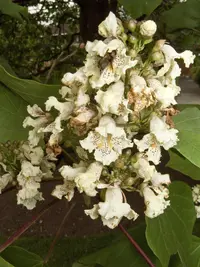
Chinese catalpa (Catalpa ovata) is a small to medium deciduous tree known for its broad heart-shaped leaves and showy, creamy white, trumpet-shaped flowers. It often develops a rounded, open crown and long, bean-like seed pods that add visual interest into late season.
This species is native to China and has been widely introduced as an ornamental tree in temperate regions. It grows relatively fast and adapts to a range of urban and garden conditions, which makes it easier to establish than many flowering trees.
It generally prefers full sun, moderate moisture, and well-drained soil. Gardeners who learn how to care for Chinese catalpa usually find it a reasonably forgiving landscape tree.

Care Difficulty
Easy Care

Light Preference
Full Sun

Water Requirements
Moderate Water

Temperature Preference
Cold Hardy

Hardiness Zone
4–8

Soil Texture
Loamy, Sandy, Clay

Soil pH
Slightly acidic (6.5–7.0), Neutral (7.0)

Soil Drainage
Moist but well-drained

Fertilization
Minimal (feed rarely)
Scan your plant to receive care tips personalized for your specific plant
Available on iOS and Android
This sun-loving small tree needs bright conditions to build a strong canopy and flower well.
This species prefers consistently moist, well-drained soil, especially while establishing.
This hardy deciduous tree tolerates a wide temperature range but responds best to moderate conditions.
This species tolerates a wide humidity range and rarely needs special humidity management outdoors.
This tree prefers deep, moderately fertile, well-drained but moisture-retentive soil for stable growth.
This species can be grown in large containers when young, but it is not a long-term container tree.
This tree grows well in average soil, but light feeding improves vigor, especially for young Chinese catalpa specimens.
Pruning Catalpa ovata is mainly used to maintain structure, clearance, and safety rather than to increase flowering.
This species is usually grown in the ground; transplanting young Catalpa ovata carefully helps establish a stable, long-lived tree.
Propagation of Catalpa ovata is most practical from seed, with softwood cuttings used when clonal traits must be preserved.
Established Catalpa ovata trees are generally cold hardy in much of the US and need little active winter care.

Plant Health Check
Not sure what's wrong with your plant? Check your plant's health inside the app.
This species produces loose clusters of pale yellow, bell-shaped flowers with purple and orange markings that emit a noticeable sweet scent, especially in warm evening air.
After flowering, it forms long, slender capsule fruits that look like green beans, which dry to brown and can remain hanging on the tree into winter, aiding seed dispersal over time.
In its native habitats of northern and central China, this tree often grows on dry slopes and rocky sites, showing relatively high tolerance to drought and urban air pollution compared with many ornamental trees.

In China this species has long been planted near temples and traditional buildings, and its light yet resonant wood has historically been valued for making certain musical instruments, including parts of qin and other stringed instruments.
Lack of flowers often comes from too much shade, heavy pruning of young wood, or stress from drought or nutrient-poor soil. Once established, consistent moisture, balanced fertilizer, and patience usually restore normal blooming over several seasons.
Keep your plants happy and healthy with plant identification, disease detection, and easy care guidance.