Deep root establishment
During the first 2–3 years, irrigate less often but for longer sessions to encourage deep rooting, which helps the tree tolerate brief dry spells and wind exposure as it matures.

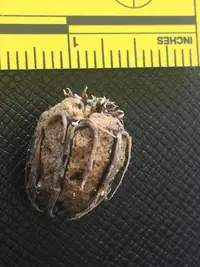
Anchovy pear, Grias cauliflora, is an evergreen tropical tree grown mainly for its unusual cauliflorous flowers and olive-shaped, edible fruits. It naturally occurs in lowland rainforests and riverbanks of the Caribbean and parts of Central and South America, where conditions are warm and humid year-round.
The tree forms a dense crown of large, glossy leaves and can reach considerable height in the ground, so it is usually suited to spacious gardens or specialty collections. It prefers consistently moist, well-drained soil and protection from cold or dry air, which influences how to care for anchovy pear in non-tropical climates.

Care Difficulty
Hard Care

Light Preference
Partial Shade

Water Requirements
Keep Soil Moist

Temperature Preference
Tropical / Frost Sensitive

Hardiness Zone
11–12

Soil Texture
Loamy, Silty, Organic-rich

Soil pH
Acidic (5.5–6.5), Slightly acidic (6.5–7.0)

Soil Drainage
Moist but well-drained

Fertilization
Minimal (feed rarely)
Scan your plant to receive care tips personalized for your specific plant
Available on iOS and Android
This tropical tree prefers bright, gentle light similar to an understory rainforest position.
This species thrives in consistently moist, not waterlogged, soil.
This lowland tropical tree needs warm, frost-free conditions year-round for reliable growth.
This species requires high, consistently moist air to grow well and avoid leaf damage.
This rainforest tree needs deep, moisture-retentive yet aerated soil to support rapid growth and a large root system.
This species can be grown in large containers when young or kept dwarf, but it becomes impractical in pots at full tree size.
Grias cauliflora responds well to modest, consistent nutrition during warm, active growth.
Grias cauliflora needs only light structural pruning to maintain health and safe size.
This tropical tree is usually grown in the ground, so focus on careful transplanting rather than frequent repotting.
Grias cauliflora is typically propagated from seeds, which demand warmth and patience.
This tropical tree is highly frost-sensitive and needs protection in any climate with cool winters.

Plant Health Check
Not sure what's wrong with your plant? Check your plant's health inside the app.
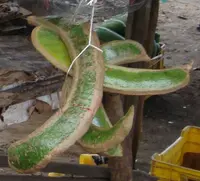
This species produces its large, brown, egg-shaped fruits directly on the trunk and main branches, a trait known as cauliflory. The fruits often appear clustered along the bark, making the trunk look studded with oversized pods.
The tree is native to lowland, often seasonally flooded forests of northern South America and parts of Central America. Its natural distribution is closely tied to moist tropical river systems where soils are deep and humid year-round.
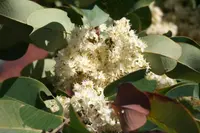
The large, yellowish to cream flowers open mainly at night and release a strong scent that attracts bats, which act as primary pollinators. Their thick, fleshy petals and abundant pollen match typical bat-pollination syndromes described in tropical botany.

The seeds from the large cauliflorous fruits are buoyant and can float, which helps the species disperse downstream along tropical rivers and colonize new floodplain sites over time.
This tree grows moderately, often adding 30–60 cm in height per year under warm, consistently moist, fertile conditions. Growth slows with cool temperatures, nutrient-poor soil, or irregular watering, so site and care strongly influence overall speed.
Keep your plants happy and healthy with plant identification, disease detection, and easy care guidance.