Weeping Fig Care (Ficus benjamina 'Starlight')

Also known as: Chinese Banyan
Weeping Fig

About Weeping Fig

Ficus benjamina 'Starlight' is a variegated form of the weeping fig, grown mainly as an indoor ornamental tree or large shrub. It is commonly used in homes and offices for a bright, structured foliage display.

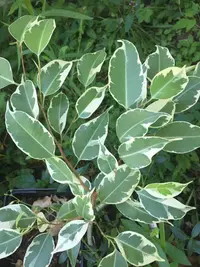
The plant has glossy green leaves with creamy white margins and a naturally arching, somewhat cascading habit. With time, it can form a woody trunk and a dense canopy if given enough light and space.

In nature, Ficus benjamina comes from warm, humid forests in Asia and Australia, where it grows as a medium to large tree. Indoors it is moderately demanding, as it dislikes sudden changes in light, temperature, or watering, so learning how to care for Weeping Fig helps keep this cultivar stable and attractive.

It prefers bright, indirect light, evenly moist but not waterlogged soil, and good drainage to avoid root stress.

Main Plant Requirements

Care Difficulty

Moderate Care

Light Preference

Bright Indirect Light

Water Requirements

Moderate Water

Temperature Preference

Tropical / Frost Sensitive

Hardiness Zone

10–12

Soil Texture

Loamy, Sandy, Organic-rich

Soil pH

Acidic (5.5–6.5), Slightly acidic (6.5–7.0)

Soil Drainage

Moist but well-drained

Fertilization

Light (every 4–6 weeks)

Get Personalized Care Plan

Scan your plant to receive care tips personalized for your specific plant

Available on iOS and Android

How to Care for the Weeping Fig

Ficus benjamina 'Starlight' prefers bright, filtered light that mimics a bright understory habitat.

  • Provide 6–8 hours of bright, indirect light each day; morning sun from an east window or light shade outdoors suits this variegated Weeping Fig well.
  • Avoid harsh midday or strong afternoon sun, which can scorch the cream leaf edges; use sheer curtains or light dappled shade if light is intense.
  • If light is too low, growth slows and variegation fades; move gradually to a brighter spot, especially in winter when natural light levels drop.

This plant prefers evenly moist but not saturated soil, with short dry periods between waterings.

  • Water when the top 2–4 cm of soil feels dry, allowing excess to drain freely so roots do not sit in waterlogged conditions.
  • In spring and summer, expect to water more often as growth and evaporation increase; reduce frequency in fall and winter when growth slows.
  • Watch for yellowing, soft leaves and a musty smell as signs of overwatering, while crisp leaf edges and leaf drop on Ficus benjamina 'Starlight' often indicate underwatering.

This ficus needs stable, warm conditions and reacts poorly to sudden temperature swings.

  • Aim for 65–80°F (18–27°C) for steady growth, avoiding frequent shifts of more than 5–10°F (3–5°C) within a short time.
  • Protect from cold; growth slows below 60°F (16°C), and damage can occur below about 50°F (10°C), especially with cold drafts or wind.
  • It tolerates short heat spells up to about 90°F (32°C) if humidity and watering are adequate, but intense hot, dry air can cause leaf drop and stress.

This cultivar prefers moderately humid air but copes with average home conditions if not extremely dry.

  • Aim for 40–60% humidity to reduce leaf drop and brown edges on this Weeping Fig.
  • Tolerates short dry spells, but sustained air below 30% often causes crisp tips and increased leaf shed.
  • Increase humidity by grouping plants, placing the pot on a pebble tray with water, or running a nearby room humidifier.

Ficus benjamina 'Starlight' grows best in a loose, aerated potting medium that drains quickly yet holds some moisture.

  • Use a peat- or coco-based mix with added perlite and fine bark to create a light, loamy, organic-rich structure.
  • Ensure rapid drainage; the mix should not stay waterlogged longer than 1–2 days after thorough watering.
  • Target a slightly acidic to neutral pH around 6.0–7.0, which supports nutrient uptake and root health.
  • Avoid dense garden soil, heavy clay, or mixes dominated by unmodified compost, which compress and restrict root aeration.

This species is well suited to container growing when the pot supports its woody roots and tall, often top-heavy canopy.

  • Choose a wide, weighty container or use a cachepot to reduce tipping risk as the canopy becomes dense and tall.
  • Select slightly porous materials like unglazed clay if the plant sits in a cool, low-light area to prevent prolonged soggy conditions.
  • Use a pot shape that is deeper than it is wide to accommodate the downward-growing woody root system and maintain stability.

Balanced, modest feeding keeps Ficus benjamina 'Starlight' growing steadily without excessive, weak growth.

  • Use a balanced liquid fertilizer (e.g., 10-10-10 or 20-20-20) at 1/2 strength every 4–6 weeks in spring and summer.
  • Alternatively, apply a slow-release granular fertilizer at the start of the growing season, following label rates.
  • Skip compost-heavy mixes in small indoor pots, which can stay wet and compact around roots.
  • In fall and winter, pause feeding or reduce to very light applications every 8–10 weeks for Weeping Fig indoor care.

Thoughtful pruning keeps Ficus benjamina 'Starlight' compact, dense, and healthy indoors.

  • Prune in late winter or early spring before strong new growth begins.
  • Remove dead, damaged, crossing, or very crowded branches first to improve light and airflow.
  • Shorten overly long shoots to maintain desired height and shape, cutting just above a leaf node.
  • Use clean, sharp pruning shears and make angled cuts to reduce disease risk and promote quick healing.

Container-grown Ficus benjamina 'Starlight' benefits from occasional repotting to relieve root crowding and refresh soil.

  • Check for roots circling the pot, pushing through drainage holes, or for slowed growth and rapid drying soil as signs to repot.
  • Repot every 2–3 years in late winter or early spring, moving to a pot 2–5 cm wider with drainage holes.
  • Gently loosen circling roots and trim any dead or mushy sections before setting the plant in fresh, well-draining mix.
  • Water thoroughly after repotting, then keep in bright, indirect light and slightly reduced watering for 1–2 weeks to limit stress.

Ficus benjamina 'Starlight' is most commonly propagated from stem cuttings taken during the active growing season.

  • Take 8–12 cm semi-hardwood tip cuttings in late spring or early summer, each with 3–4 leaves.
  • Remove lower leaves, dip the cut end in rooting hormone if available, and insert into moist, well-draining mix.
  • Maintain high humidity (cover with a clear dome or bag) and provide bright, indirect light at 70–80°F.
  • Keep the medium just barely moist and allow roots to develop for 4–8 weeks before potting on carefully.

This tropical ficus is frost-sensitive and requires indoor winter care in most temperate climates.

  • Move containers indoors before temperatures drop below 55°F, keeping them away from drafts and heater vents.
  • Provide bright, indirect light and slightly drier soil, allowing the top layer to dry more between waterings.
  • Expect some leaf drop from light or temperature changes and avoid major pruning or repotting in midwinter.

Care Tips

Branch training

Rotate the pot 90° every 1–2 weeks and lightly tie flexible young branches to a discreet stake to encourage an even, full canopy instead of a lopsided plant.

Controlled leaf drop

When moving the plant to a new location, reduce stress-triggered leaf drop by keeping light and watering schedules consistent for 2–3 weeks and avoiding drafts or sudden temperature changes during the transition.

Canopy thinning

Once a year, selectively remove a few crowded inner twigs back to their origin to improve air circulation and light penetration, which reduces pest pressure and keeps variegation stronger on remaining leaves.

Salt buildup management

Every 2–3 months, flush the potting mix thoroughly with clean, lukewarm water until it runs freely from the drainage holes to reduce fertilizer salt accumulation that can scorch leaf margins on this sensitive cultivar.

Preventing scale pests

Inspect stems and leaf undersides monthly for early signs of scale insects and wipe them off with a soft cloth lightly moistened with insecticidal soap, which is an effective part of caring for Weeping Fig without harsh chemicals.

Common Pests and Diseases

Scale insects

These insects attach to stems and leaf veins, appearing as small brown, gray, or tan bumps, and can cause yellowing leaves, sticky honeydew, and sooty mold. Heavy infestations often lead to leaf drop and weak growth.

Solution

Remove heavily infested stems and wipe remaining scale off with a cotton pad dipped in isopropyl alcohol, repeating weekly until clear. Improve light and airflow, then use a horticultural oil or insecticidal soap labeled for indoor ficus, applied thoroughly to stems and leaf undersides according to label directions.

Spider mites

This pest thrives on Ficus foliage in warm, dry indoor air, causing tiny pale stippling, dull leaves, and fine webbing between leaves and twigs. Symptoms include increased leaf drop when the plant is stressed by low humidity or drafts.

Solution

Shower the plant with lukewarm water to rinse mites from both sides of the leaves, then increase humidity and avoid hot, dry air from vents. Follow up with repeated applications of insecticidal soap or a miticidal horticultural oil, ensuring full coverage of leaf undersides every 5–7 days until new growth looks clean.

Thrips

These insects feed inside the tender new foliage, leading to distorted leaves, silvery streaks, and black specks of frass, especially on variegated areas. Damage often appears first on young, cream-colored parts of the leaves where cells are softer.

Solution

Prune and discard the most distorted growth, then gently rinse the plant to dislodge insects. Use sticky traps to monitor activity and treat with insecticidal soap or a systemic insect control product suitable for indoor ornamental ficus, repeating treatments across several weeks to catch emerging stages.

Cercospora leaf spot

This disease causes small dark brown to black spots with sometimes lighter centers on older leaves, which can merge into larger blotches and trigger premature leaf drop. Symptoms include more severe spotting in dense, poorly ventilated canopies kept constantly damp.

Solution

Remove and discard affected leaves and any fallen foliage from the soil surface, then allow the top of the soil and foliage to dry between waterings and avoid overhead watering. Improve air circulation and, for persistent cases, apply a copper-based or other ornamental leaf spot fungicide according to the label, focusing on thorough coverage of both leaf surfaces.

Edema

This disorder is a physiological response where cells burst from taking up water faster than it is lost, leading to small corky, blister-like bumps or rough patches on leaves. Symptoms include localized scarring rather than spreading rot, often after irregular or heavy watering in low light and cool conditions.

Solution

Adjust watering so the top 2–3 cm of soil dry between waterings and avoid keeping the root zone saturated, especially in low light. Improve light levels, maintain stable temperatures, and increase airflow around the foliage to support balanced transpiration while continuing normal Ficus benjamina 'Starlight' plant care practices.

Interesting Facts

Stable chimeric variegation

The creamy-white leaf patches are caused by a stable chimeric mutation, where genetically different tissues coexist in one leaf, which is why the variegation pattern stays relatively consistent over time instead of reverting fully to green like many unstable sports.

Lower light efficiency

Its white leaf sectors lack chlorophyll, so this cultivar captures less light energy than all-green Ficus benjamina and therefore grows more slowly and is more prone to leaf drop in low light conditions.

Compact architectural habit

Compared with typical green weeping figs, this cultivar tends to develop a denser canopy and shorter internodes, which gives it a more compact, bushy outline that emphasizes the contrast between green and cream foliage in interior plantings.

FAQs about Weeping Fig

Yellowing leaves usually result from sudden changes in light, temperature drafts, or overwatering. Check for soggy soil, cold air, or recent relocation. Remove affected leaves and correct the main stress source to stabilize the plant.

Grow Healthy Plants with Botan Care

Keep your plants happy and healthy with plant identification, disease detection, and easy care guidance.

Botan plant care app — identify plants on mobile

Explore More Plants