Early leader training
In the first 3–5 years, select one strong central leader and remove or shorten competing upright shoots in late winter so the tree develops a stable, wind-resistant structure.

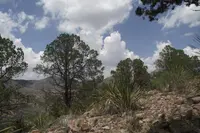
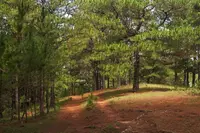
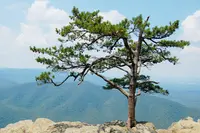
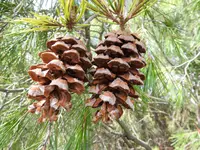
Papershell pinyon, Pinus remota, is a small, slow-growing pine native to dry, rocky regions of Texas and northern Mexico. It usually forms a compact, irregular tree with dense blue-green needles and attractive cones.
This species is adapted to harsh, arid conditions and poor, stony soils, which makes it tough but also slow to establish in cultivation. Once rooted, it is long-lived and drought tolerant, so the main challenge is early care for papershell pinyon.
It prefers full sun, well-drained soil, and low to moderate moisture, making it suitable for dry landscapes and water-wise gardens in warm, sunny climates.

Care Difficulty
Moderate Care

Light Preference
Full Sun

Water Requirements
Low Water

Temperature Preference
Cold Hardy

Hardiness Zone
5–9

Soil Texture
Sandy, Loamy, Rocky

Soil pH
Slightly acidic (6.5–7.0), Neutral (7.0)

Soil Drainage
Well-drained

Fertilization
Minimal (feed rarely)
Scan your plant to receive care tips personalized for your specific plant
Available on iOS and Android
This desert pine needs strong, direct sun to form dense, healthy growth.
This species is highly drought-tolerant once established and prefers infrequent, deep watering.
This pine is adapted to hot, dry climates and tolerates substantial cold once established.
This species is highly tolerant of dry air and seldom needs special humidity control.
Pinus remota prefers very well-drained, mineral soils that mimic its native rocky habitats.
This species can be grown in containers for many years, but only with careful attention to drainage and root space.
This drought-adapted conifer needs only light feeding in poor soils; many established trees need no fertilizer at all.
Pruning Pinus remota is minimal and focuses on safety and structure rather than shaping.
This species is usually grown in the ground; transplanting young trees carefully is more important than repotting.
Pinus remota is propagated almost exclusively from seed, and vegetative methods are rarely successful.
Mature Pinus remota is cold hardy in its usual planting zones and generally needs little winter care.

Plant Health Check
Not sure what's wrong with your plant? Check your plant's health inside the app.
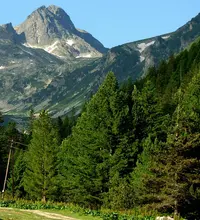
This species is naturally confined to arid regions of southwest Texas and adjacent northern Mexico, where it grows on dry limestone slopes and canyons at relatively high elevations compared with many other North American pinyons.
Its edible seeds are larger and have thinner, more easily cracked shells than those of many related pinyon pines, which is why it is commonly called papershell pinyon and has been valued as a local nut source.
In parts of its range, this tree can hybridize with closely related pinyon species, which makes field identification challenging and contributes to a complex pattern of variation within pinyon pine woodlands.

Despite its harsh, dry habitat, this species can live for several centuries, forming small, gnarled trees that help stabilize thin desert soils and provide critical food and shelter for birds, rodents, and other wildlife in otherwise sparse landscapes.
This species grows slowly, typically adding 10–20 cm in height per year under good conditions. Growth is even slower in poor, dry soils, which is normal for desert-adapted pines and not usually a sign of poor health.
Keep your plants happy and healthy with plant identification, disease detection, and easy care guidance.