Khasi Pine Care (Pinus kesiya)

Also known as: Benguet Pine, Luzon Pine
Khasi Pine

About Khasi Pine

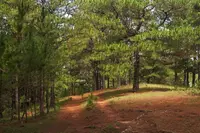
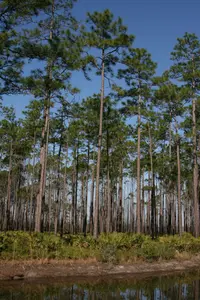
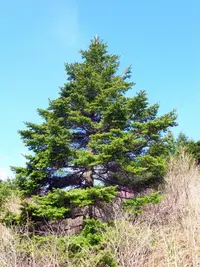
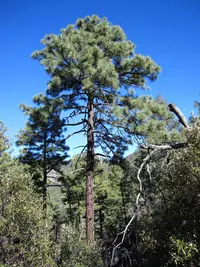
Khasi pine (Pinus kesiya) is a fast-growing evergreen conifer, usually forming a tall, straight trunk with a rounded, open crown. Needles grow in soft bundles, giving the tree a lighter, airy look compared with many other pines.

It is native to the hills of northeast India and surrounding regions in Southeast Asia, where it grows in warm, seasonally dry climates. The species is valued for timber and resin, and its adaptability makes it suitable for plantations and larger landscapes.

Pinus kesiya prefers full sun, well-drained, slightly acidic soil, and does best where it has room to reach full size, which influences how to care for Khasi Pine in gardens or managed sites.


Main Plant Requirements

Care Difficulty

Moderate Care

Light Preference

Full Sun

Water Requirements

Moderate Water

Temperature Preference

Warm Climate

Hardiness Zone

9–11

Soil Texture

Sandy, Loamy, Rocky

Soil pH

Strongly acidic (4.5–5.5), Acidic (5.5–6.5)

Soil Drainage

Well-drained

Fertilization

Minimal (feed rarely)

Get Personalized Care Plan

Scan your plant to receive care tips personalized for your specific plant

Available on iOS and Android

How to Care for the Khasi Pine

This species performs best in open, bright conditions typical of mountain or upland sites.

  • Provide full sun for at least 6–8 hours per day; Khasi Pine develops a denser crown and stronger trunk in unobstructed light.
  • Tolerates light partial shade, especially in the first 2–3 years, but persistent shade leads to sparse, elongated shoots and reduced vigor.
  • In hot, lowland areas, young trees benefit from some protection from intense late-afternoon sun to reduce needle scorch and drought stress.

Pinus kesiya prefers evenly drained soils and is more tolerant of short dry periods than standing water.

  • Allow the top 3–5 cm of soil to dry between waterings on young or newly planted trees, then water deeply so moisture reaches the full root zone.
  • Reduce watering in cool or rainy seasons; persistent soggy soil, foul odor, or yellowing, dropping needles indicate overwatering and poor drainage.
  • Watch for dull, brittle needles and slowed growth as signs of underwatering, especially on sandy or sloping sites that lose moisture quickly.

This pine is adapted to warm-temperate to subtropical climates with mild winters.

  • Optimal growth occurs around 68–82°F (20–28°C), with strongest height and needle production in warm, moist seasons.
  • Mature trees tolerate brief drops to about 23–26°F (-5 to -3°C), but young plants are more sensitive and may suffer shoot damage from hard frost.
  • Handles dry heat up to about 95°F (35°C) if soil moisture is adequate; extended hotter periods increase stress and require strict avoidance of waterlogging.

Pinus kesiya tolerates a wide humidity range and usually needs no special humidity control in typical outdoor conditions.

  • Target 40–60% humidity when growing Khasi Pine in sheltered or indoor-like settings, as excessively dry heated air can slow growth.
  • Leaf tips browning and premature needle drop in still, hot air can indicate low humidity combined with heat stress rather than disease.
  • Increase humidity locally by grouping plants and using mulch over the root zone to moderate evaporation around the plant in hot, dry climates.

Pinus kesiya prefers light, well-drained, slightly acidic soil that mimics its native mountain habitats.

  • Use a sandy or sandy-loam mix with 30–50% coarse sand or grit to prevent waterlogging and compaction around the roots.
  • Aim for pH 5.0–6.5; avoid strongly alkaline substrates, which can reduce nutrient availability and cause chlorotic, yellowing needles.
  • Combine pine bark fines, coarse sand, and a small portion of compost to provide structure, organic matter, and stable drainage.
  • Avoid heavy clay, peat-heavy mixes, or any soil that stays wet for more than 24 hours after watering, as this increases risk of root rot.

This species can be grown in containers for several years, especially as a young tree or bonsai-style specimen.

  • Choose a deep, heavy container that resists tipping, as the plant becomes top-heavy with a tall, upright trunk.
  • Use a very free-draining, gritty mix so water runs through in seconds, preventing prolonged saturation around the taproot.
  • Position the pot where wind exposure is reduced, since strong gusts act more strongly on tall pines rooted in limited container volume.

Pinus kesiya benefits from light, infrequent feeding on poor or very sandy soils, but heavy fertilization is unnecessary.

  • Use a balanced slow-release fertilizer (for example 10-10-10) or well-rotted compost around the drip line, not against the trunk.
  • Apply once in early spring and, on very poor soil, a second light dose in midsummer.
  • Use fertilizer at 1/2 label strength for young trees to avoid root burn.
  • Skip feeding in fall and winter to prevent soft, frost-sensitive growth.

Pinus kesiya needs minimal structural pruning, mainly to maintain health and safe form.

  • Carry out pruning in late winter or very early spring before active growth starts.
  • Remove dead, diseased, crossing, or storm-damaged branches with sharp bypass pruners or a clean pruning saw.
  • Limit cuts to small branches to preserve natural shape and prevent large wounds.
  • Use selective thinning rather than heading cuts to keep a stable, open crown and sound structure.

This pine is usually grown in the ground; focus on careful transplanting rather than frequent repotting.

  • Transplant young trees in late winter or early spring when soil is workable and growth is still slow.
  • Look for roots circling the container, slow growth, or the root ball drying very quickly as signs it has outgrown its pot or nursery bag.
  • Move up only 1 pot size or into a prepared ground hole, loosening circling roots gently to reduce stress.
  • Water deeply after planting, mulch 5–8 cm around the root zone, and shade lightly for 1–2 weeks to support recovery.

Pinus kesiya is propagated mainly from seed; vegetative methods are uncommon and more difficult.

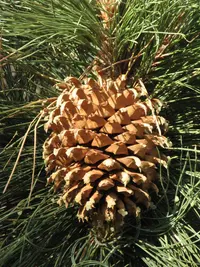
  • Collect ripe cones in late autumn, then dry and extract seeds, discarding obviously empty ones.
  • Stratify seeds at 34–41°F in slightly moist sand for 4–8 weeks to improve germination.
  • Sow in a free-draining, low-fertility mix, just covering the seed, and keep at 60–70°F with bright light.
  • Maintain even, light moisture and good air movement; transplant seedlings carefully once they develop several true needle whorls.

This subtropical pine has limited frost tolerance and needs protection in regions with hard freezes.

  • Mulch 5–8 cm around the root zone in late fall to buffer soil temperature and moisture.
  • Shelter young trees from cold, drying winds using windbreak netting or temporary barriers.
  • Move container plants to an unheated but frost-free space, with bright light and slightly reduced watering.

Care Tips

Root flare check

When planting or inspecting established trees, make sure the uppermost main roots sit just below the soil surface and gently remove excess soil or mulch from the trunk base so the root flare is visible and less prone to rot and instability.

Wind-firm training

In windy sites, stake young trees loosely for only the first 1–2 years and allow some trunk movement so the root system strengthens and the tree becomes more resistant to storm damage over time.

Thinning for airflow

In dense plantings or mixed stands, selectively remove weaker or crowded individuals to increase light and air circulation, which reduces fungal issues and improves overall vigor when growing Khasi Pine.

Needle litter management

Leave a moderate layer of fallen needles under the canopy as a natural mulch, but rake back thick, compacted mats from the trunk line to avoid excess moisture and to discourage fungal disease at the base.

Seasonal pest scouting

From late spring through summer, inspect candles, new shoots, and needle bases every 2–4 weeks for early signs of aphids, caterpillars, or scale, and spot-treat localized infestations promptly with horticultural oil or targeted biological controls.

Common Pests and Diseases

Pine needle blight

This disease causes browning and premature shedding of older needles, often starting on lower branches and moving upward. Symptoms include tan to brown bands or spots on needles and a thinning, ragged crown over time.

Solution

Prune out and destroy heavily infected lower branches during dry weather, and rake up and remove fallen needles to reduce fungal spores. Improve spacing and airflow around trees, avoid overhead irrigation, and, in high‑value plantings, apply a registered copper or chlorothalonil-based fungicide at budbreak and again as new needles expand, following local label directions.

Pine needle rust

This disease produces yellow to orange spots on needles that later develop powdery orange pustules, leading to partial defoliation. Symptoms include patchy discoloration on current-season needles and reduced vigor in young trees or nursery stock.

Solution

Remove and destroy infected needles and nearby alternate host plants if known, and avoid prolonged leaf wetness by improving site drainage and spacing. In nurseries or plantations where rust is recurring, apply a preventative fungicide labeled for pine rusts in early spring when new growth starts, timing repeat sprays based on local extension recommendations for caring for Khasi Pine.

Pine shoot borer

This pest is a caterpillar that tunnels into young shoots, causing wilting, bending, or death of the leader, which can deform the tree. Symptoms include resin exudation, frass at entry points, and forked or crooked stems after repeated attacks.

Solution

Prune and destroy infested shoots as soon as wilting or resin-soaked entry holes are noticed, cutting several cm below visible damage. Encourage natural predators by maintaining plant diversity nearby and, in plantations or high-value settings, use pheromone traps or targeted, timing-specific biological insecticides (such as Bacillus thuringiensis) against newly hatched larvae before they bore into shoots.

Pine aphids

These insects feed on twigs and needles, extracting sap and causing needle yellowing, reduced growth, and sticky honeydew on foliage. Symptoms include sooty mold on needles and presence of ants tending the aphids.

Solution

Dislodge colonies with a strong jet of water on small or young trees and prune heavily infested shoots. Support beneficial insects by avoiding broad-spectrum insecticides, and when needed, use insecticidal soap or horticultural oil applied thoroughly to twigs and needle bases, repeating at 7–10 day intervals as labels permit.

Pine bark beetles

These insects bore into the trunk and branches, creating galleries under the bark that disrupt water flow and can quickly kill stressed trees. Symptoms include boring dust around the base, pitch tubes on the bark, fading crown color, and rapid decline.

Solution

Keep trees vigorous by avoiding mechanical injury, soil compaction, and drought stress, since healthy pines resist attack better. Promptly remove and destroy heavily infested trees or branches to reduce beetle populations, and in high-risk areas consider preventive trunk sprays by a certified arborist on uninfested but vulnerable trees during local beetle flight periods.

Interesting Facts

Three-needle pine

This species consistently bears its needles in bundles of three, each needle often 15–20 cm long, which helps distinguish it from many other Asian pines that have shorter or differently grouped needles.

Rapid pioneer growth

It is a fast-growing, light-demanding tree that naturally colonizes open, disturbed slopes in hilly and montane regions of South and Southeast Asia, often forming nearly pure stands after logging or fire.

Important resin producer

The tree is tapped commercially in parts of India and Southeast Asia for oleoresin, which is processed into rosin and turpentine used in products such as adhesives, paper sizing, and solvents.

Botan icon

Did you know?

Native populations of this pine form some of the highest-elevation coniferous forests in Northeast India and northern Myanmar, where its open, tall crowns create a distinctive park-like woodland that supports specialized understory plants and fire-adapted grasses.

FAQs about Khasi Pine

This species is generally fast-growing, often adding 30–90 cm in height per year in suitable conditions. Growth is quicker in deep, well-drained soil, full light, and mild climates, and slower in exposed, dry, or compacted sites.

Grow Healthy Plants with Botan Care

Keep your plants happy and healthy with plant identification, disease detection, and easy care guidance.

Botan plant care app — identify plants on mobile

Explore More Plants