Hosta Care (Hosta 'Rainforest Sunrise')

Hosta

About Hosta

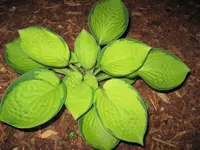
Hosta 'Rainforest Sunrise' is a compact, shade-loving perennial grown mainly for its colorful foliage rather than its flowers. It forms low, dense clumps that suit beds, borders, and containers. Its rounded leaves emerge chartreuse to yellow with darker green margins, creating a strong contrast that brightens shaded areas. Short flower spikes add pale lavender blooms in summer, but foliage remains the main feature. The species comes from East Asia, where many hostas naturally grow in woodland habitats with moist, rich soil. This background makes it a forgiving plant for temperate gardens and helps explain how to care for Hosta in low to medium light.

Main Plant Requirements

Care Difficulty

Easy Care

Light Preference

Partial Shade

Water Requirements

Regular Water

Temperature Preference

Cold Hardy

Hardiness Zone

3–9

Soil Texture

Loamy, Silty, Organic-rich

Soil pH

Acidic (5.5–6.5), Slightly acidic (6.5–7.0)

Soil Drainage

Moist but well-drained

Fertilization

Light (every 4–6 weeks)

Get Personalized Care Plan

Scan your plant to receive care tips personalized for your specific plant

Available on iOS and Android

How to Care for the Hosta

This compact hosta develops best color and leaf health in bright shade with limited direct sun.

  • Provide 2–4 hours of gentle morning sun with afternoon shade; strong sun after 11 a.m. can scorch the chartreuse and gold leaves.
  • Grow in dappled or filtered light under trees or beside buildings where light is bright but not harsh, especially in zones with hot summers.
  • In cooler climates, it tolerates more direct sun, but in mid-summer monitor for leaf burn and increase shade if foliage fades or browns.

Moist, cool soil supports dense foliage and stable growth in Hosta 'Rainforest Sunrise'.

  • Water when the top 3–5 cm of soil feels dry, aiming for consistently moist but not saturated soil around the root zone.
  • During hot, dry periods, increase deep watering to 1–2 times per week, focusing on the soil rather than wetting leaves to limit fungal issues.
  • Reduce watering in fall as growth slows, and watch for yellow, mushy leaves as a sign of overwatering or crisp, folding leaves as a sign of drought stress.

This hardy perennial tolerates cold winters but grows most vigorously in moderate temperatures.

  • Active growth is strongest at 60–75°F (16–24°C), where leaves expand fully and color develops well.
  • Dormant crowns can survive down to about -20°F (-29°C) under mulch or snow cover, but late spring frosts can damage emerging shoots.
  • During heat above 85°F (29°C), provide shade and consistent moisture, since prolonged high temperatures can cause leaf scorch and early dormancy.

This cultivar prefers moderate outdoor humidity but usually adapts well in typical garden conditions.

  • Aim for 40–60% humidity; prolonged air below 30% can dry leaf edges, especially in hot, windy spots.
  • Watch for crisp, browning margins and slowed growth as signs of humidity stress combined with heat or strong sun.
  • Increase local humidity by mulching the soil 3–5 cm deep and grouping plants, rather than misting the foliage.

Hosta 'Rainforest Sunrise' grows best in moist, well‑structured soil that stays aerated yet never waterlogged.

  • Use a loamy, organic‑rich soil with fine to medium texture that holds moisture but still crumbles when squeezed.
  • Ensure moderate drainage; mix garden soil with 30–40% compost plus 10–20% pine bark fines to improve structure and aeration.
  • Target a slightly acidic to neutral pH around 6.0–7.0; incorporate composted leaf mold to buffer pH and increase humus content.
  • Avoid compacted clay, standing water, or pure sand; improve heavy soil with coarse bark and compost, and raise beds if drainage remains slow.

This variety is well suited to container growing outdoors in partial shade.

  • Choose a wide, moderately deep pot so the shallow, spreading root system can form a broad clump without crowding.
  • Select a heavier material such as ceramic or thick plastic to stabilize the foliage mound against wind and uneven watering.
  • Fill the container with a peat‑free, compost‑rich mix amended with pine bark for structure and several drainage holes to prevent soggy roots.

This cultivar benefits from modest, consistent feeding during the active growing season.

  • Use a balanced slow-release granular fertilizer (around 10-10-10) or a thin layer of compost in early spring as shoots emerge.
  • Apply again mid-season if growth slows, keeping fertilizer off the crowns and leaves to prevent burn.
  • For liquid feeds, use a balanced NPK at 1/2 strength every 4–6 weeks during spring–summer only.
  • Stop feeding in late summer so Hosta can harden growth before dormancy and avoid winter applications.

Pruning Hosta 'Rainforest Sunrise' focuses on cleanliness and maintaining a neat clump rather than shaping.

  • In spring, remove any dead or mushy foliage left from winter using clean, sharp pruners or scissors.
  • During the growing season, clip off yellowing, chewed, or damaged leaves at the base to reduce disease risk.
  • Deadhead spent flower stalks after blooming by cutting them low to keep the plant compact and tidy.
  • In late fall, after frost has blackened leaves, cut foliage to ground level in colder climates to limit overwintering pests.

Transplanting is more common than repotting for this shade perennial, which is usually grown in the ground.

  • Plan to lift and divide clumps every 3–5 years in early spring or early fall when temperatures are mild.
  • Look for signs such as crowded eyes, declining vigor, or a tight root mass circling a container if grown in pots.
  • Dig widely around the root ball, lift gently, then replant at the same depth into loosened, well-drained soil with added organic matter.
  • Water thoroughly after moving and keep soil evenly moist for several weeks to reduce root stress and support reestablishment.

Division is the standard and most reliable method for propagating Hosta 'Rainforest Sunrise'.

  • Divide mature clumps in early spring as new shoots just emerge, or in early fall while soil is still warm.
  • Lift the entire clump and gently tease or cut it into sections, each with several eyes (growing points) and a healthy root mass.
  • Replant divisions at the same depth in moist, well-drained soil with light shade, spacing 30–45 cm apart for future spread.
  • Water divisions thoroughly, then maintain consistent moisture until new leaves expand fully and growth is stable.

This cultivar is cold hardy and usually needs only basic winter care once established in the landscape.

  • After hard frost, allow foliage to die back, then remove or cut it to ground level to reduce pests and disease carryover.
  • Apply a 5–8 cm layer of mulch over the root zone in late fall, keeping it slightly back from the crowns.
  • For container plants in colder regions, move pots into a sheltered, unheated space such as a garage to prevent root freeze-thaw damage.

Care Tips

Slug exclusion barrier

Place a 2–3 in wide ring of sharp horticultural grit or crushed, washed gravel around the clump in early spring to physically discourage slugs from reaching the emerging foliage.

Early foliage protection

Cover new shoots with an open plant collar or short wire cloche in early spring to protect tender eyes from late frosts, heavy rain splash, and early slug activity, then remove once leaves have fully unfurled.

Dividing for vigor

Divide established clumps every 4–6 years in early spring just as the eyes emerge, using a sharp, clean knife or spade to separate firm sections with at least 3–5 buds each, then replant promptly at the same depth.

Targeted pest scouting

Inspect the undersides of leaves and along the midrib every 1–2 weeks in warm weather for slug damage and foliar nematode streaking, removing heavily damaged leaves and treating early before issues spread to nearby plants.

Mulch management

Maintain a 2–3 in layer of fine bark mulch around but not touching the crowns, and rake it lightly each spring to break surface crusts, reduce splash-borne foliar disease, and keep the root zone consistently cool when growing Hosta.

Common Pests and Diseases

Hosta foliar nematodes

This pest lives inside leaf tissue and feeds between the veins, causing tan to brown streaks that appear water-soaked at first and later turn dry and papery. Symptoms include patches of distorted, prematurely yellowing leaves that often show clear damage when held up to the light.

Solution

Remove and destroy heavily affected leaves as soon as symptoms appear and avoid overhead watering to limit water-splash spread. Disinfect tools, do not share divisions from infected clumps, and if infestation is severe, discard the entire plant and replant only with certified clean stock in a new location.

Black vine weevil

This pest is a major Hosta problem; adults notch the leaf edges while the white, C-shaped larvae feed on roots and crowns, leading to stunted growth or plant collapse. Symptoms include crescent-shaped bites along leaf margins and plants that wilt or fail to thrive despite adequate moisture.

Solution

Hand-pick adult beetles at night using a flashlight and shake them from foliage onto a sheet for easy removal. For larvae, apply beneficial nematodes labeled for vine weevils to moist soil in spring or late summer and consider using physical barriers like sticky bands around pots to reduce adult climbing on container-grown plants.

Slug and snail damage

These pests are strongly attracted to thick Hosta leaves and chew irregular holes, often leaving only leaf midribs on young shoots. Symptoms include shredded foliage, silvery slime trails, and worst damage on tender new growth after rainy or humid nights.

Solution

Use a combination of methods: hand-pick at dusk or dawn, place iron phosphate slug baits around but not on the crown, and set traps such as shallow dishes of beer sunk to soil level. Reduce hiding spots by clearing debris and mulch directly around the crown and water in the morning so the surface soil is drier overnight.

Anthracnose leaf blight

This disease causes tan to brown irregular leaf spots with darker borders that can merge into large blighted areas, especially in warm, wet conditions. Symptoms include leaves that develop holes where dead tissue falls out, giving a tattered appearance.

Solution

Remove and destroy infected leaves promptly and avoid overhead irrigation to keep foliage as dry as possible. Improve air circulation by spacing plants properly, clean up fallen debris in autumn, and in severe or recurring cases use a labeled fungicide during wet periods to protect new growth.

Petiole rot (Sclerotium blight)

This disease attacks the base of the leaf stalks, causing water-soaked, yellowing petioles that collapse at soil level, sometimes with white fungal growth and mustard-colored sclerotia on or in the crown. Symptoms include sudden wilting of otherwise healthy-looking leaves and rotting tissue around the crown area.

Solution

Carefully remove and discard affected leaves and any obviously rotted crown tissue, along with surrounding contaminated mulch or soil. Avoid excessive mulching against the crown, improve drainage and airflow, and if the crown is badly affected, remove the entire plant and replace the soil before replanting a Hosta in that spot to support long-term Hosta 'Rainforest Sunrise' care.

Interesting Facts

Stable leaf coloration

This cultivar maintains its bright yellow center and dark green edge reliably through the season when grown in part shade, which makes it more color-stable than many older gold-centered hostas that tend to fade or green out in strong light.

Distinctive leaf texture

The leaves develop a thick, heavily puckered (corrugated) surface as they mature, a trait linked to its Hosta 'Touch of Class' parentage and valued by collectors for added visual depth and slug resistance.

Miniature clump habit

It forms a compact, slow-spreading mound usually under 25–30 cm tall and wide, which allows gardeners to grow Hosta 'Rainforest Sunrise' in small beds, containers, and tight shaded spaces where larger hostas do not fit.

Botan icon

Did you know?

Hosta 'Rainforest Sunrise' received the American Hosta Growers Association Hosta of the Year award for 2013, which significantly increased its popularity and availability in the nursery trade as a reliable small specimen hosta.

FAQs about Hosta

Brown, crisp edges usually indicate moisture stress, either from underwatering, hot sun, or low humidity, sometimes combined with excess fertilizer salts. Improve watering consistency, provide shade from strong afternoon sun, and flush the soil occasionally to reduce salt buildup.

Grow Healthy Plants with Botan Care

Keep your plants happy and healthy with plant identification, disease detection, and easy care guidance.

Botan plant care app — identify plants on mobile

Explore More Plants