Gentle current management
Place the plant where there is a slow, steady water movement rather than still or highly turbulent zones, which helps keep leaves clean, improves gas exchange, and reduces algae buildup on foliage.

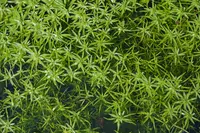
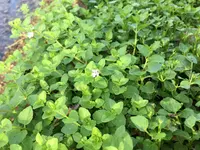
Blunt-fruited water-starwort (Callitriche obtusangula) is a small aquatic plant commonly found in slow-moving rivers, ditches, and ponds. It forms dense submerged or floating mats of fine, opposite leaves. These bright green mats provide cover for aquatic wildlife and can help stabilize shallow water ecosystems. Stems are slender and branching, with tiny, inconspicuous flowers. This species is generally undemanding if given clean, cool to mild water and steady moisture, so care for blunt-fruited water-starwort is usually manageable for beginners. It prefers good light, low competition from aggressive algae, and a nutrient level that is not extremely high or extremely poor.

Care Difficulty
Moderate Care

Light Preference
Partial Sun

Water Requirements
Aquatic

Temperature Preference
Cool Climate

Hardiness Zone
5–9

Soil Texture
Loamy, Silty, Organic-rich

Soil pH
Slightly acidic (6.5–7.0), Neutral (7.0)

Soil Drainage
Waterlogged tolerant

Fertilization
Minimal (feed rarely)
Scan your plant to receive care tips personalized for your specific plant
Available on iOS and Android
This aquatic species prefers bright, open conditions but adapts to variable light in shallow freshwater habitats.
Callitriche obtusangula is an aquatic plant that needs consistently submerged conditions rather than periodic surface watering.
This freshwater plant prefers cool to mild conditions but tolerates a fairly broad temperature range in ponds and slow streams.
This aquatic species does not rely on ambient air humidity as long as water levels are stable.
In cultivation, Callitriche obtusangula prefers fine-textured, mineral-rich substrate that stays submerged or saturated.
This species is suitable for shallow containers such as tubs, bowls, or the margins of larger water features.
This aquatic species usually thrives without heavy feeding, especially in nutrient-moderate ponds or streams.
Pruning Callitriche obtusangula helps control spread and maintain healthy, well-lit mats in ponds or slow water.
This aquatic species is more often transplanted within ponds than conventionally repotted.
Callitriche obtusangula is commonly propagated by division and stem pieces rather than by seed under garden conditions.
This hardy aquatic tolerates typical temperate winters in ponds with minimal intervention.

Plant Health Check
Not sure what's wrong with your plant? Check your plant's health inside the app.
This species naturally occurs mainly in western Europe, especially in mildly polluted, slow-flowing lowland rivers, canals, and drainage ditches, and is far less widespread than several other Callitriche species.
Its small fruits have characteristically blunt tips and a narrow wing-like margin around each mericarp, a feature used by botanists to distinguish it reliably from similar water-starworts.
Compared with related species that favor ponds or still water, this plant is particularly associated with running or gently moving fresh water and often forms submerged or floating mats anchored in riverbed sediments.

In parts of its range, this species is used as an indicator of relatively good but slightly eutrophic water quality in lowland rivers, because it can tolerate moderate nutrient enrichment yet still declines when conditions become heavily polluted or channels are excessively modified.
This species can spread quickly by stem fragments and seed, forming dense mats in still or slow water. In managed ponds or aquariums, regular thinning and physical removal of excess stems keeps growth under control and maintains water movement.
Keep your plants happy and healthy with plant identification, disease detection, and easy care guidance.