oysterleaf Care (Mertensia maritima)

Also known as: Oysterplant, Sea Lungwort, Sea Bluebells
oysterleaf

About oysterleaf

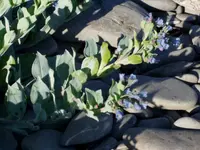
Oysterleaf, Mertensia maritima, is a low, creeping perennial herb from cool coastal regions of northern Europe and North America. It naturally grows on sandy or rocky seashores and dunes. The plant forms small, trailing mats of fleshy, blue-green leaves with a glaucous, slightly waxy surface and delicate blue bell-shaped flowers. Its leaves have a mild oyster-like flavor, which makes it interesting for edible and ornamental use. In cultivation it prefers cool conditions, full sun to light shade, and very well-drained, sandy soil. These specific climate and drainage needs mean that how to care for oysterleaf can be more challenging away from cool coasts.

Main Plant Requirements

Care Difficulty

Hard Care

Light Preference

Full Sun

Water Requirements

Moderate Water

Temperature Preference

Cold Hardy

Hardiness Zone

2–7

Soil Texture

Sandy, Rocky, Loamy

Soil pH

Slightly acidic (6.5–7.0), Neutral (7.0)

Soil Drainage

Well-drained

Fertilization

Minimal (feed rarely)

Get Personalized Care Plan

Scan your plant to receive care tips personalized for your specific plant

Available on iOS and Android

How to Care for the oysterleaf

Mertensia maritima prefers cool, bright conditions with gentle sun exposure, similar to its coastal habitat.

  • Provide 3–6 hours of direct morning sun with light afternoon shade; strong mid-day sun in summer can scorch leaves, especially in hotter regions.
  • Allow bright, open shade or filtered light during the hottest months; in cool, cloudy coastal areas it tolerates longer sun exposure safely.
  • Watch leaf color and texture: pale, crispy, or curled leaves indicate too much sun, while stretched, floppy growth signals insufficient light for oysterleaf.

This coastal plant prefers slightly moist, fast-draining soil and does poorly in stagnant, waterlogged conditions.

  • Irrigate when the top 2–3 cm of soil feels dry; in cool, breezy sites this may mean moderate but not frequent watering based on weather rather than a fixed schedule.
  • Use sandy or gritty soil with excellent drainage so excess water runs through quickly, reducing root rot risk for Mertensia maritima.
  • In cooler seasons reduce watering as growth slows; soft, yellowing, or mushy leaves suggest overwatering, while limp, dull, and wilting foliage indicates the root zone stayed dry too long.

This species is a cool-climate coastal plant that tolerates cold better than heat but still needs protection from extremes.

  • Aim for active growth in 50–65°F (10–18°C); it can handle down to about 20–25°F (-6 to -4°C) once established, especially with good drainage.
  • In regions with hot summers, protect from prolonged heat above 80°F (27°C) by using light shade and avoiding reflected heat from walls or paving.
  • Expect some dieback in very cold winters; plants often resprout in spring if roots are insulated and not exposed to repeated freeze–thaw cycles in saturated soil.

Humidity plays a minor role for this coastal species, which tolerates relatively dry air.

  • Aim for 40–60% humidity, similar to typical indoor air, without special equipment.
  • Plants cope with drier air, but very hot, dry drafts can crisp leaf edges over time.
  • If air is extremely dry, place the oysterleaf pot on a pebble tray with water, keeping the base above water level.

Mertensia maritima prefers very free-draining, sandy soil with low to moderate fertility.

  • Use a mix of roughly 50–70% sharp sand or grit with the rest as loam-based compost to mimic coastal dunes.
  • Ensure rapid drainage; excess water should run through within seconds after watering to prevent root rot.
  • Keep pH slightly alkaline to neutral (about 7.0–8.0) by adding a small amount of crushed shell or horticultural lime if your mix is acidic.
  • Avoid heavy, compacted, or peat-heavy mixes that stay wet, and loosen soil with extra grit if water lingers in the pot or bed.

This species can be grown in containers if its need for sharp drainage and cool roots is met.

  • Choose a wide, shallow pot to allow spreading roots and stems while preventing deep, soggy zones at the bottom.
  • Use a heavy or terracotta container to keep the plant stable and slightly cooler than lightweight plastic in sun-exposed positions.
  • Elevate the pot on feet or blocks so drainage holes stay clear and runoff water does not pool under the container.

This coastal native needs only light feeding, as too much fertilizer weakens growth and flavor in oysterleaf.

  • Use a low-dose balanced NPK liquid fertilizer at 1/4–1/2 strength for container plants during the main growing season.
  • Apply every 4–6 weeks from spring to late summer if growth appears pale or weak, skipping feeds in very rich mixes.
  • In the ground, rely mainly on a thin layer of compost in spring rather than frequent synthetic fertilizer.
  • Stop feeding in fall and winter to allow natural dormancy and avoid soft, frost-prone growth.

Pruning Mertensia maritima is minimal and focuses on cleanliness rather than shaping.

  • In late winter or very early spring, remove dead, damaged, or diseased stems with clean, sharp scissors or hand pruners.
  • Trim back any leggy or sprawling shoots lightly after flowering to maintain a compact, low mound.
  • Cut spent flower stalks at the base to direct energy into roots and foliage instead of seed production.
  • Avoid heavy cutting into woody or very old tissue, as this can reduce vigor and overall plant longevity.

This coastal perennial is usually grown in the ground, so transplanting is more common than repotting.

  • Transplant in early spring or early fall, when temperatures are mild and moisture is more reliable.
  • Move plants only when necessary, such as when growth stalls, roots circle a pot, or soil drainage is poor.
  • Lift with a wide soil clump to keep roots intact, then replant at the same depth in very free-draining, sandy soil.
  • Water gently after transplanting, then keep evenly moist but not waterlogged for 1–2 weeks to limit transplant shock.

Mertensia maritima is usually propagated by seed, with some success from careful division in established clumps.

  • Sow fresh seed in late summer or fall outdoors so it experiences natural cold stratification over winter.
  • Use a sharply drained, sandy mix, keep it just moist, and allow cool conditions; germination often occurs in spring.
  • For division, split only well-established plants in early spring, keeping large root sections with attached shoots.
  • Replant divisions immediately, firm gently, and maintain steady moisture without saturation until new growth appears.

This species is quite cold hardy and usually needs only modest winter care in most temperate climates.

  • Tolerates frost and freezing, especially in well-drained sandy soil that prevents waterlogging around roots.
  • In colder regions, apply a light mulch layer after the ground cools to buffer repeated freeze–thaw cycles.
  • Avoid heavy, wet organic mulches that hold excess moisture and encourage rot at the crown.
  • Container plants in very cold zones can be moved to a cold, bright, frost-free spot to protect the root ball.

Care Tips

Shelter From Wind

Site plants where they are shielded from strong, drying winds, for example behind a low wall or rock, to prevent leaf scorch and breakage of the brittle stems.

Use Gravel Mulch

Apply a 1–2 cm layer of washed grit or small gravel around the crown to keep stems dry at the base, reduce slug access, and mimic the plant’s natural coastal shingle habitat.

Encourage Low Spreading

Gently guide young stems to sprawl over stones or the edge of a raised bed so the foliage stays well aerated and less prone to rot while still shading the shallow roots.

Harvest Leaves Correctly

When harvesting, take only a few of the outer, mature leaves from each plant and avoid cutting the central growing point so it can continue producing new foliage through the season.

Plan For Short Lifespan

Because the plant can be short-lived, collect seed from healthy plants at the end of the season and pre-chill it in moist sand in the refrigerator for several weeks to support long-term success in growing oysterleaf.

Common Pests and Diseases

Aphids

This pest forms small soft-bodied colonies on young stems and leaves, feeding on sap and causing distortion or stunting. Symptoms include sticky honeydew and sooty mold developing on affected areas in calm, sheltered sites where oysterleaf is grown ornamentally or for food.

Solution

Rinse colonies off with a firm stream of fresh water and pinch off heavily infested shoot tips, then dispose of them away from the planting area. For persistent infestations, use insecticidal soap or a neem oil spray directed at the undersides of leaves, repeating every 5–7 days until new growth appears clean, and encourage airflow so plants dry quickly after watering.

Flea beetles

These insects chew numerous tiny round holes in the leaves, giving a shot‑hole or lace-like appearance, especially on young plants in sunny, open coastal or garden sites. Damage can slow growth and make foliage unattractive or less usable as an edible leaf.

Solution

Protect young plants with fine insect mesh or floating row cover, ensuring the edges are sealed to soil, and remove nearby weeds that can host the beetles. In established clumps, use yellow sticky traps near the plants and, if damage is heavy, apply a targeted pyrethrin or spinosad spray in the evening, focusing on leaf surfaces while avoiding times when pollinators are active.

Powdery mildew

This disease shows as pale white or gray powdery patches on leaves and stems, usually in late season or when air is humid but the foliage stays relatively dry. Symptoms include reduced vigor, yellowing, and premature leaf drop, which can weaken small coastal plantings of this species.

Solution

Improve airflow by spacing plants properly and trimming nearby dense vegetation, then remove and discard the most affected leaves to reduce spore load. In ongoing cases, apply a sulfur-based or potassium bicarbonate fungicide labeled for edible crops at intervals recommended on the product label, making sure leaves are evenly coated but not dripping.

Interesting Facts

Seashore salt tolerance

This coastal species naturally grows on shingle beaches and sand dunes in cold North Atlantic regions, where it tolerates windblown salt spray that would damage many other plants.

Blue bell-shaped flowers

It produces small, nodding, bell-shaped flowers in shades of pale to deep blue that are adapted to attract pollinating insects in short, cool northern summers.

Edible oyster-flavored leaves

The fleshy, bluish-grey leaves are edible and noted for their mild marine, oyster-like taste, which has led to limited culinary use by foragers and chefs in coastal areas.

Botan icon

Did you know?

This plant has a fragmented, declining native range around the North Atlantic, and in several European countries it is considered rare or threatened due to habitat loss and coastal disturbance, leading to legal protection in some regions.

FAQs about oysterleaf

Yes, this coastal species is edible and valued for its mild oyster-like flavor. Leaves and young shoots are typically used fresh as a garnish. Harvest sparingly to avoid weakening plants and exposure to polluted shorelines.

Grow Healthy Plants with Botan Care

Keep your plants happy and healthy with plant identification, disease detection, and easy care guidance.

Botan plant care app — identify plants on mobile

Explore More Plants