Rhizome Zoning
Plant rhizomes in a shallow shelf zone of the pond, 5–15 cm below the water surface, so emerging shoots receive warmth and oxygen while roots stay consistently submerged.

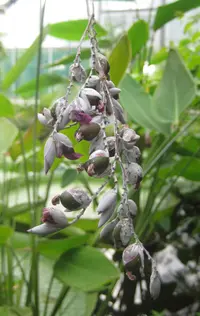
Hardy canna (Thalia dealbata), also called powdery alligator-flag, is a tall, perennial aquatic plant grown for its bold foliage and upright flower spikes. It forms clumps of broad, paddle-shaped leaves with a bluish or silvery cast on strong, reed-like stems.
In nature it occurs in wetlands, pond margins, and slow-moving waters in the southeastern United States. It is often used in water gardens and naturalistic ponds for height and structure.
This species is generally robust and low-maintenance if its need for constant moisture and full sun is met. Understanding how to care for hardy canna starts with providing consistently wet soil and a stable, unfrozen root zone.

Care Difficulty
Moderate Care

Light Preference
Full Sun

Water Requirements
Aquatic

Temperature Preference
Cold Hardy

Hardiness Zone
6–10

Soil Texture
Loamy, Clay, Organic-rich

Soil pH
Acidic (5.5–6.5), Slightly acidic (6.5–7.0)

Soil Drainage
Waterlogged tolerant

Fertilization
Light (every 4–6 weeks)
Scan your plant to receive care tips personalized for your specific plant
Available on iOS and Android
Thalia dealbata thrives in strong light typical of open ponds and wetland edges.
This marginal aquatic plant prefers consistently wet conditions rather than cyclic drying.
This species grows best in warm, frost-free conditions but survives short periods of cold when dormant.
This wetland marginal plant prefers high humidity but usually copes with average outdoor air if its roots stay constantly wet.
Thalia dealbata grows best in permanently wet, organic-rich soil that mimics a shallow pond margin or bog.
This species is suitable for large containers, especially when grown as a shallow water or pond-tub plant outdoors.
Thalia dealbata responds well to moderate feeding in containers or nutrient-poor ponds, but avoid heavy applications.
Thalia dealbata benefits from light, seasonal pruning to maintain tidy growth and strong new shoots.
This marginal aquatic is usually grown in ponds or bogs, so focus on dividing and transplanting over frequent repotting.
Thalia dealbata is most commonly propagated by division, with seed used mainly for breeding or larger-scale production.
Thalia dealbata is relatively cold hardy but may need some help in colder regions or exposed water gardens.

Plant Health Check
Not sure what's wrong with your plant? Check your plant's health inside the app.
The leaf surfaces are covered with a fine whitish, waxy coating that gives the foliage a blue-gray appearance and helps reduce water loss and sun damage in exposed wetland sites.
It spreads by thick rhizomes that anchor the plant in saturated mud, allowing stable growth in shallow water where many other ornamentals would rot or topple.
The hard, buoyant seeds can float on water for long distances, which helps the species colonize new pond edges, ditches, and slow-moving waterways.

This species is among the few ornamental marsh plants that can overwinter in frozen ponds in much of the eastern and central United States, surviving subfreezing air temperatures as long as its rhizomes remain insulated below the ice in the mud.
Yellowing leaves often result from nutrient-poor, cold, or waterlogged conditions, or from natural aging of older foliage. Check for consistent shallow water, mild fertilization, and adequate warmth, and remove only fully spent, mushy leaves.
Keep your plants happy and healthy with plant identification, disease detection, and easy care guidance.