


Simulate tidal movement
Place the algae in a tank with a gentle wavemaker or directed pump flow so fronds sway but are not bent sharply, which reduces tissue stress and more closely mimics its natural surge-zone habitat.

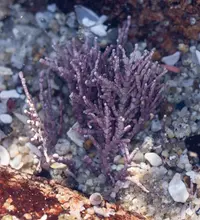
Calliarthron tuberculosum is a calcified red alga, not a typical land houseplant. It forms tough, branching, coral-like fronds with flattened segments and swollen joints. The thallus, or algal body, is often pink to deep red and becomes rigid as it deposits calcium carbonate in its tissues.
This species is native to cold, wave-exposed rocky shores of the Pacific coast of North America, especially in intertidal zones. Its strong, articulated structure helps it withstand heavy surf and grazing. In aquaria or marine systems, it is considered challenging because it needs stable, cool, high-salinity water and good water movement. Only experienced marine keepers should attempt to care for Calliarthron tuberculosum.

Care Difficulty
Hard Care

Light Preference
Partial Shade

Water Requirements
Aquatic

Temperature Preference
Cool Climate

Hardiness Zone
Unknown

Soil Texture
Sandy, Rocky, Organic-rich

Soil pH
Slightly acidic (6.5–7.0)

Soil Drainage
Waterlogged tolerant

Fertilization
Minimal (feed rarely)
Scan your plant to receive care tips personalized for your specific plant
Available on iOS and Android
This cold-water red alga needs consistent, cool, high-intensity marine light rather than typical garden sun exposure.
This species is fully marine and depends on continuous seawater immersion rather than intermittent freshwater-style watering.
This temperate marine alga is adapted to cool ocean waters and does poorly in warm or highly fluctuating temperatures.
This marine red alga depends on fully submerged, consistently high-humidity seawater conditions rather than air humidity.
Calliarthron tuberculosum is a marine red alga that anchors to hard substrates and does not use soil in the terrestrial sense.
This species is not suitable for traditional soil containers but can be maintained in marine aquarium systems using rockwork rather than pots.
This intertidal red alga generally gains enough nutrients from seawater and does not need supplemental fertilizer in typical culture.
Pruning is not relevant for Calliarthron tuberculosum, as it is a marine alga without woody stems or shaped crowns.
In aquaria or marine research systems, this species is not truly repotted but its holdfasts and attachment surfaces may be managed.
Propagation of Calliarthron tuberculosum in hobby or small research settings is uncommon and technically demanding, so it is usually maintained rather than actively multiplied.
In the wild this marine alga tolerates natural seasonal changes and needs no specific winter care from humans.

Plant Health Check
Not sure what's wrong with your plant? Check your plant's health inside the app.
This red alga forms a hardened, jointed skeleton by depositing calcium carbonate in its tissues, giving it a bone-like structure that helps it withstand strong wave action in rocky intertidal zones.
It typically grows in high-energy coastal habitats on the Pacific coast of North America, where its flexible joints allow fronds to bend rather than break under heavy surf.
Its dense, branching growth provides important three-dimensional habitat for small invertebrates and juvenile organisms, increasing local biodiversity on wave-exposed rocky shores.

Fossil evidence shows that species very similar to this modern articulated red alga were already present in the Cretaceous period, indicating that its jointed, calcified body plan is an ancient and evolutionarily long-lived adaptation to life in high-energy marine environments.
Growth is generally slow to moderate. It forms new branches over months rather than weeks. Stable cool, well-lit, nutrient-rich, wave-aerated seawater promotes faster development. Any sudden change in salinity, temperature, or light usually stalls growth.
Keep your plants happy and healthy with plant identification, disease detection, and easy care guidance.

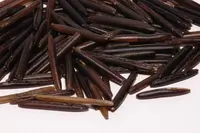
northern wildrice
Zizania palustris
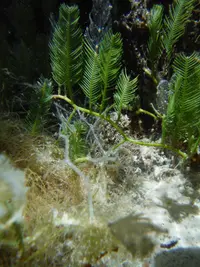
Green Feather Alga
Caulerpa sertularioides

spotted calla lily
Zantedeschia albomaculata
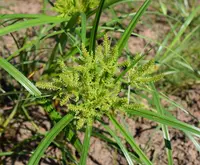
redroot flatsedge
Cyperus erythrorhizos
inland leatherfern
Acrostichum danaeifolium
Mangrove Fern
Acrostichum speciosum
annual wildrice
Zizania aquatica

American white waterlily
Nymphaea odorata