redroot flatsedge Care (Cyperus erythrorhizos)

Also known as: Red-rooted umberella-sedge
redroot flatsedge

About redroot flatsedge

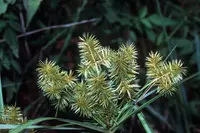
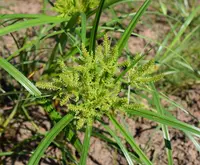
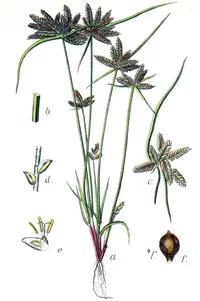
Redroot flatsedge, Cyperus erythrorhizos, is a perennial sedge often found in shallow water, ditches, rice fields, and other wet, disturbed sites. It forms dense clumps with triangular stems and narrow grass-like leaves, topped by flat, reddish-brown seed heads. This species is native to North America and is most common in warm, wet regions, especially in the central and southern United States. It thrives in saturated or periodically flooded soils and full sun, which makes it vigorous and sometimes weedy in suitable conditions. Those who want to care for redroot flatsedge usually grow it in controlled water gardens, ponds, or ecological plantings rather than in regular ornamental beds.

Main Plant Requirements

Care Difficulty

Moderate Care

Light Preference

Full Sun

Water Requirements

Aquatic

Temperature Preference

Tropical / Frost Sensitive

Hardiness Zone

8–11

Soil Texture

Loamy, Silty, Organic-rich

Soil pH

Acidic (5.5–6.5), Slightly acidic (6.5–7.0)

Soil Drainage

Waterlogged tolerant

Fertilization

Minimal (feed rarely)

Get Personalized Care Plan

Scan your plant to receive care tips personalized for your specific plant

Available on iOS and Android

How to Care for the redroot flatsedge

This wetland sedge prefers strong natural light to support dense, upright growth.

  • Provide 6–8 hours of sun daily, ideally with morning sun and light afternoon shade, especially in hot summer regions.
  • Tolerates partial shade (around 3–4 hours direct sun) but stems may elongate and color can dull compared with redroot flatsedge grown in fuller sun.
  • In open, treeless sites, use neighboring plants or grasses to give light dappled shade and reduce leaf scorch during intense midsummer sun.

This species is adapted to saturated, marshy conditions and does best with constant moisture.

  • Aim for consistently wet soil; in the field, it can stand shallow water, while in garden settings the surface should never dry out completely.
  • Use soil that holds water but does not sour; foul odor, slimy roots, or collapsing stems indicate chronic overwatering without enough oxygen.
  • Crisping leaf tips or wilting between soakings signal that Cyperus erythrorhizos is not getting enough water or the substrate dries too deeply between irrigations.

This sedge favors warm, frost‑free conditions typical of temperate to subtropical wetlands.

  • Optimal growth occurs around 70–86°F (21–30°C), with steady warmth promoting faster rhizome expansion and denser stands.
  • It is highly frost sensitive; growth usually stops below about 50°F (10°C), and hard freezes near 32°F (0°C) can kill foliage and young plants.
  • In hot summers above 95°F (35°C), ample water and some afternoon shade reduce heat stress and help maintain healthy, turgid leaves.

This wetland sedge needs high humidity to stay vigorous in cultivation.

  • Aim for 60–90% humidity and keep the root zone constantly moist, mimicking marshy conditions.
  • It tolerates brief dips to 40–50% but leaf tips brown and edges curl in persistently dry air.
  • Watch for dull, papery leaves and stalled growth as humidity-stress signals in redroot flatsedge.
  • Increase humidity by grouping pots over trays of water or using shallow water reservoirs beneath containers without letting crowns dry.

This species prefers saturated, organic-rich substrates rather than typical potting conditions.

  • Use a heavy, fine-textured mix such as 60–70% loam or clay topsoil blended with 30–40% compost to hold water.
  • Cyperus erythrorhizos grows best in soil that stays waterlogged with no need for drainage, mimicking marsh or pond margins.
  • Target a slightly acidic to neutral pH around 6.0–7.0 to support nutrient uptake and root health.
  • Avoid sandy, fast-draining, or peat-only mixes that dry quickly; add extra compost or garden soil if water drains from the surface in less than a few minutes.

This sedge adapts well to container culture when the pot is managed as a mini-bog.

  • Choose a deep, sturdy container that can safely hold standing water without tipping when the plant forms dense clumps.
  • Use non-porous materials such as plastic or glazed ceramic to slow evaporation and maintain a permanently saturated substrate.
  • Place the container inside a larger outer tub that can hold several centimeters of water to stabilize moisture and prevent rapid drying.

Cyperus erythrorhizos benefits from moderate feeding during active growth in warm months.

  • Apply a balanced liquid NPK fertilizer at 1/4–1/2 strength every 4–6 weeks in spring and summer.
  • Use slow-release granules or a light top-dressing of compost for plants growing in rich, wet garden soil.
  • Rinse or flush containers monthly to prevent salt buildup from repeated feeding.
  • Stop fertilizing in late fall and winter when growth slows or foliage dies back.

Pruning Cyperus erythrorhizos is mainly done to keep clumps tidy and maintain healthy, vigorous growth.

  • Cut dead, yellowing, or damaged stems at the base whenever noticed to limit disease and improve appearance.
  • In late winter or early spring, thin crowded stems using clean, sharp shears to allow light and air into the clump.
  • Trim back overly tall or leaning stems to shape the plant and encourage fresh basal shoots.
  • Disinfect tools before and after use to reduce the spread of fungal or bacterial problems.

This wetland sedge is more often transplanted in the ground than repotted, but container clumps still benefit from periodic division.

  • Transplant or divide every 2–3 years when growth slows, stems thin, or roots circle the container or pond basket.
  • Schedule moves for early spring, just as new growth starts, to shorten recovery time.
  • Lift the clump, gently wash off soil, then divide into sections with healthy roots and several shoots each.
  • Replant divisions at the same depth, water thoroughly, and keep soil or aquatic medium consistently wet to limit root stress.

Cyperus erythrorhizos is commonly propagated by division, which preserves the characteristics of the parent plant.

  • Divide established clumps in early spring when new shoots are visible but still short.
  • Lift the plant and separate rhizomes or root masses into pieces, each with multiple buds or stems.
  • Replant divisions into saturated soil or shallow water, firming the medium around roots to remove air pockets.
  • Keep conditions warm and consistently wet to support rapid establishment and new shoot growth.

In mild climates, redroot flatsedge needs minimal winter attention, but cold regions require some planning.

  • This species is not tolerant of hard freezes; foliage may die back after light frost.
  • Mulch hardy outdoor plantings with 5–8 cm of straw or leaves to insulate the root zone.
  • Move container plants into a frost-free greenhouse or bright indoor area and keep the substrate damp, not dry.

Care Tips

Container depth choice

Use a wide, shallow container or pond basket so the spreading rhizomes have space to colonize horizontally, which keeps the stand dense and stable rather than overcrowded in one tight clump.

Substrate anchoring

Add a 3–5 cm layer of washed sand or fine gravel over the planting medium to keep it from floating or eroding when submerged, which helps roots anchor firmly and reduces water cloudiness.

Rhizome thinning

Every 1–2 years, lift and divide congested rhizomes, discarding weak, pale sections and replanting only firm, red to reddish-brown pieces to maintain vigorous new growth and prevent self-shading.

Edge containment

In outdoor ponds or wet beds, install a 20–25 cm deep root barrier or plant in submerged pots to prevent this species from spreading aggressively into nearby planting zones.

Seasonal dieback management

In cooler climates, allow foliage to yellow and die back in autumn, then trim it to the base and overwinter the rhizomes in frost-free water or very wet substrate for reliable regrowth when growing redroot flatsedge.

Common Pests and Diseases

Rice water weevil

This pest is a common aquatic and wetland rice pest that can also feed on Cyperus roots and foliage in shallow water plantings. Symptoms include notched leaves from adult feeding and weakened growth where larvae feed on submerged roots and rhizomes.

Solution

Monitor plants in water features or flooded containers during warm months and physically remove adult beetles from foliage and water surfaces. Where damage is recurring, drain or lower water levels temporarily to disrupt the larval stage around the roots, and use floating row covers or fine mesh barriers over small ponds or tubs to limit adult access while maintaining adequate moisture for the sedge.

Leaf spot

This disease is caused by various fungi that thrive on sedges in warm, wet conditions, producing small brown to purple lesions that may merge into larger dead patches on leaves. Symptoms include thinning clumps, premature leaf death, and reduced ornamental quality in dense or overcrowded stands.

Solution

Remove and discard heavily spotted leaves and any dense leaf litter from around the clump to reduce fungal spores, and irrigate at the soil level rather than overhead so foliage dries quickly. Improve air movement by thinning surrounding vegetation, and if the plant is in a container, avoid crowding multiple species too closely; in persistent cases, a labeled fungicide for ornamental grasses and sedges can be applied according to directions.

Rust

This disease produces orange to brown powdery pustules on the undersides of leaves of Cyperus species, especially in warm, humid, low-airflow locations. Symptoms include yellowing, early leaf drop, and a dusty residue that rubs off on fingers or nearby surfaces.

Solution

Prune out and discard affected leaves as soon as pustules appear and avoid wetting foliage late in the day to limit humidity on leaf surfaces. Increase spacing around the plant, remove dense weeds that block airflow, and, in severe outdoor stands, consider rotating or rejuvenating clumps by cutting back and disposing of infected material, then encouraging new clean growth under drier leaf conditions.

Aphids

These insects sometimes colonize young Cyperus shoots and flowering stems, sucking sap and excreting sticky honeydew that can attract sooty mold. Symptoms include curled or distorted new leaves, sticky surfaces, and clusters of soft-bodied insects on stems and undersides of leaves.

Solution

Rinse colonies from stems and foliage with a firm stream of water, repeating every few days until populations drop, and pinch back heavily infested tender shoots. Encourage natural predators such as lady beetles outdoors, avoid excess nitrogen fertilizer that stimulates very soft new growth, and in container specimens use an insecticidal soap or horticultural oil labeled for use on sedges, applied thoroughly to all infested surfaces.

Spider mites

These insects are tiny sap feeders that can appear when plants are grown in very warm, dry air or in indoor settings with low humidity, even though this sedge prefers moist conditions. Symptoms include fine webbing, stippled or dull-looking leaves, and gradual leaf yellowing or browning from the tips.

Solution

Increase humidity around the plant by keeping the root zone consistently wet or shallowly submerged and by grouping plants to create a more humid microclimate, then wash leaves gently with water to remove mites and webbing. For persistent infestations, apply insecticidal soap or horticultural oil to both upper and lower leaf surfaces, and maintain regular monitoring as part of Cyperus erythrorhizos care to catch new mite activity early.

Interesting Facts

Distinct red root system

This species is named for its conspicuously red to reddish-brown roots and rhizomes, which can stain surrounding soil and are a reliable field character for distinguishing it from other sedges.

Preference for muddy drawdown zones

It commonly occupies recently exposed muddy shorelines and drawdown zones of ponds, reservoirs, and ditches, appearing as water levels recede and taking advantage of low competition in these disturbed wet areas.

North American endemic sedge

The plant is native to North America and occurs mainly in the central and eastern United States, where it grows in warm, shallow, nutrient-rich wetlands and slow-water habitats.

FAQs about redroot flatsedge

This species spreads mainly by rhizomes and seed and can form dense patches in wet, open soil. In gardens or ponds, contain it with barriers or containers and remove seedheads before they mature to limit spread.

Grow Healthy Plants with Botan Care

Keep your plants happy and healthy with plant identification, disease detection, and easy care guidance.

Botan plant care app — identify plants on mobile

Explore More Plants