yellow flatsedge Care (Cyperus flavescens)

Also known as: yellow galingale
yellow flatsedge

About yellow flatsedge

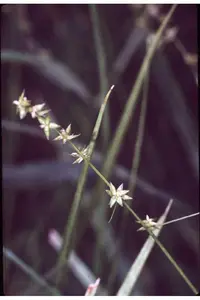
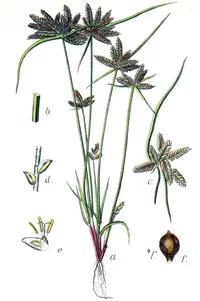
Yellow flatsedge (Cyperus flavescens) is a small, fine-textured sedge typically found in wet, open habitats such as pond margins, ditches, and damp meadows. It forms low clumps of narrow, grasslike leaves with delicate, yellowish seed heads that give the plant its common name.

This species is native to many temperate and subtropical regions and often appears in seasonally wet or disturbed soils. It grows quickly in consistently moist substrates and can reseed where conditions suit it.

For those who want to care for yellow flatsedge, it generally prefers full sun, regular moisture, and a loose, organic-rich soil, which reflects its natural wetland origins.

Main Plant Requirements

Care Difficulty

Moderate Care

Light Preference

Full Sun

Water Requirements

Aquatic

Temperature Preference

Warm Climate

Hardiness Zone

5–10

Soil Texture

Sandy, Loamy, Silty

Soil pH

Acidic (5.5–6.5), Slightly acidic (6.5–7.0)

Soil Drainage

Waterlogged tolerant

Fertilization

Minimal (feed rarely)

Get Personalized Care Plan

Scan your plant to receive care tips personalized for your specific plant

Available on iOS and Android

How to Care for the yellow flatsedge

This sedge prefers bright, open conditions that mimic sunny, wet shores and pond margins.

  • Provide 6–8 hours of sun daily, with at least 4 hours of direct morning or late-afternoon sun for compact growth in yellow flatsedge.
  • Allow light partial shade during the hottest midday period, especially in hot summers, to reduce leaf scorching and moisture loss.
  • In shorter winter days, prioritize unobstructed exposure; avoid dense shade from shrubs or structures, which leads to weak, elongated stems and sparse foliage.

This wetland sedge thrives in constantly moist to saturated conditions and dislikes drying out.

  • Maintain soil that is consistently wet; in the ground, the surface should never fully dry and may stay shallowly flooded without harming Cyperus flavescens.
  • In drier weather, use visual cues: water when the soil surface loses its sheen or cracks form, before foliage begins to curl or brown at the tips.
  • Avoid stagnant, foul-smelling water, which signals poor drainage and potential root rot; improve flow or water exchange in bog gardens and pond edges.

This species grows best in warm, frost-free conditions typical of temperate to subtropical wetlands.

  • Aim for 68–82°F (20–28°C) during the main growing season for fastest growth and dense clumps.
  • Protect plants when temperatures drop near 40°F (4°C); hard frost below 32°F (0°C) can kill foliage and may damage or kill crowns.
  • During hot spells above 90°F (32°C), growth usually remains stable if soil stays saturated; increase watering and avoid dry, wind-exposed sites to limit heat stress.

This sedge prefers consistently moist air but adapts if basic humidity needs are met.

  • Aim for 50–70% humidity to keep foliage green and growth steady.
  • Dry indoor air causes browning tips, curling edges, and slower growth in yellow flatsedge.
  • Increase humidity with a nearby humidifier, grouped plants, or a water tray placed close but not under the pot.

This species thrives in saturated, organic-rich soil that mimics shallow wetland conditions.

  • Use a dense, peat- or compost-based mix with added loam and fine sand to hold moisture while avoiding compaction.
  • Maintain soil that stays wet or even shallowly flooded; do not allow the root zone to dry out completely.
  • A slightly acidic to neutral pH around 6.0–7.0 supports nutrient uptake and stable growth in Cyperus flavescens.
  • Avoid coarse, fast-draining mixes with high perlite or bark content that shed water too quickly and stress the plant.

This sedge is well suited to container growing, especially for controlled wet or boggy conditions.

  • Choose a wide, stable pot to support its clumping habit and prevent tipping when filled with saturated soil.
  • Select a non-porous container material, such as plastic or glazed ceramic, to slow moisture loss and maintain a boggy substrate.
  • Use a cache pot or saucer to safely hold standing water around the inner pot without leaking onto surrounding surfaces.

Cyperus flavescens benefits from light feeding but grows acceptably in nutrient-rich, natural soils without extra inputs.

  • Use a balanced liquid fertilizer (around 10-10-10 or 20-20-20) diluted to 1/4–1/2 strength for containers or nutrient-poor sites.
  • Feed every 4–6 weeks during active growth in spring and summer, when plants are producing fresh shoots.
  • In winter or dormancy, stop feeding or reduce to at most 1 very light application if foliage remains green indoors.
  • For more natural growing yellow flatsedge in the ground, incorporate a thin layer of compost once in spring instead of frequent feeding.

Pruning Cyperus flavescens is mainly maintenance-focused to keep stands tidy and healthy.

  • Best time is late winter to early spring, before vigorous new growth, or after flowering flushes if plants look untidy.
  • Cut back dead, yellowing, or storm-damaged stems at the base using clean, sharp scissors or hand pruners.
  • Thin out the most crowded or weak stems to improve air flow and light penetration, encouraging sturdier new growth.
  • Light shaping of clumps maintains a neat outline without severely reducing flowering or compromising plant vigor.

This sedge is more often transplanted in the ground or wet margins than repotted as a houseplant.

  • Transplant or divide clumps in early spring or early fall, when temperatures are mild and soil moisture is consistent.
  • Look for signs such as overcrowded clumps, reduced vigor, or roots tightly circling a container as indicators a move is needed.
  • In containers, shift to a pot 1–2 in wider every 1–2 years, using moisture-retentive, organic-rich substrate.
  • Water thoroughly before and after moving, keep roots shaded and moist during handling, and trim back stressed foliage to limit transplant shock.

Cyperus flavescens is commonly propagated by division and seeds under consistently moist conditions.

  • Divide mature clumps in early spring, separating sections with several healthy shoots and roots, then replant at the original depth.
  • Sow fresh seed on the surface of wet, fine substrate; do not cover heavily, as light can support germination.
  • Maintain 68–77°F, constant moisture, and bright, indirect light for both divisions and seedlings to establish well.
  • For container culture, start divisions in small pots kept in trays of shallow water until strong new roots and shoots form.

In mild climates this sedge needs little winter attention, but extra care is useful in colder regions.

  • Cyperus flavescens is only lightly frost tolerant; repeated freezes can damage foliage and crowns, especially in containers.
  • Apply 5–8 cm of mulch around outdoor clumps in late fall to insulate the root zone while avoiding direct contact with stems.
  • Move pots into a frost-free, bright, cool space before hard freezes, keeping soil just moist, not waterlogged.
  • Remove dead or mushy foliage in late winter to reduce disease risk and allow clean spring regrowth.

Care Tips

Shallow Water Trays

Grow plants in wide, shallow trays or saucers filled with 2–5 cm of water to mimic marshy edges while keeping the crown just above standing water to reduce rot risk.

Seasonal Pot Sinking

In summer, sink nursery pots into the margins of a pond or a large water container so the rim is just above water level, which stabilizes moisture and temperature around the root zone.

Tight Clump Division

When dividing, split only vigorous outer sections into tight clumps and replant them immediately into saturated substrate to maintain strong, upright growth and quick establishment.

Nutrient Buffer Layer

In containers, add a thin top layer of clean sand or fine grit over the substrate to limit nutrient leaching into standing water and reduce algae growth on the surface.

Seed Bank Management

Allow some seed heads to mature and fall into the surrounding wet soil or water margins to build a natural seed bank, which supports long-term population renewal when growing yellow flatsedge in outdoor bog or pond settings.

Common Pests and Diseases

Aphids

This pest feeds on tender shoots and undersides of leaves, sucking sap and causing distortion and sticky honeydew on stems and foliage.

Solution

Rinse stems and foliage thoroughly with a strong stream of water, then spot-treat colonies with insecticidal soap or a dilute horticultural oil, repeating weekly until populations drop. In outdoor or pond-edge settings, encourage natural predators such as lady beetles and avoid high nitrogen fertilization that drives soft, aphid-prone growth.

Spider mites

These insects prefer hot, dry conditions and cause fine stippling, yellowing, and eventual bronzing of narrow leaves, sometimes with thin webbing between stems.

Solution

Increase humidity around the plant, then wash foliage carefully with water to remove mites and webs, and follow with insecticidal soap or a miticide labeled for ornamentals. Monitor the plant closely and repeat treatments every 5–7 days until new leaves appear clean and free of speckling.

Leaf spot

This disease produces small, water-soaked or brown lesions on the narrow blades, which can coalesce into larger patches that dry and tear in windy or sunny conditions.

Solution

Remove and discard heavily spotted leaves to reduce inoculum, then improve air movement and avoid wetting foliage when irrigating. If the problem persists in dense clumps, a copper- or chlorothalonil-based fungicide labeled for ornamental leaf spots can be applied according to label directions.

Rust

This disease causes small yellow to orange pustules on lower leaf surfaces, with corresponding pale or yellow areas visible on the upper side of the leaf blade.

Solution

Promptly remove and discard affected leaves and thin crowded stands to lower humidity around foliage. In persistent or severe cases, apply a rust-labeled fungicide and rotate products if needed, while also avoiding overhead watering that keeps leaves wet for long periods.

Interesting Facts

Ephemeral wetland annual

This sedge is typically an annual that completes its life cycle quickly in seasonally wet habitats such as rice fields, river margins, and temporary pools, disappearing once soils dry out.

Tiny, pale-yellow spikelets

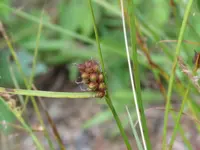
It is named for its small, pale-yellow to straw-colored spikelets, which are arranged in loose, umbrella-like clusters distinct from the denser heads of many other Cyperus species.

Pioneer of disturbed mud

The species often colonizes freshly exposed mud or disturbed, nutrient-rich wet soils, acting as an early successional plant that takes advantage of open, competition-free surfaces.

FAQs about yellow flatsedge

This species spreads mainly by seed in open, wet soil. In garden settings it can self-seed and form patches but is usually manageable with regular pulling of unwanted seedlings and avoiding bare, constantly moist disturbed soil.

Grow Healthy Plants with Botan Care

Keep your plants happy and healthy with plant identification, disease detection, and easy care guidance.

Botan plant care app — identify plants on mobile

Explore More Plants