Wind-resistant staking
Install a single sturdy stake on the windward side of each clump early in the season and secure stems loosely with soft ties to prevent tall flower spikes from snapping in summer storms.

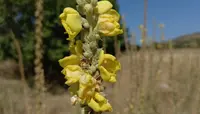
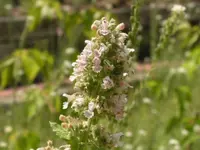
Orange mullein (Verbascum phlomoides) is a short-lived perennial or biennial herb, best known for its tall flowering spikes and soft, felted leaves. It forms a low rosette in the first year, then sends up upright stems with many yellow-orange flowers in the following season.
This species is native to parts of Europe and western Asia and often naturalizes in open, disturbed, or rocky sites. It thrives in full sun, prefers well-drained, rather poor soils, and tolerates dry conditions once established.
Its drought tolerance and low nutrient needs make it relatively undemanding, though it dislikes waterlogged ground. These traits make it straightforward for gardeners who want to learn how to care for orange mullein without complex maintenance routines.

Care Difficulty
Easy Care

Light Preference
Full Sun

Water Requirements
Low Water

Temperature Preference
Cold Hardy

Hardiness Zone
4–9

Soil Texture
Sandy, Loamy, Rocky

Soil pH
Slightly acidic (6.5–7.0), Slightly alkaline (7.0–7.5)

Soil Drainage
Well-drained

Fertilization
Minimal (feed rarely)
Scan your plant to receive care tips personalized for your specific plant
Available on iOS and Android
Verbascum phlomoides thrives in bright, open sites with strong direct sun.
This species prefers dry to moderately moist soil and is sensitive to standing water.
This hardy perennial tolerates a wide temperature range but flowers best in moderate conditions.
Humidity is not a critical factor for Verbascum phlomoides, which prefers dry air and resists typical indoor conditions.
Verbascum phlomoides prefers lean, well-drained soil that mimics dry, rocky habitats.
This species can be grown in containers outdoors if the pot supports its deep roots and dry-loving habit.
Verbascum phlomoides is adapted to lean soils and usually needs minimal feeding in garden beds.
Pruning Verbascum phlomoides is mainly about removing spent growth to maintain vigor and appearance.
This species is usually grown in beds or borders, so focus on careful transplanting of young plants rather than frequent repotting.
Verbascum phlomoides is most often propagated from seed, which allows large numbers of plants at low cost.
This species is generally cold hardy in much of the US and needs only modest winter attention in the ground.

Plant Health Check
Not sure what's wrong with your plant? Check your plant's health inside the app.
This species usually follows a strict 2‑year life cycle, forming a low leaf rosette in the first year and sending up a flowering stem that can reach 1–2 m in the second year before dying back after seed set.
Its soft, felted leaves are covered with dense woolly hairs that reduce water loss, reflect strong sunlight, and can trap small airborne particles in dry, open habitats.
Each flowering spike can produce many small seed capsules, and each capsule holds numerous tiny seeds, giving the plant a strong ability to colonize disturbed, sunny soils such as roadsides and field margins.

In parts of central and eastern Europe, dried flowering stems of this species have historically been dipped in tallow or wax and used as makeshift torches because the tall, straight stalk and dense seed structures burn with a steady flame.
Lack of flowers often comes from too much shade, overly rich nitrogen fertilizer, or plants still in their first year. This species usually needs full sun, lean soil, and a cold period before producing strong flower spikes.
Keep your plants happy and healthy with plant identification, disease detection, and easy care guidance.