Shallow rhizome setting
Position the rhizomes just at or slightly below the substrate surface, then top with a very thin layer of fine orchid bark or leaf litter so new growth and stolons can emerge freely without rotting.

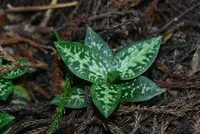
Goodyera daibuzanensis, often called Daibuza Goodyera, is a small terrestrial orchid from shaded forest floors in East Asia. It forms low rosettes of leaves close to the ground. The foliage is usually dark green with pale, netted veins that give it a “jewel orchid” look, while the slender flower spikes are more subtle. This species grows slowly and prefers stable, cool to mild conditions, so it suits patient growers. It is considered challenging because it needs consistent moisture, good air movement, and a loose, humus-rich substrate. Understanding how to care for Daibuza Goodyera starts with providing soft, filtered light and protection from heat and drying drafts.

Care Difficulty
Hard Care

Light Preference
Partial Shade

Water Requirements
Keep Soil Moist

Temperature Preference
Warm Climate

Hardiness Zone
Unknown

Soil Texture
Loamy, Peaty, Organic-rich

Soil pH
Strongly acidic (4.5–5.5), Acidic (5.5–6.5)

Soil Drainage
Moist but well-drained

Fertilization
Minimal (feed rarely)
Scan your plant to receive care tips personalized for your specific plant
Available on iOS and Android
This woodland orchid prefers soft, filtered light that mimics a shaded forest floor.
This species prefers consistently moist but not waterlogged conditions around its shallow roots.
This terrestrial orchid grows best in cool to mild temperatures without sharp extremes.
This species prefers moist, humid air similar to a shaded forest floor.
This orchid-like terrestrial plant needs a loose, humus-rich mix that stays evenly moist but never waterlogged.
This species adapts well to container growing when moisture and aeration are carefully balanced.
This terrestrial orchid grows slowly and benefits from very light feeding in active growth only.
Pruning needs for Goodyera daibuzanensis are minimal and focus on hygiene rather than shaping.
This species prefers stable conditions and should be repotted or transplanted only when clearly necessary.
Propagation of Goodyera daibuzanensis is possible but slow and best done by division rather than seed at home.
This orchid prefers cool, frost-free conditions and needs some protection in regions with freezing winters.

Plant Health Check
Not sure what's wrong with your plant? Check your plant's health inside the app.
This species is native to shaded, moist forest floors of Taiwan’s Daibu Mountains, where it grows among leaf litter and moss in cool, humid microhabitats.
Its dark green leaves show a clear network of pale or silvery veins, forming a net-like pattern that makes it recognizable among Asian Goodyera species known as jewel orchids.
The plant spreads slowly via a slender rhizome, forming small, scattered clumps rather than dense colonies, which contributes to its patchy distribution in the wild.
This species performs best outdoors in cool, shaded, humus-rich woodland or a carefully recreated woodland bed. Indoors it is difficult to maintain stable moisture, cool temperatures, and high humidity, so long‑term success is limited.
Keep your plants happy and healthy with plant identification, disease detection, and easy care guidance.