Daylily Care (Hemerocallis 'Stella de Oro')

Daylily

About Daylily

Hemerocallis 'Stella de Oro' is a compact, herbaceous perennial daylily valued for its long and reliable flowering season. It forms dense clumps of arching, grass-like foliage topped with trumpet-shaped yellow-gold blooms.

Daylilies originated in Asia but are now widely grown in gardens across North America and Europe as hardy, low-maintenance ornamentals. This cultivar is especially popular for borders, mass plantings, and containers.

It tolerates a range of soils, recovers well from division, and adapts to many climates, which makes it forgiving for beginners learning how to care for Daylily. It generally prefers full sun, moderately moist but well-drained soil, and benefits from regular deadheading to stay tidy.

Main Plant Requirements

Care Difficulty

Easy Care

Light Preference

Full Sun

Water Requirements

Moderate Water

Temperature Preference

Cold Hardy

Hardiness Zone

3–9

Soil Texture

Sandy, Loamy, Clay

Soil pH

Acidic (5.5–6.5), Slightly acidic (6.5–7.0)

Soil Drainage

Moist but well-drained

Fertilization

Light (every 4–6 weeks)

Get Personalized Care Plan

Scan your plant to receive care tips personalized for your specific plant

Available on iOS and Android

How to Care for the Daylily

This compact daylily thrives in bright outdoor conditions with plenty of direct sun for best flowering.

  • Provide 6–8 hours of direct sun daily; morning sun with light afternoon shade is ideal in hot summer regions.
  • Plant in a spot that gets at least 4–5 hours of direct light; in heavier shade, blooms decrease and foliage becomes thin and floppy.
  • In very hot climates, protect from harsh sun after 2–3 p.m. to reduce leaf scorch and faded flowers, especially in mid to late summer.

This plant prefers evenly moist but not saturated soil, especially during active growth and blooming.

  • Water when the top 3–5 cm of soil feels dry, soaking the root zone deeply, then let excess drain away to avoid standing water.
  • Use well-draining soil; frequent shallow watering encourages weak roots, while soggy soil can cause yellowing leaves and root rot.
  • In spring and summer, monitor more closely during heat or drought; in fall and winter, water less often as growth slows and rainfall increases.

This hardy perennial tolerates a wide temperature range but performs best in moderate, stable conditions during the growing season.

  • Optimal growth occurs around 65–80°F (18–27°C) during spring and summer, supporting strong foliage and continuous flowering.
  • Established plants tolerate winter cold down to about -20°F (-29°C) in the ground, with foliage dying back and roots resting safely below soil level.
  • In summer heat above 90°F (32°C), mulch the soil to keep roots cooler and reduce stress, as extreme heat can shorten flower life and fade color.

Humidity is rarely a concern for Hemerocallis 'Stella de Oro' in typical outdoor conditions.

Hemerocallis 'Stella de Oro' grows best in well-structured, moisture-retentive yet free-draining soil.

  • Use a loamy soil with a mix of mineral particles and organic matter to support both drainage and root anchoring.
  • Aim for slightly acidic to neutral pH around 6.0–7.0 to optimize nutrient availability and root function.
  • Blend garden soil with 25–40% compost to increase organic content, moisture holding, and nutrient supply without becoming heavy.
  • In heavy clay, incorporate coarse sand or fine gravel plus compost to improve aeration and prevent standing water around the crowns.

This daylily adapts well to container growing outdoors when given a stable, well-drained setup.

  • Choose a pot at least 30–35 cm wide and deep so the fibrous roots can spread and support multiple fans without crowding.
  • Select a heavier material such as ceramic or thick-walled plastic to keep the clump stable against wind as the foliage fills out.
  • Elevate the container slightly on pot feet or bricks so drainage holes stay clear and water does not collect under the base after rain or irrigation.

Nutrient-rich soil supports strong flowering and foliage in this compact daylily.

  • Apply a balanced slow-release fertilizer (around 10-10-10) in early spring as new growth emerges.
  • Supplement with a light feeding of balanced liquid fertilizer at half strength once every 4–6 weeks through mid-summer.
  • Use compost or well-rotted manure as a thin top-dressing to improve soil structure and steady nutrition.
  • Stop feeding in late summer to early fall so plants can harden off before winter dormancy.

Thoughtful pruning keeps Hemerocallis 'Stella de Oro' blooming well and looking tidy.

  • Deadhead spent flowers every few days by snapping or cutting just below the bloom stalk to encourage repeat flowering.
  • Remove entire flower scapes at the base once all buds have finished, using clean hand pruners or snips.
  • Trim yellowing, damaged, or diseased leaves at ground level to reduce pest and disease pressure.
  • Cut back the clump to a few inches above soil level in late fall or very early spring to refresh new growth.

Transplanting and dividing clumps maintains vigor and flowering performance in established plants.

  • Watch for crowded clumps with declining bloom or fans pushing outward, which signal time to divide or transplant.
  • Plan division every 3–5 years in early spring or late summer to early fall, avoiding peak heat.
  • Dig up the clump carefully, shake off soil, and gently separate fans, keeping healthy roots attached to each division.
  • Replant divisions at the same depth in well-drained soil, water thoroughly, then keep evenly moist for several weeks to limit transplant stress.

Division is the standard method for increasing Hemerocallis 'Stella de Oro' while keeping flowers true to type.

  • Divide mature clumps in early spring as new shoots appear or in late summer after main flowering.
  • Lift the entire clump, rinse or shake off soil, and separate into smaller fans with several roots each.
  • Trim damaged roots, replant divisions at original depth, and firm soil around each fan.
  • Water consistently and provide full sun to light shade until new growth shows that divisions have re-established.

This daylily is cold hardy in most temperate gardens and usually needs only minimal winter care.

  • Allow foliage to die back naturally in fall, then cut to a few inches above soil level once fully brown.
  • Apply a 5–7 cm layer of mulch over the root zone in late fall, especially in colder or exposed sites.
  • Container-grown plants in very cold regions benefit from moving into a sheltered, unheated space to avoid root freeze-thaw damage.

Care Tips

Deadhead With Shears

Use clean, sharp scissors or pruners to remove spent flowers and the small swelling behind them every few days to direct energy into new buds and extend the bloom season.

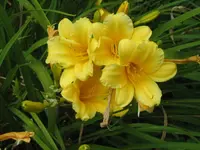
Thin Crowded Fans

Every 3–4 years, lift and divide congested clumps in early spring or early fall, replanting only the healthiest outer fans to maintain strong flowering and prevent the center from dying out.

Mulch To Stabilize

Apply a 5–7 cm layer of shredded bark or compost around but not touching the crowns to keep roots cooler, reduce weed pressure, and maintain more even soil moisture in summer.

Seed Pod Removal

Check stems weekly and remove any forming seed pods so the plant does not waste energy on seed production, which supports repeat blooming and overall vigor when growing Daylily.

Winter Foliage Cleanup

In cold climates, cut back dead or mushy foliage to 5–8 cm above the crown after hard frost and remove debris, which helps reduce overwintering pests and fungal disease pressure.

Everything About Daylily

Common Pests and Diseases

Daylily rust

This disease causes yellow to orange powdery spots on leaves that can merge into larger patches, leading to premature leaf yellowing and reduced flowering.

Solution

Remove and discard heavily infected foliage, avoid overhead watering, and improve spacing for better air movement; in regions where rust is persistent, use a sulfur or myclobutanil-based fungicide labeled for daylilies and rotate products to slow resistance, following label directions precisely.

Spring sickness

Symptoms include distorted, twisted, or stunted fans in spring, with some leaves failing to emerge fully or appearing stuck together and deformed.

Solution

Cut out and discard affected fans as soon as they are noticed, keep the planting area clean of old foliage, and maintain even soil moisture; dividing overcrowded clumps and replanting into well-drained soil helps reduce stress and lowers incidence over time.

Daylily leaf streak

This disease produces yellow streaks along leaf centers that turn brown and necrotic, often starting from the leaf tips and moving downward.

Solution

Remove and dispose of spotted or dead leaves during the growing season and after frost, avoid wetting foliage when watering, and in severe cases apply a labeled foliar fungicide during early leaf emergence to protect new growth, following all safety directions.

Aphids

These insects cluster on scapes, buds, and young leaves, sucking sap and causing curling, distortion, and sticky honeydew that can attract sooty mold.

Solution

Spray infested areas with a strong stream of water to knock aphids off, then use insecticidal soap or a neem oil product labeled for ornamentals, coating both upper and lower leaf surfaces and repeating at 5–7 day intervals as needed.

Daylily gall midge

This pest causes flower buds to become swollen, misshapen, and fail to open, with maggots feeding inside the bud tissue.

Solution

Promptly remove and destroy all distorted or unopened buds before they drop, keep the area clean of plant debris, and avoid moving infested plants or soil; in high-pressure areas, gardeners often select early or mid-season cultivars less affected and use fine mesh over plants in spring to block egg-laying adults.

Interesting Facts

Repeat-blooming genetics

This cultivar was one of the first daylilies specifically bred to rebloom reliably through the growing season, often cycling from late spring to fall in suitable climates, unlike many older daylilies that flower only once.

Compact landscape form

It was selected for its naturally dwarf, clumping habit, typically staying around 30–45 cm tall, which makes it suitable for edging, containers, and high-density mass plantings in public and residential landscapes.

Award-winning introduction

Introduced by plant breeder Walter Jablonski in 1975, it received major recognition from the American Hemerocallis Society, including the Stout Silver Medal, which is the highest award given to a daylily cultivar.

Botan icon

Did you know?

This cultivar became so widely used in commercial landscaping across North America that it is often considered a benchmark plant in nursery trials, used as a standard comparison for bloom performance, durability, and ease of maintenance in daylilies.

FAQs about Daylily

Lack of blooms usually comes from too little light, overcrowded clumps, or nutrient imbalance. Divide congested plants every 3–4 years, avoid high‑nitrogen fertilizer, and ensure strong sun exposure to support reliable flowering.

Grow Healthy Plants with Botan Care

Keep your plants happy and healthy with plant identification, disease detection, and easy care guidance.

Botan plant care app — identify plants on mobile

Explore More Plants