Mounting strategy
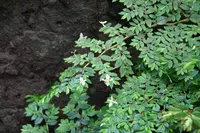
Use a small cork slab or hardwood mount with a thin pad of long-fiber sphagnum around the roots to keep the plant well aerated while still holding enough moisture between waterings.

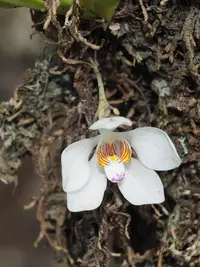
The orange blossom orchid, Sarcochilus falcatus, is a compact epiphytic orchid that often grows on trees or rocks in moist forests of eastern Australia. It forms small clumps with arching, narrow leaves and short, wiry stems.
In season, it produces many small white flowers with a yellow center and a light citrus fragrance, creating a dense spray along each stem. The plant usually stays modest in size, which suits growers with limited space.
This species prefers bright, filtered light, steady moisture, and good air movement, which makes greenhouse or indoor culture manageable. Understanding how to care for Orange blossom orchid mainly involves maintaining even moisture without waterlogging and avoiding extreme temperature swings.

Care Difficulty
Moderate Care

Light Preference
Partial Shade

Water Requirements
Keep Soil Moist

Temperature Preference
Tropical / Frost Sensitive

Hardiness Zone
Unknown

Soil Texture
Rocky, Organic-rich

Soil pH
Acidic (5.5–6.5)

Soil Drainage
Moist but well-drained

Fertilization
Light (every 4–6 weeks)
Scan your plant to receive care tips personalized for your specific plant
Available on iOS and Android
This epiphytic orchid prefers bright, gentle light that mimics dappled forest conditions.
Moist but well-aerated roots are essential for healthy growth.
Stable cool-to-warm conditions suit this species best.
This orchid prefers consistently moist air and reacts quickly to dry conditions.
This epiphytic orchid needs a loose, airy medium rather than dense soil.
This species grows well in containers when drainage and root aeration are prioritized.
This orchid benefits from light, consistent feeding during active growth for reliable flowering.
Pruning needs for Sarcochilus falcatus are minimal and focus on hygiene rather than shaping.
This orchid prefers snug conditions, so repotting is infrequent and done mainly to refresh the medium.
Propagation of Sarcochilus falcatus is usually done by careful division of mature clumps.
Cool-tolerant but not frost-hardy, this orchid needs moderate winter protection, especially in containers.

Plant Health Check
Not sure what's wrong with your plant? Check your plant's health inside the app.
This orchid naturally grows on limestone cliffs and rocky outcrops in eastern Australia, often rooting into narrow crevices where alkaline, mineral-rich seepage supports its growth.
In nature it usually grows as an epiphyte on trees such as brush box and figs in cool, moist gullies, where air movement is high but temperatures stay relatively mild year-round.
The small white flowers release a stronger fragrance in the evening and at night, which is thought to help attract moth pollinators in its native habitat.

This species is one of the few Australian orchids that regularly forms sizable clumps hanging from vertical rock faces, creating conspicuous white flower sheets after late winter and spring rain in its natural limestone gorge habitats.
Lack of flowering often comes from insufficient light, too-warm nights, or skipped cool-season rest. Provide bright but gentle light, a slight temperature drop in fall, and steady, low-dose fertilizer to support bud initiation and development.
Keep your plants happy and healthy with plant identification, disease detection, and easy care guidance.