


Basket setup
Use a slatted wooden or plastic basket with large side gaps and a coarse chunky medium so that the downward-growing flower spikes can emerge freely without being blocked.

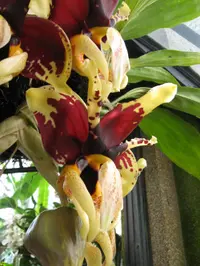
Stanhopea tigrina is a tropical epiphytic orchid, usually grown in hanging baskets so its large, pendant flower spikes can emerge freely. The plant forms clumps of ovoid pseudobulbs, each topped with a single pleated leaf.
It is native to humid forests of Mexico, where it grows on trees in filtered light and moving air. The dramatic, short-lived flowers are heavily scented and patterned with yellow, brown, and maroon markings.
This species can be challenging, mainly due to its need for high humidity, good air circulation, and regular moisture without staying waterlogged. Understanding how to care for Stanhopea tigrina starts with copying its airy, moisture-retentive but fast-draining forest habitat.

Care Difficulty
Hard Care

Light Preference
Partial Shade

Water Requirements
Regular Water

Temperature Preference
Tropical / Frost Sensitive

Hardiness Zone
Unknown

Soil Texture
Peaty, Organic-rich, Rocky

Soil pH
Acidic (5.5–6.5)

Soil Drainage
Moist but well-drained

Fertilization
Moderate (every 2–4 weeks)
Scan your plant to receive care tips personalized for your specific plant
Available on iOS and Android
This orchid prefers bright, filtered light that mimics dappled forest shade.
Watering should follow a moist-but-aerated pattern that respects the plant’s epiphytic roots.
Stable intermediate to warm temperatures support vigorous growth and reliable flowering.
This orchid needs consistently high humidity to grow well.
Stanhopea tigrina grows best in a very open, airy medium rather than traditional potting soil.
This species is well suited to container culture when grown in baskets or shallow, well-ventilated pots.
Nutrient support helps Stanhopea tigrina produce strong pseudobulbs and abundant flowers.
Pruning needs are minimal and focus on hygiene rather than shaping Stanhopea tigrina.
Container and basket care for Stanhopea tigrina centers on timely division and refreshment of the open-growing medium.
Reproduction of Stanhopea tigrina is mainly done by careful division of mature clumps.
Cold-sensitive Stanhopea tigrina needs protection in regions with cool or freezing winters.

Plant Health Check
Not sure what's wrong with your plant? Check your plant's health inside the app.
This orchid pushes its flower spikes downward through the basket or substrate, so the scented flowers hang beneath the plant instead of above it, an adaptation to its natural life on tree branches.
The flowers release a very strong, complex perfume mostly at night, attracting specific male euglossine bees that collect the fragrance compounds on their bodies.
The lip of the flower is waxy and slippery, causing visiting perfume-collecting bees to slide into a narrow channel that guides them past the pollen, ensuring precise pollination.

In Mexico, where it is native, this species is considered one of the largest-flowered orchids in its genus, with dramatic blooms that can approach the size of a human hand and appear in impressive clusters from a single inflorescence.
Lack of flowering usually relates to insufficient light intensity, too little seasonal temperature drop at night, or an overpotting problem. Mature pseudobulbs must be present, and the plant needs a brief drier, cooler rest to set buds.
Keep your plants happy and healthy with plant identification, disease detection, and easy care guidance.

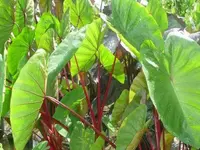
Elephant's Ear
Colocasia esculenta Royal Hawaiian Blue Hawaii
Tillandsia violacea
Tillandsia violacea
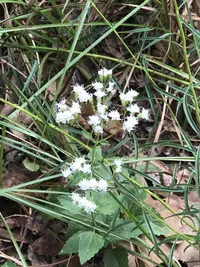
hammock snakeroot
Ageratina jucunda
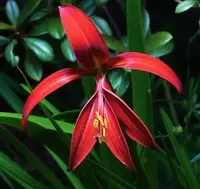
Jacobean lily
Sprekelia formosissima
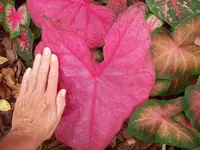
Fancy-leaf Caladium
Caladium 'Fannie Munson'
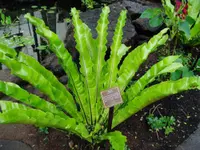 POPULAR
Japanese bird's-nest fern
Asplenium antiquum
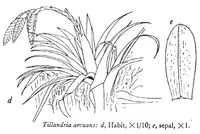
Tillandsia lajensis
Tillandsia lajensis
Bugleweed
Ajuga reptans 'Burgundy Glow'