Gradual light acclimation
When moving a plant from shade to brighter conditions, increase light over 1–2 weeks to avoid bleaching the palm-like leaves, starting with dappled light and slowly extending exposure times.

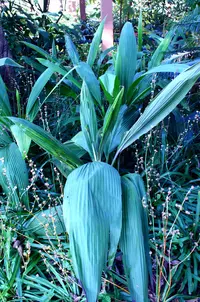
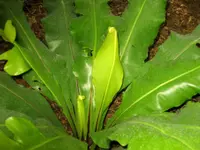
Palm-grass, Curculigo capitulata, is an evergreen, clump-forming perennial grown mainly for its bold, pleated foliage that resembles a small tropical palm. It forms low, fountain-like mounds, making it useful as a shade groundcover or an underplanting around taller shrubs and trees.
This species is native to tropical and subtropical regions of Asia, where it grows in warm, humid forest understories. It is generally considered moderately easy to grow if its basic needs are met, which helps guide how to care for palm-grass.
Palm-grass prefers shaded to semi-shaded locations, consistently moist but not waterlogged soil, and protection from cold or drying winds, especially in cooler climates or exposed sites.

Care Difficulty
Moderate Care

Light Preference
Partial Shade

Water Requirements
Keep Soil Moist

Temperature Preference
Tropical / Frost Sensitive

Hardiness Zone
9–11

Soil Texture
Loamy, Peaty, Organic-rich

Soil pH
Acidic (5.5–6.5), Slightly acidic (6.5–7.0)

Soil Drainage
Moist but well-drained

Fertilization
Light (every 4–6 weeks)
Scan your plant to receive care tips personalized for your specific plant
Available on iOS and Android
Curculigo capitulata prefers bright, filtered light that mimics a forest understory.
This plant prefers evenly moist but not saturated soil.
This species thrives in warm, frost-free conditions.
This species prefers consistently moist air and reacts noticeably to very dry conditions.
Curculigo capitulata grows best in loose, organic-rich soil that holds moisture but never stays waterlogged.
This species is well suited to container growing for porches, patios, or sheltered garden spots.
Curculigo capitulata benefits from modest, consistent feeding during the warm growing months.
Pruning Curculigo capitulata is light and mainly focused on hygiene and maintaining a tidy clump.
Curculigo capitulata forms dense clumps that occasionally benefit from division, repotting, or transplanting.
Curculigo capitulata is most commonly propagated by division rather than by seed.
Curculigo capitulata is frost-tender and needs specific winter care in cooler climates.

Plant Health Check
Not sure what's wrong with your plant? Check your plant's health inside the app.
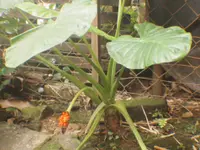
The leaves show a distinctive fan-like venation pattern, where parallel veins spread from the base toward the tip, which helps support the broad, pleated leaf blades often compared to small palm fronds.
In its native range across tropical Asia, this species typically grows as an understory plant on the forest floor, adapted to filtered light and leaf-litter-rich soils rather than open, sunny habitats.
Despite its palm-like appearance, the plant forms from a short, underground rhizome with leaves arising in a basal rosette, so the visible stem remains very compact at or just below soil level.

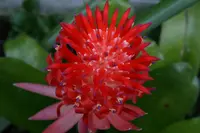
The small, yellow, star-shaped flowers are produced on very short stalks at soil level, often hidden among the leaf bases, and can be followed by orange to red fleshy fruits that attract small animals in its native forests.
This species spreads slowly by short rhizomes, forming clumps rather than running widely. In suitable shade and moisture it can gradually widen, but it is not considered aggressive and is usually easy to keep contained.
Keep your plants happy and healthy with plant identification, disease detection, and easy care guidance.