


Terrarium Microclimate
Grow this plant in a closed or semi-closed terrarium or covered tray to stabilize humidity and reduce edge crisping, but open the lid slightly 1–2 times per week for fresh air exchange to prevent mold.

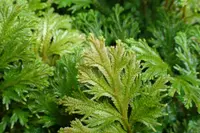
Selaginella martensii, often called Martens spike moss, is a primitive, fern-like clubmoss grown mainly for its dense, feathery foliage. It forms low, mounding mats of finely divided leaves that stay bright green in suitable conditions.
This species is native to humid tropical regions of Central America, where it grows on the forest floor in consistently moist, shaded habitats. It can be somewhat demanding, as it dislikes drying out, strong sun, and very low humidity.
For anyone learning how to care for Selaginella martensii, it helps to treat it like a delicate woodland plant that prefers soft light, evenly moist soil, and stable indoor conditions.

Care Difficulty
Hard Care

Light Preference
Bright Indirect Light

Water Requirements
Keep Soil Moist

Temperature Preference
Tropical / Frost Sensitive

Hardiness Zone
11–12

Soil Texture
Loamy, Peaty, Organic-rich

Soil pH
Strongly acidic (4.5–5.5), Acidic (5.5–6.5)

Soil Drainage
Moist but well-drained

Fertilization
Light (every 4–6 weeks)
Scan your plant to receive care tips personalized for your specific plant
Available on iOS and Android
This species prefers low to moderate light that mimics a shaded forest floor.
This plant needs consistently moist conditions without waterlogging.
This clubmoss prefers stable, mild warmth similar to a sheltered woodland understory.
This species needs constantly high humidity to maintain healthy foliage.
This plant prefers a loose, consistently moist, organic-rich substrate that never becomes waterlogged.
This species adapts well to container culture when moisture and stability are carefully managed.
This moisture-loving spikemoss benefits from light, careful feeding under indoor conditions.
This plant needs only light pruning to maintain a compact, healthy cushion of foliage.
This shallow-rooted plant prefers stable conditions and only infrequent repotting.
Propagation is usually done by division or short stem cuttings taken from healthy mats.
This tropical spikemoss is not frost hardy and must be kept warm in winter.

Plant Health Check
Not sure what's wrong with your plant? Check your plant's health inside the app.
Selaginella martensii belongs to the lycophytes, an ancient lineage of vascular plants that diverged from the line leading to flowering plants hundreds of millions of years ago, so its stems and leaves are built on a very old structural plan.
Its delicate-looking stems creep along the substrate and regularly produce adventitious roots at the nodes, forming dense, mat-like colonies that stabilize the surface and help the plant capture moisture efficiently.
S. martensii produces two distinct types of spores, microspores and megaspores, in separate sporangia on its cone-like strobili, a reproductive strategy known as heterospory that is relatively advanced among spore-bearing plants.

In favorable warm, humid conditions, a single S. martensii colony can gradually expand into a continuous carpet, with genetically identical shoots interlinked by branching stems and roots, functioning almost like a single clonal organism spread across the substrate.
This species usually performs more reliably indoors or in terrariums, where humidity, moisture, and temperature remain stable. Outdoors it only thrives in mild, shaded, constantly moist microclimates, so most hobbyists focus on Selaginella martensii indoor care instead.
Keep your plants happy and healthy with plant identification, disease detection, and easy care guidance.

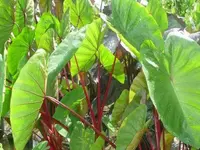
Elephant's Ear
Colocasia esculenta Royal Hawaiian® Blue Hawaii
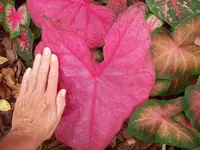
Fancy-leaf Caladium
Caladium 'Fannie Munson'
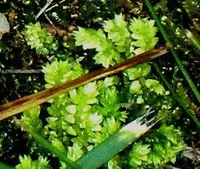
Meadow spikemoss
Selaginella apoda
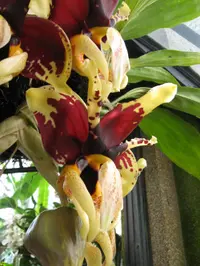
Stanhopea tigrina
Stanhopea tigrina
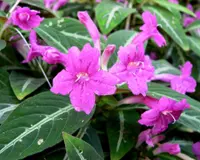
Trailing Velvet Plant
Ruellia makoyana
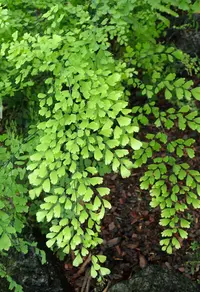
Chilean Maidenhair Fern
Adiantum chilense
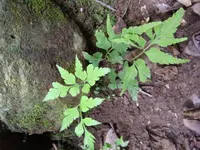
dwarf spleenwort
Asplenium pumilum
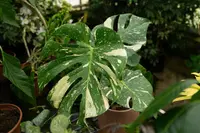
Monstera deliciosa 'Thai Constellation'
Monstera deliciosa 'Thai Constellation'