Frond cleanup
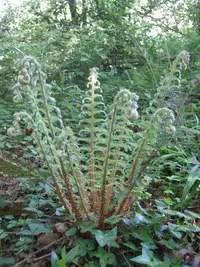
Remove old, winter-burned or yellowing fronds at the base in late winter before new croziers (fiddleheads) emerge, which reduces fungal spore load and keeps the clump open for healthier new growth.

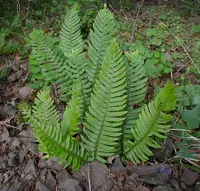
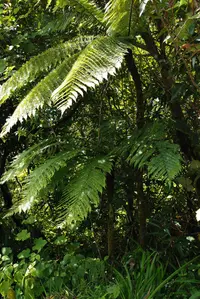
Western swordfern, Polystichum munitum, is a hardy evergreen fern native to the moist forests of the Pacific Northwest in North America. It forms dense clumps of upright, arching fronds that create a bold, textured look.
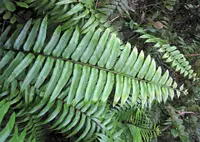
The fronds are deep green, leather-like, and divided into many narrow leaflets, giving the plant a strong architectural shape in shady spaces. It stays attractive year-round in mild climates.
This fern naturally grows on forest floors and banks, favoring cool, shady sites with consistently moist, humus-rich soil. These traits make it relatively easy to care for western swordfern in gardens and shaded outdoor containers.

Care Difficulty
Easy Care

Light Preference
Partial Shade

Water Requirements
Keep Soil Moist

Temperature Preference
Cold Hardy

Hardiness Zone
3–8

Soil Texture
Loamy, Peaty, Organic-rich

Soil pH
Strongly acidic (4.5–5.5), Acidic (5.5–6.5)

Soil Drainage
Moist but well-drained

Fertilization
Minimal (feed rarely)
Scan your plant to receive care tips personalized for your specific plant
Available on iOS and Android
This fern thrives in low to moderate light that mimics a shaded forest floor.
This species prefers consistently moist but not waterlogged soil.
This fern is adapted to cool, mild climates with moderate seasonal variation.
This fern prefers consistently moist, cool air and benefits from moderate to high humidity.
This species prefers moist, humus-rich soil that drains freely yet never dries out completely.
This fern can grow in containers outdoors if moisture and stability are carefully managed.
This native fern grows well in average woodland soil and usually needs only light feeding.
Pruning Polystichum munitum focuses on hygiene and maintaining a tidy clump rather than reshaping the plant.
Western swordfern is usually grown in the ground, so care centers on transplanting rather than frequent repotting.
Polystichum munitum is most reliably propagated by division rather than from spores in home settings.
This fern is cold hardy in much of its range and usually needs minimal winter care in the ground.

Plant Health Check
Not sure what's wrong with your plant? Check your plant's health inside the app.
This fern is one of the dominant understory species in Pacific Northwest conifer forests, where its dense clumps help structure the forest floor and provide shelter for invertebrates, amphibians, and small mammals.
On the underside of fertile fronds, the spore-producing sori are arranged in neat, single rows on either side of the midrib, a pattern that helps distinguish it from many other large woodland ferns.
Individual fronds can remain green and functional for 1–2 years in mild climates, which is unusually long-lived for fern foliage and contributes to its consistently lush appearance year-round.

Indigenous peoples along the Pacific Northwest coast have long used this species for practical purposes, including lining cooking pits, cushioning bedding, and weaving or wrapping foods, reflecting a deep cultural relationship with this common forest fern.
This species is a true fern and does not produce flowers or blooms at any stage. Instead, it reproduces by spores that form in small clusters (sori) on the undersides of mature fronds.
Keep your plants happy and healthy with plant identification, disease detection, and easy care guidance.