


Use wider pots
Choose a shallow, wide pot rather than a deep one to encourage a dense clump of fronds and reduce the risk of water sitting around the roots.

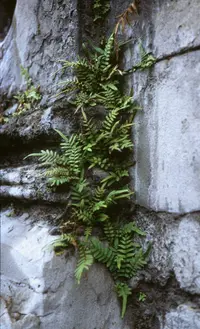
Ladder brake, Pteris vittata, is an evergreen fern commonly grown as a houseplant or in shaded outdoor beds in mild climates. It forms upright, arching fronds with many narrow leaf segments, giving it a fine, feathery look.
In nature it often grows on rocks, walls, and well-drained slopes in tropical and subtropical regions, especially Asia. It tends to be adaptable and resilient, which makes it moderately easy for beginners.
This fern prefers bright, indirect light, steady moisture without waterlogging, and a loose, well-drained substrate. Understanding these basics helps you care for ladder brake with fewer problems over time.

Care Difficulty
Moderate Care

Light Preference
Partial Shade

Water Requirements
Keep Soil Moist

Temperature Preference
Tropical / Frost Sensitive

Hardiness Zone
9–11

Soil Texture
Sandy, Loamy, Organic-rich

Soil pH
Slightly alkaline (7.0–7.5), Alkaline (7.5–8.5)

Soil Drainage
Moist but well-drained

Fertilization
Light (every 4–6 weeks)
Scan your plant to receive care tips personalized for your specific plant
Available on iOS and Android
This fern prefers bright, filtered light that mimics dappled woodland conditions.
This species prefers steadily moist but not waterlogged soil.
This fern prefers warm, frost-free conditions typical of subtropical and warm temperate regions.
This fern prefers consistently moist air and reacts quickly to dry indoor conditions.
This fern prefers a loose, moist, organic-rich substrate that drains freely yet never dries out completely.
This species grows reliably in containers when moisture and stability are managed carefully.
Pteris vittata benefits from light, consistent feeding during active growth to support healthy fronds in pots.
Pruning Pteris vittata focuses on cleanliness and maintaining a neat clump of fronds.
Pteris vittata in containers benefits from periodic repotting to refresh soil and manage vigorous roots.
Multiplying Pteris vittata is most practical by division, with spores used mainly by advanced growers.
Outdoor Pteris vittata needs mild winters, while container plants in colder regions need indoor protection.

Plant Health Check
Not sure what's wrong with your plant? Check your plant's health inside the app.
This fern is one of the first terrestrial plants confirmed to hyperaccumulate arsenic, drawing the element from soil or water and storing it at very high levels in its fronds without apparent damage to itself.
In many warm regions it often appears spontaneously in cracks of concrete, mortar, and limestone walls because it prefers alkaline, calcium-rich substrates where other ferns usually struggle.
The species is naturally distributed across tropical and subtropical regions of Asia, Africa, and Australia, and has been introduced to parts of the Americas, where it can naturalize along disturbed, human-made structures.

This fern has been studied as a tool for phytoremediation, where large numbers of plants are grown on contaminated sites so that their harvested fronds can gradually remove arsenic from polluted soils and irrigation water.
Yellowing fronds usually result from overwatering, waterlogged soil, or low light. Check that the pot drains well, let the top layer of mix dry slightly between waterings, and remove old, naturally aging fronds at the base.
Keep your plants happy and healthy with plant identification, disease detection, and easy care guidance.

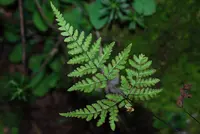
Hemionitis leucopoda
Hemionitis leucopoda
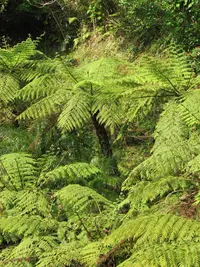
flying spider-monkey tree fern
Alsophila spinulosa
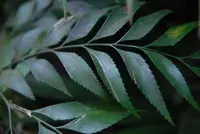
Byfield fern
Bowenia serrulata
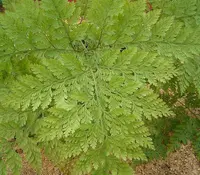
hare's-foot fern
Davallia canariensis
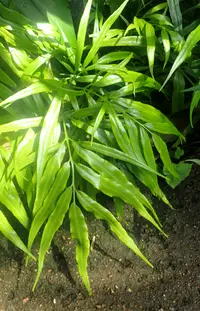
bamboo fern
Coniogramme japonica
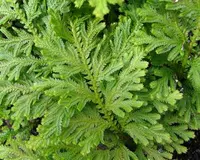
Selaginella moellendorffii
Selaginella moellendorffii
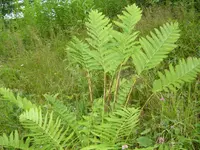
interrupted fern
Osmunda claytoniana
spiny cliffbrake
Hemionitis truncata