


Mount on Substrate
Grow the fern in a shallow, wide pot or mounted on a wood slab with sphagnum so the furry rhizomes can creep over the surface instead of being buried, which greatly reduces rot and encourages dense, even growth.

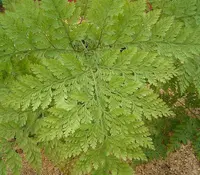
Hare's-foot fern, Davallia canariensis, is an epiphytic fern valued for its soft, finely divided fronds and distinctive furry rhizomes that creep over the soil or pot edge. These fuzzy “feet” store moisture and give the plant a sculptural, textural look.
In nature it grows on rocks and tree trunks in the Canary Islands and nearby regions with mild, humid conditions. This background helps explain its preference for gentle light, steady moisture, and very airy, well-drained growing media.
It is moderately easy to grow indoors when humidity and watering are consistent, but it can decline quickly if allowed to dry out fully or sit in soggy soil. Understanding how to care for hare's-foot fern mainly means balancing moisture, air circulation, and indirect light.

Care Difficulty
Moderate Care

Light Preference
Bright Indirect Light

Water Requirements
Keep Soil Moist

Temperature Preference
Tropical / Frost Sensitive

Hardiness Zone
10–11

Soil Texture
Loamy, Peaty, Organic-rich

Soil pH
Acidic (5.5–6.5)

Soil Drainage
Moist but well-drained

Fertilization
Light (every 4–6 weeks)
Scan your plant to receive care tips personalized for your specific plant
Available on iOS and Android
Davallia canariensis prefers soft, indirect light that mimics dappled woodland shade.
This fern needs steadily moist but not saturated soil to maintain healthy fronds and rhizomes.
This species thrives in mild, frost-free conditions with stable temperatures.
This fern prefers moist air and reacts quickly to very dry conditions.
This fern needs a loose, airy, organic-rich medium that drains quickly yet holds some moisture.
This species is very suitable for containers and hanging baskets.
This fern benefits from light, consistent feeding rather than heavy applications.
Pruning Davallia canariensis focuses on hygiene and maintaining a neat, airy frond canopy.
This species prefers slightly tight quarters, so repot only when clear signs of crowding appear.
Division of rhizomes is the most practical method for home propagation of this fern.
Winter care focuses on frost avoidance and stable indoor conditions rather than heavy intervention.

Plant Health Check
Not sure what's wrong with your plant? Check your plant's health inside the app.
This fern naturally grows as a lithophyte, anchoring its wiry rhizomes into cracks of volcanic and siliceous rock walls in the Canary Islands and Madeira, rather than mainly in soil like many other ferns.
It is characteristic of Macaronesian laurel forests, where it exploits the constant trade-wind mists and high air humidity, making it an important indicator of these relict subtropical woodlands.
The thick, hairy, above-ground rhizomes help reduce water loss and protect the plant when exposed on bare rock faces, allowing it to survive intermittent drying between periods of cloud and rain.

In parts of its native Macaronesian range, this species can form dense, cascading mats on vertical cliff faces and ancient stone walls, visually tracing long-term patterns of moisture seepage and making it useful for identifying consistently damp microhabitats in rugged terrain.
Brown tips or fronds usually result from low humidity, inconsistent watering, or excess fertilizer salts. Dry indoor air, letting the root zone fully dry, or using hard tap water can all cause tissue damage and browning.
Keep your plants happy and healthy with plant identification, disease detection, and easy care guidance.

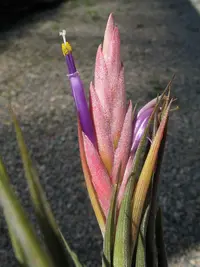
Tillandsia circinnatioides
Tillandsia circinnatioides
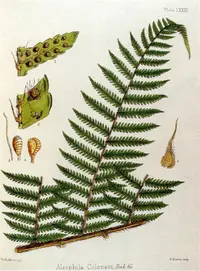
creeping tree fern
Alsophila colensoi
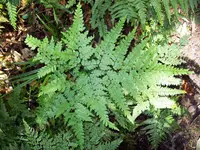
Giant maidenhair fern
Adiantum formosum
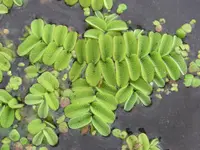
Floating fern
Salvinia natans
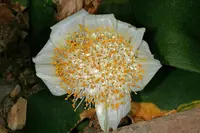
Dwarf Bloodlily
Haemanthus deformis
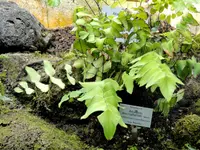
largeleaf maidenhair
Adiantum macrophyllum
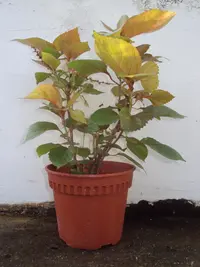
Copperleaf
Acalypha wilkesiana

Musky-smelling Dendrobium
Dendrobium moschatum