African Mask Care (Alocasia 'Polly')

Also known as: Amazonian Elephant Ear, Elephant's Ear

About African Mask

The African mask plant, Alocasia 'Polly', is a compact tropical aroid grown mainly for its striking foliage rather than its flowers. It is a cultivated hybrid, inspired by species from the warm, humid rainforests of Southeast Asia.

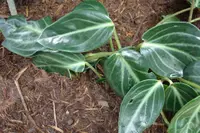
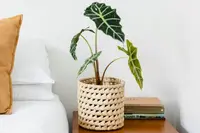
Plants form upright clumps of arrow-shaped leaves with deep green surfaces, bold white veins, and wavy edges, creating a strong architectural look. Growth is moderate and usually stays manageable indoors.

This plant prefers bright, filtered light, steady warmth, evenly moist but not waterlogged soil, and good airflow. Understanding how to care for African Mask is important, as it can be sensitive to cold drafts, low humidity, and inconsistent watering.

Main Plant Requirements

Care Difficulty

Moderate Care

Light Preference

Bright Indirect Light

Water Requirements

Keep Soil Moist

Temperature Preference

Tropical / Frost Sensitive

Hardiness Zone

10–11

Soil Texture

Loamy, Peaty, Organic-rich

Soil pH

Acidic (5.5–6.5), Slightly acidic (6.5–7.0)

Soil Drainage

Moist but well-drained

Fertilization

Moderate (every 2–4 weeks)

Get Personalized Care Plan

Scan your plant to receive care tips personalized for your specific plant

Available on iOS and Android

How to Care for the African Mask

Alocasia 'Polly' prefers bright, indirect light that mimics dappled forest shade.

  • Provide 6–8 hours of bright, filtered light daily, such as near an east- or north-facing window or under sheer curtains.
  • Accepts light partial shade, but growth and leaf size decline if kept in dim corners or beyond 1–2 m from a bright window; rotate the African Mask plant to prevent leaning.
  • Avoid harsh midday or afternoon sun, which scorches leaves; increase light slightly in winter when days are shorter.

Alocasia 'Polly' needs evenly moist but not waterlogged soil.

  • Water when the top 2–4 cm of soil feels dry, using enough water to moisten the root zone while letting excess drain away fully.
  • In spring and summer, expect to water more often as growth and evaporation increase; in fall and winter, extend intervals as the plant slows down.
  • Watch for yellow, soft leaves or a sour smell as signs of overwatering, and crisp edges or drooping, thin leaves as signs the plant is too dry.

This plant thrives in consistently warm conditions with no sudden temperature swings.

  • Aim for 65–80°F (18–27°C) for active growth; short exposures down to about 60°F (16°C) are usually tolerated but slow growth.
  • Protect from cold drafts, open windows in winter, and air-conditioning vents; leaves can suffer damage near 50°F (10°C) and the plant may decline below this.
  • High temperatures above 85°F (29°C) are tolerated if humidity and watering are well managed, but avoid placing the plant near hot radiators or heat sources.

This plant needs consistently high humidity to maintain healthy foliage and growth.

  • Aim for 60–70% humidity; it tolerates brief dips to around 50% but reacts poorly to prolonged dry air from heating or AC vents.
  • Low humidity causes brown, crispy leaf edges, curling, and slowed new growth in African Mask.
  • Increase humidity with a nearby humidifier, grouped plants on a pebble tray with water below the pot base, and by avoiding strong air drafts.

Alocasia 'Polly' prefers a loose, airy, organic-rich mix that drains quickly yet holds steady moisture.

  • Use a base of peat or coco coir with added perlite and fine bark to keep the mix light and well-structured.
  • Aim for slightly acidic to neutral pH around 6.0–7.0, which supports nutrient availability for root health.
  • Ensure the mix drains within seconds after watering but still feels lightly moist, not waterlogged, within 30 minutes.
  • Avoid dense, clay-heavy, or compacted mixes; improve aeration by increasing perlite or bark if the pot stays wet for more than 3–4 days.

This species adapts very well to container growing when the pot supports its moisture needs and upright form.

  • Choose a stable, slightly wider-than-deep pot so the top-heavy foliage does not tip when the soil is moist.
  • Select plastic or glazed ceramic if a slower-drying mix is needed, or unglazed terracotta where faster evaporation is helpful.
  • Use a pot with large drainage holes and place it in an outer cachepot or tray that allows immediate runoff removal.

This tropical aroid benefits from moderate feeding during active growth but is sensitive to overfertilization.

  • Use a balanced liquid fertilizer around 10-10-10 or 20-20-20, diluted to 1/4–1/2 strength for African Mask indoor care.
  • Feed every 3–4 weeks in spring and summer when new leaves are forming.
  • Stop or reduce feeding to once every 6–8 weeks in fall and winter as growth slows.
  • Avoid heavy compost or slow-release pellets that can accumulate salts in small indoor pots.

Alocasia 'Polly' requires only light pruning to maintain health and a neat shape.

  • Prune at any time of year, with main clean-up best done in late winter or early spring before strong new growth.
  • Remove yellowing, dead, or damaged leaves by cutting the entire stalk at the base with clean, sharp scissors or pruners.
  • Thin out weak, crowded leaves to improve air circulation and light penetration around remaining foliage.
  • Disinfect tools before and after use to reduce the risk of transmitting fungal or bacterial problems.

This plant prefers slightly snug pots and reacts poorly to frequent disturbance, so repot only when necessary.

  • Check for roots circling the container, growing out of drainage holes, or very fast drying soil as signs it needs a larger pot.
  • Plan repotting for mid to late spring, every 2–3 years, moving up only 2–5 cm in pot diameter.
  • Gently loosen outer roots, keep the root ball mostly intact, and use a chunky, well-drained mix to limit stress.
  • Water lightly after repotting, keep humidity high, and shade from strong sun for 1–2 weeks while roots recover.

Alocasia 'Polly' is best propagated by division of the rhizome rather than by stem cuttings or seed.

  • Choose late spring or early summer when the plant is actively growing and temperatures are warm.
  • Unpot the plant, gently remove soil, and separate natural offsets or rhizome sections, each with roots and at least one growing point.
  • Plant divisions in small pots with airy, well-drained mix, then water lightly to settle the roots.
  • Provide bright, indirect light, 70–80°F warmth, and high humidity to encourage rapid establishment.

This warmth-loving plant is not frost tolerant and needs careful indoor winter management in most climates.

  • Keep indoor temperatures around 65–75°F and avoid drafts from windows or doors.
  • Move containers indoors before outdoor temperatures drop below 55°F, as chilling can trigger leaf loss.
  • Reduce watering in low light, allowing the top soil layer to dry slightly to prevent root rot.
  • If growth stalls or leaves die back, keep the soil barely moist so the rhizome survives until spring.

Care Tips

Dormancy management

Reduce watering slightly and hold fertilizer in late fall and winter when growth slows, and accept some leaf loss as normal dormancy rather than a sign to repot or drastically change conditions.

Pot size control

Use a pot only 2–4 cm wider than the root ball and avoid frequent up-potting, as overly large containers stay wet longer and increase the risk of corm and root rot.

Corm health checks

During a planned repot, gently remove old soil, inspect the corm for soft or foul-smelling areas, trim only clearly rotten tissue with a sterile blade, and dust cuts with a dry fungicidal powder if available.

Targeted pest patrol

Check the undersides of leaves, leaf axils, and petiole bases weekly for spider mites, mealybugs, and scale, and at the first sign of pests isolate the plant and treat with a measured application of insecticidal soap or horticultural oil.

Stable placement strategy

Choose a stable location away from HVAC vents and frequently opened exterior doors, since minimizing drafts and abrupt microclimate shifts helps maintain consistent turgor and supports long-term success when growing African Mask.

Everything About African Mask

Common Pests and Diseases

Spider mites

This pest causes tiny pale dots on leaves, fine webbing, and overall leaf dullness, especially in warm, dry indoor air.

Solution

Shower the foliage with lukewarm water, then wipe both sides of the leaves. Increase humidity, isolate the plant, and treat with repeated applications of insecticidal soap or neem oil every 5–7 days until no new damage appears.

Mealybugs

These insects appear as white cottony clusters on leaf undersides, at leaf joints, and around the base, leading to yellowing and sticky residue.

Solution

Remove visible insects with a cotton swab dipped in 70% isopropyl alcohol, then wash the plant thoroughly. Repeat checks weekly and apply insecticidal soap or neem oil to all leaf surfaces and stems until the infestation is gone.

Rhizome rot

This disease affects the thick underground stem, causing a soft, foul-smelling rhizome and sudden wilting or collapse of leaves, often after overwatering in compact soil.

Solution

Unpot the plant, cut away all soft, brown, or black tissue with sterile tools, and dust healthy cuts with fungicidal powder or ground cinnamon. Repot in fresh, fast-draining mix, water lightly, and reduce watering frequency while maintaining warm temperatures and good airflow.

Bacterial leaf spot

This disease shows as water-soaked, translucent patches on leaves that may turn dark, sometimes with a yellow halo and irregular shapes along veins.

Solution

Remove affected leaves with sterile scissors and discard them, then avoid splashing water on foliage and improve air circulation around the plant. Allow the top layer of soil to dry slightly between waterings and, if spread continues, use a copper-based bactericide according to label directions.

Leaf burn from fertilizer

Symptoms include brown, crispy tips and edges on leaves following recent feeding, sometimes with white crust on soil from accumulated salts.

Solution

Flush the pot thoroughly with plenty of lukewarm water to leach excess fertilizer salts, then let it drain completely. Trim only the dead, crispy portions of leaves, reduce feeding strength to 1/4–1/2 of the recommended dose, and fertilize less often as part of Alocasia 'Polly' care instructions.

Interesting Facts

Hybrid from Southeast Asia

This cultivar likely traces back to complex hybrids of Alocasia longiloba and related Southeast Asian species, selected for its compact size and strongly contrasted leaf veins.

Fixed juvenile leaf form

Unlike many aroids that change leaf shape as they mature, this plant maintains the same narrow, arrow-shaped leaf form throughout its life cycle as an indoor ornamental.

High transpiration foliage

The thick, glossy leaves with large surface area can transpire considerable moisture in warm, bright conditions, which slightly raises local humidity around the plant compared with many compact houseplants.

Botan icon

Did you know?

Alocasia 'Polly' does not exist as a wild species; it is a human-selected ornamental hybrid that cannot be found growing naturally in any native habitat.

FAQs about African Mask

Brown leaf edges usually result from low humidity, fertilizer buildup, or inconsistent moisture rather than pests or disease. Increase humidity, flush the pot occasionally to remove salts, and keep the root zone evenly but not constantly moist.

Grow Healthy Plants with Botan Care

Keep your plants happy and healthy with plant identification, disease detection, and easy care guidance.

Botan plant care app — identify plants on mobile

Explore More Plants