

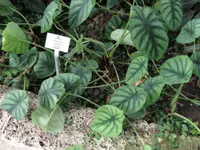
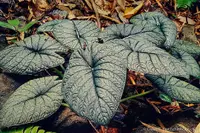
African Mask (Alocasia 'Polly') Light Needs

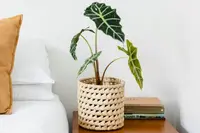
African Mask grows best in bright indirect or filtered light, with only brief gentle morning sun.

Light Preference

Bright Indirect Light

Alocasia 'Polly' Light Requirements

In cultivation, Alocasia 'Polly' reflects the light pattern of tropical forest understory habitats, where broad leaves receive bright light softened by taller canopy growth. Direct sun is usually broken up before it reaches the foliage, especially during the hottest part of the day.

That background explains why strong indoor brightness is helpful, but open midday sun can scorch the leaves. It prefers bright, filtered light.

  • Ideal exposure:

    Ideal exposure: Alocasia 'Polly' needs about 6–8 hours of bright indirect or filtered light daily, including up to 1–2 hours of gentle direct morning sun.

  • Direct sun:

    Brief early sun is tolerated, but full sun or hot afternoon rays can burn the thin leaf surface.

  • Lower light:

    Shade is tolerated for short periods, yet dim rooms often lead to smaller leaves and slower growth.

  • Seasonal brightness:

    Winter light is weaker, so a brighter filtered spot may be needed during the shortest days.

Indoors, place it where daylight is bright but softened before it reaches the leaves.

NConditional
North-facing window:

Use only if the window is large, unobstructed, and the plant sits close to the glass.

EBest
East-facing window:

Place within 1–3 ft of the window so it receives bright morning light and mild early sun.

SConditional
South-facing window:

Keep 3–6 ft back or use a sheer curtain to block direct midday sun.

WConditional
West-facing window:

Set it several feet from the window or behind a sheer curtain to soften hot afternoon rays.

If leaves lean strongly, rotate the pot a quarter turn every 1–2 weeks.

Excess light usually shows on the exposed side first.

Bleached patches:

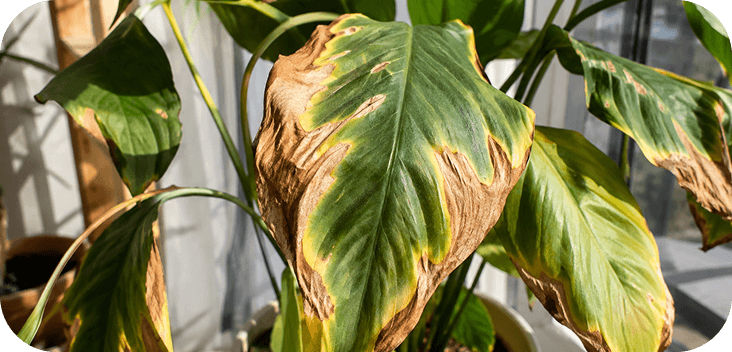
Pale tan or whitish areas can appear where direct sun hits the leaf blade, especially after a sudden move.

Dry sun spots:

Crisp, papery marks may form on upper leaves that face intense glass or afternoon rays.

Fading contrast:

The dark leaf surface can look washed out when Alocasia 'Polly' receives more sun than it can use.

Afternoon droop:

Leaves may curl or sag during bright hot hours, then look better after the light weakens.

Move it out of direct afternoon sun and filter the brightest rays. Keep the new position bright, not shaded, so recovery growth has enough energy.

Low light usually changes new growth before older leaves show clear stress. The change is often slow indoors.

  • Leaning stems:

    Petioles may angle toward the nearest window as the plant tries to capture more light.

  • Longer spacing:

    New leaves may sit farther apart, with stretched growth that looks less compact than earlier growth.

  • Smaller leaves:

    Fresh leaves can emerge smaller and less sturdy during the active growing season.

  • Muted pattern:

    The leaf surface may look duller, with less crisp contrast between the dark blade and pale veins.

Move Alocasia 'Polly' gradually into brighter indirect light. Avoid jumping from a dim corner into direct sun, which can cause sun stress.

If ideal light is limited, choose the brightest suitable area and keep the leaves out of harsh afternoon rays. A spot with strong ambient daylight is better than a dim corner.

Rotate the pot a quarter turn every 1–2 weeks so each side receives similar exposure. Clean dusty leaves gently so available light reaches the surface.

Avoid placing it far across a room from the main daylight source. That setup usually gives shade, not bright indirect light.

Get Personalized Care Plan

Scan your plant to receive care tips personalized for your specific plant

FAQ

The best light for African Mask is bright indirect or filtered light for most of the day, with only brief gentle morning sun if the plant is acclimated.

Everything About African Mask

More Plant Light Guides

Get the Botan App

Discover how to care for your plants with Botan.

Botan app identifying a plant with a phone camera
How Often to Water Fruit Trees

7 min read · 11 Aug 2026

How Often to Water Fruit Trees

Irrigation needs change as roots establish and weather shifts. This guide gives practical starting intervals, explains how soil and tree type change them, and shows how to recognize both excess moisture and drought stress.

Plant Care
How Often to Water Fruit Trees
Best Fertilizer for Grass in Summer: How to Choose the Right One

6 min read · 18 Aug 2026

Best Fertilizer for Grass in Summer: How to Choose the Right One

The right fertilizer in summer can make a lawn thrive. The wrong one can damage it. Here, you’ll learn the best NPK ratios by grass type, when and how to apply your formula, and how to recognize the signs of over- or under-fertilizing.

Plant Care
Best Fertilizer for Grass in Summer: How to Choose the Right One
Plant Pot Sizes: How to Choose the Right Plant Container

7 min read · 20 Aug 2026

Plant Pot Sizes: How to Choose the Right Plant Container

Plant pot sizes can be confusing because the number on the label only tells you part of the required information. A container may look spacious but actually be too shallow. So, how to choose pot size for plant species?

Beginner Guides
Plant Pot Sizes: How to Choose the Right Plant Container