Shield delicate fronds
Place the plant where air movement is gentle and containers are not brushed in passing, since the thin, wiry stems snap easily under drafts or frequent handling.


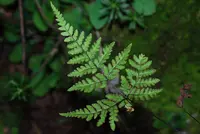
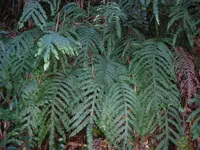
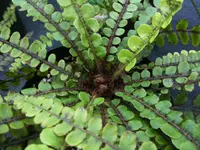
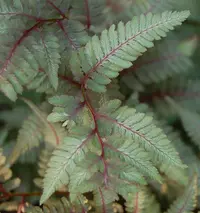
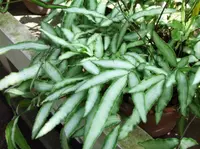
Hemionitis leucopoda is a small tropical fern valued for its delicate, divided fronds and contrasting pale leaf stalks. It typically forms a compact, clumping habit suited to pots and terrariums.
This species is native to humid forest environments in Southeast Asia, where it grows in sheltered, shaded locations with constant moisture. Its fine roots and preference for evenly moist conditions mean it is less tolerant of drying out or inconsistent care.
Because it favors stable humidity, gentle airflow, and soft, indirect light, it is considered moderately challenging for beginners. Understanding how to care for Hemionitis leucopoda helps reduce stress, frond browning, and slow decline indoors.

Care Difficulty
Moderate Care

Light Preference
Partial Shade

Water Requirements
Keep Soil Moist

Temperature Preference
Tropical / Frost Sensitive

Hardiness Zone
11–12

Soil Texture
Loamy, Peaty, Organic-rich

Soil pH
Acidic (5.5–6.5)

Soil Drainage
Moist but well-drained

Fertilization
Light (every 4–6 weeks)
Scan your plant to receive care tips personalized for your specific plant
Available on iOS and Android
This fern prefers soft, filtered light similar to a shaded forest floor.
This species needs steadily moist but not waterlogged soil.
This fern thrives in mild, stable temperatures without extremes.
This fern benefits from consistently high humidity to keep fronds hydrated and healthy.
This fern prefers a loose, moisture-retentive but airy mix that mimics leaf-litter forest soil.
This species is well suited to container growing due to its compact, fibrous root system.
This fern benefits from light, consistent feeding rather than heavy applications.
Pruning needs are minimal and focus on cleanliness and maintaining a neat clump.
This fern prefers gentle handling and occasional repotting rather than frequent root disturbance.
Propagation is possible but slower than many houseplants, so careful conditions are important.
This species is sensitive to cold and benefits from sheltered winter conditions in most climates.

Plant Health Check
Not sure what's wrong with your plant? Check your plant's health inside the app.
This fern is named for its striking pale to whitish lower stipes and rhizome scales, which contrast sharply with the darker green fronds and help distinguish it from closely related Hemionitis species in the wild and in cultivation.
Hemionitis leucopoda has a relatively restricted distribution in tropical Southeast Asia, where it is typically found in humid forests on shaded, mossy substrates rather than across a broad range of habitats.
Although the fronds appear thin and delicate, they are coriaceous (leathery) at maturity, an adaptation that helps reduce water loss in intermittently drying forest microhabitats and supports successful growing Hemionitis leucopoda in controlled environments.
Brown leaf edges usually come from low humidity, underwatering, or fertilizer burn. Check that the potting mix stays evenly moist, avoid letting it dry out completely, increase humidity, and dilute or reduce fertilizer applications.
Keep your plants happy and healthy with plant identification, disease detection, and easy care guidance.