Avoid Frond Handling
Place the pot where fronds are not brushed by people, pets, or curtains, since repeated touching damages the thin leaflets and causes premature browning.

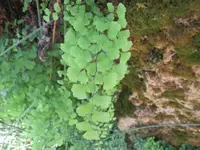
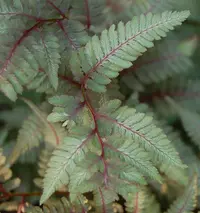
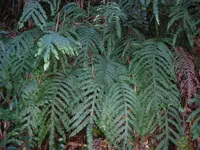
Black maidenhair fern, Adiantum capillus-veneris, is a delicate, finely textured fern valued for its airy fronds and graceful, arching habit. It forms loose clumps of wiry black stems lined with small, fan-shaped leaf segments.
This species is native to moist, shaded rock faces and stream edges in many warm and temperate regions worldwide. It prefers consistently damp, humus-rich soil and gentle, filtered light that mimics woodland or ravine conditions.
Because of its thin fronds and shallow roots, it is less forgiving of drying out or harsh indoor air than many other houseplants. With stable moisture, good humidity, and soft light, it can adapt well to indoor conditions, and learning how to care for Black maidenhair fern greatly improves long-term success.

Care Difficulty
Moderate Care

Light Preference
Partial Shade

Water Requirements
Keep Soil Moist

Temperature Preference
Warm Climate

Hardiness Zone
7–11

Soil Texture
Loamy, Silty, Organic-rich

Soil pH
Acidic (5.5–6.5), Slightly acidic (6.5–7.0)

Soil Drainage
Moist but well-drained

Fertilization
Light (every 4–6 weeks)
Scan your plant to receive care tips personalized for your specific plant
Available on iOS and Android
This fern prefers soft, indirect light that mimics shaded stream banks and moist rock faces.
This species needs steadily moist conditions but suffers if soil stays saturated or dries out completely.
This fern thrives in mild, stable temperatures similar to a sheltered, cool ravine.
This species needs consistently high humidity to maintain healthy, delicate fronds.
This fern prefers a moist, airy, organic-rich substrate that never becomes waterlogged or compacted.
This species is well suited to container growing when moisture and drainage are carefully controlled.
This fern benefits from light, consistent feeding but is sensitive to excess salts.
Adiantum capillus-veneris responds well to light, hygienic pruning to keep fronds fresh.
This fern prefers stable conditions but benefits from occasional repotting to refresh the root zone.
This fern is most reliably propagated by division rather than spores in home conditions.
This fern has limited frost tolerance and needs protection in cold climates.

Plant Health Check
Not sure what's wrong with your plant? Check your plant's health inside the app.
This fern often grows on moist vertical limestone or sandstone rock faces, walls, and cave mouths, anchoring its rhizomes in tiny crevices where constant seepage keeps the roots wet.
In mild climates it can remain evergreen year-round, producing a continuous flush of new fronds while older fronds gradually die back, which makes it one of the few maidenhair ferns that can form long-lived outdoor colonies in suitable microhabitats.
Its fan-shaped pinnae can curl and crisp very quickly in dry air but rehydrate and uncurl when humidity and moisture are restored, an adaptation that helps reduce water loss on exposed rock surfaces and is important to understand for Adiantum capillus-veneris care instructions.

Fossil evidence and molecular studies indicate that the maidenhair ferns (the genus Adiantum) are an ancient fern lineage, and this species is considered one of the most widespread members, naturally occurring from the Mediterranean and parts of Europe across Asia to the Americas, which is unusually broad for a fern with such fine, delicate foliage.
Brown tips or fronds usually result from dry air, missed waterings, or exposure to hot or cold drafts. Hard tap water with high minerals can also scorch tissue. Remove damaged fronds and correct humidity and watering consistency.
Keep your plants happy and healthy with plant identification, disease detection, and easy care guidance.