


Leaf litter mulch
Leave a 3–5 cm layer of shredded leaf litter or fine bark around the crown to mimic forest floor conditions, moderating soil moisture and temperature while slowly improving structure for growing marginal woodfern.

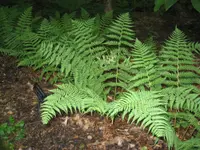
Marginal woodfern, Dryopteris marginalis, is a hardy, evergreen fern native to rocky woodlands and shaded slopes in eastern North America. It forms neat clumps of arching, leathery fronds with sori (spore clusters) lined along the leaf margins, which give the plant its common name.
This fern grows slowly and has a compact, tidy habit that suits naturalistic borders, woodland gardens, and shaded rock gardens. Once established, it tolerates cold, brief dry spells, and urban conditions, which makes it relatively low maintenance.
It prefers consistent moisture, humus-rich, well-drained soil, and shade to dappled light, and these traits shape how to care for marginal woodfern in home gardens.

Care Difficulty
Easy Care

Light Preference
Partial Shade

Water Requirements
Keep Soil Moist

Temperature Preference
Cold Hardy

Hardiness Zone
3–8

Soil Texture
Loamy, Silty, Organic-rich

Soil pH
Acidic (5.5–6.5), Slightly acidic (6.5–7.0)

Soil Drainage
Moist but well-drained

Fertilization
Minimal (feed rarely)
Scan your plant to receive care tips personalized for your specific plant
Available on iOS and Android
This shade-tolerant native fern thrives in cool, filtered woodland light rather than direct sun.
This fern prefers consistently moist, cool soil but does not tolerate standing water.
This hardy woodland fern is adapted to cool to moderate outdoor temperatures in temperate climates.
This fern grows best in moderate to high humidity and benefits from slightly moister air than most heated homes provide.
Dryopteris marginalis prefers consistently moist, humus-rich soil that drains well yet never becomes waterlogged.
This species adapts well to container growing when moisture and stability are carefully managed.
This hardy native fern needs only light feeding to maintain healthy fronds in average garden soil.
Pruning needs for Dryopteris marginalis are minimal and focus on cleanliness rather than shaping.
This fern is usually grown in the ground, with transplanting done only when necessary to adjust spacing or site.
Propagation of this fern is most reliable by division, with spores reserved for patient, more advanced growers.
This species is very cold hardy and usually needs little special winter care in the ground.

Plant Health Check
Not sure what's wrong with your plant? Check your plant's health inside the app.
This fern is naturally restricted to cool, rocky woodlands and is especially characteristic of shaded, north-facing slopes and rock outcrops in eastern North America, often growing directly from crevices in acidic boulders and ledges.
Unlike many temperate ferns that die back each winter, its leathery fronds often remain green under snow and persist into early spring, giving it an ecological advantage for early photosynthesis when light reaches the forest floor before trees fully leaf out.
The name marginalis refers to the placement of its sori, the spore-producing structures, which form a distinct row along the outer margins of the leaflets and are partially covered by kidney-shaped protective flaps.

This species is considered a reliable indicator of relatively undisturbed, long-established forest habitat in parts of its native range, so its presence can help botanists recognize older, more intact woodland ecosystems.
This species is evergreen to semi-evergreen in many climates, holding its fronds through winter if conditions stay cool and moist. In harsher winters, some fronds may die back, but the rootstock remains alive and produces new growth.
Keep your plants happy and healthy with plant identification, disease detection, and easy care guidance.

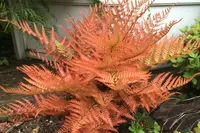
Autumn Fern
Dryopteris erythrosora 'Brilliance'
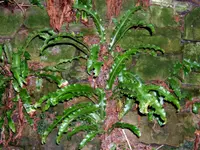
hart's-tongue fern
Asplenium scolopendrium
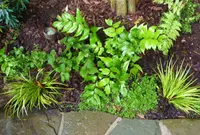
Japanese Holly Fern
Cyrtomium falcatum 'Rochfordianum'
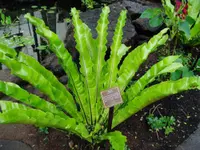 POPULAR
Japanese bird's-nest fern
Asplenium antiquum
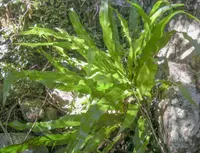
Elkhorn fern
Microsorum punctatum
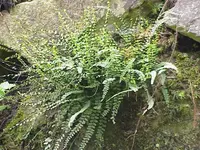
maidenhair spleenwort
Asplenium trichomanes
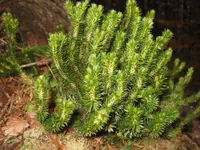
toothed clubmoss
Huperzia serrata
 POPULAR
Bird's nest ferns
Asplenium nidus