


Use cool placement
Position the pot on a tiled floor or in a naturally cooler room during summer, as slightly lower root temperatures help this fern maintain firm, upright fronds and reduce stress in warm homes.

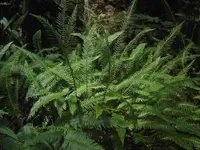
Deer fern, Blechnum spicant, is an evergreen fern native to moist forests of western Europe and the Pacific Northwest. It forms neat clumps of arching, glossy green fronds. Distinctive upright fertile fronds rise from the center, while flatter sterile fronds spread outward, creating a layered, textural look. This compact growth habit suits shady garden beds and naturalistic woodland plantings. Deer fern prefers cool, consistently moist, acidic soil and protection from hot, direct sun. When these conditions are met, it is generally reliable and low-maintenance, making it easier to understand how to care for Deer Fern over time.

Care Difficulty
Moderate Care

Light Preference
Partial Shade

Water Requirements
Keep Soil Moist

Temperature Preference
Cool Climate

Hardiness Zone
5–8

Soil Texture
Loamy, Peaty, Organic-rich

Soil pH
Strongly acidic (4.5–5.5), Acidic (5.5–6.5)

Soil Drainage
Moist but well-drained

Fertilization
Minimal (feed rarely)
Scan your plant to receive care tips personalized for your specific plant
Available on iOS and Android
Blechnum spicant thrives in cool, low to medium light resembling a shaded woodland floor.
This fern prefers consistently moist, never soggy, soil throughout the growing season.
This species is adapted to cool, mild climates with good tolerance of cold once established.
This fern prefers consistently moist air and reacts quickly to very dry conditions indoors.
This species prefers cool, moist, humus-rich soil that stays airy, not compacted.
This fern adapts well to container growing when moisture and drainage are carefully balanced.
This fern is light-feeding and grows best in humus-rich soil with modest supplemental nutrition.
Blechnum spicant needs only light, maintenance pruning to stay tidy and healthy.
This fern prefers stable conditions and only occasional repotting or transplanting.
Division is the most practical method for home propagation of this fern, while spore work is specialist-level.
This fern is generally cold hardy in suitable climates and needs only modest winter attention outdoors.

Plant Health Check
Not sure what's wrong with your plant? Check your plant's health inside the app.
This fern produces two distinct frond types: flat, spreading sterile fronds that form a low rosette and narrower, erect fertile fronds that rise above them, an adaptation that helps separate photosynthesis from spore dispersal.
It naturally favors cool, moist, acidic woodland soils, often over sandstone or other nutrient-poor substrates, and tends to decline or disappear where liming or nutrient enrichment raises soil pH.
Its native distribution, concentrated in the cool, humid, oceanic regions of western Europe and the Pacific Northwest of North America, makes it useful to ecologists as an indicator of mild, consistently moist microclimates.

Fossil and historical records show that this species has persisted in parts of western Europe since shortly after the last glacial period, making present-day populations relics of long-term, stable, moist forest habitats.
Brown tips or fronds usually come from dry air, underwatering, or excess fertilizer salts. Check soil moisture, avoid letting it fully dry, flush the pot occasionally, and increase humidity around the plant with grouping or a pebble tray.
Keep your plants happy and healthy with plant identification, disease detection, and easy care guidance.

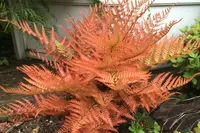
Autumn Fern
Dryopteris erythrosora 'Brilliance'
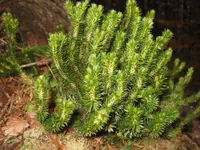
toothed clubmoss
Huperzia serrata
 POPULAR
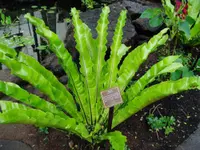
Japanese bird's-nest fern
Asplenium antiquum
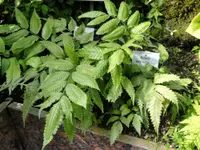
Bolbitis heteroclita
Bolbitis heteroclita
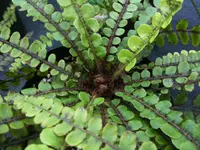
kiwikiwi
Blechnum fluviatile
drooping filmy fern
Hymenophyllum demissum
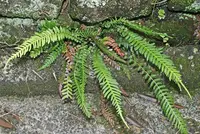
Rasp fern
Blechnum parrisiae
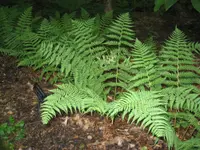
marginal woodfern
Dryopteris marginalis