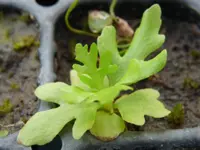
Meadow spikemoss Care (Selaginella apoda)

Meadow spikemoss

About Meadow spikemoss

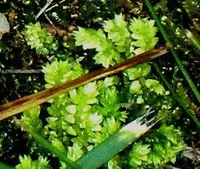
Meadow spikemoss (Selaginella apoda) is a small, creeping clubmoss relative that forms dense, moss-like mats of bright green foliage. It stays low to the ground and spreads by delicate, branching stems.

In nature it grows in moist meadows, stream edges, and damp woodland openings in eastern North America. Its fine texture and carpet-forming habit make it useful for terrariums, groundcover in humid shade, or naturalistic plantings.

This species prefers consistently moist conditions, high humidity, and soft, indirect light, so it is less tolerant of neglect or drying out. Those conditions guide how to care for Meadow spikemoss in home and garden settings.

Main Plant Requirements

Care Difficulty

Moderate Care

Light Preference

Partial Shade

Water Requirements

Keep Soil Moist

Temperature Preference

Cool Climate

Hardiness Zone

5–9

Soil Texture

Loamy, Silty, Organic-rich

Soil pH

Acidic (5.5–6.5), Slightly acidic (6.5–7.0)

Soil Drainage

Moist but well-drained

Fertilization

Minimal (feed rarely)

Get Personalized Care Plan

Scan your plant to receive care tips personalized for your specific plant

Available on iOS and Android

How to Care for the Meadow spikemoss

This moisture-loving groundcover thrives in bright, indirect light and light shade.

  • Provide dappled or filtered light under shrubs or open trees, with 2–4 hours of soft morning sun and full shade by midafternoon.
  • Avoid harsh midday and late-afternoon sun, which can bleach and crisp fronds; foliage turning pale or brown at the tips often indicates excess light.
  • In summer, shift Meadow spikemoss to deeper shade if leaves yellow or curl, while in low-light sites use light-colored surroundings to reflect extra light.

This species needs consistently moist soil and is sensitive to both drying out and waterlogging.

  • Maintain soil that feels evenly damp at 2–3 cm depth; water when the surface just begins to lose its sheen but before it feels dry or powdery.
  • Use loose, humus-rich soil that holds moisture yet drains freely; standing water, sour odor, or blackened stems indicate overwatering and poor aeration.
  • In hot, windy weather, check moisture daily; crisp, curling fronds signal underwatering, while limp, translucent foliage suggests excess moisture and root stress.

This plant prefers cool to mild conditions without abrupt temperature swings.

  • Aim for 60–75°F (16–24°C) for active growth; at these temperatures fronds stay dense and evenly green.
  • Protect from cold below about 40°F (4°C); repeated exposure near freezing can cause tip dieback, especially in exposed, windy sites.
  • In hot spells above 85°F (29°C), increase shade and humidity and keep roots cool with mulch, since prolonged heat and drying winds can stunt growth and brown the foliage.

This species needs consistently high humidity to grow well indoors.

  • Aim for 70–90% humidity, as Meadow spikemoss naturally thrives in very moist, shaded habitats.
  • In dry air, fronds curl, brown at the tips, and growth becomes patchy or stunted.
  • Increase humidity with a closed terrarium, covered tray with wet pebbles, or a room humidifier placed nearby.

This species prefers consistently moist, loose, organic-rich soil that never dries out completely.

  • Use a fine-textured mix of 2 parts peat or coco coir, 1 part leaf mold or compost, and 1 part perlite for structure.
  • Aim for slightly acidic conditions around pH 5.5–6.5, avoiding strongly alkaline mixes that limit nutrient availability.
  • Soil should drain slowly but not stay waterlogged; water should seep through in seconds, not instantly or after many minutes.
  • Avoid heavy clay, compacted potting mixes, or pure sand, as Selaginella apoda has delicate roots needing constant moisture with ample air spaces.

This species adapts well to shallow, wide containers and terrariums.

  • Choose a broad, low pot to accommodate its creeping habit and allow stems to root along the surface.
  • Select glazed ceramic or plastic rather than unglazed clay to slow moisture loss from the shallow root zone.
  • Place a fine mesh or coffee filter over drainage holes so the shallow substrate does not wash out while still draining freely.

This species grows in low-nutrient habitats and needs only light, careful feeding in cultivation.

  • Use a very dilute balanced liquid fertilizer (around 1/4 strength, such as 10-10-10) for Meadow spikemoss in active growth.
  • Apply every 4–6 weeks in spring and summer, always on moist substrate to avoid root burn.
  • Avoid slow-release pellets that can overfeed the shallow roots in small containers.
  • Stop feeding in fall and winter, when growth slows and nutrient demand drops.

Pruning Selaginella apoda focuses on light grooming rather than structural shaping.

  • Trim back browned, dead, or damaged fronds at any time using clean, sharp scissors.
  • In spring or early summer, lightly tip back overlong, leggy shoots to maintain a compact mat.
  • Remove crowded or overlapping stems to improve air flow and reduce moisture-related rot.
  • Avoid cutting into the oldest central growth; concentrate on outer, actively growing tips.

Container-grown plants appreciate infrequent but careful repotting to keep the root zone healthy.

  • Check for roots circling the pot, drying out quickly, or noticeably slowed growth as signs it needs more space.
  • Plan to repot every 2–3 years in spring, shifting only 1 pot size up to limit stress.
  • Lift the plant gently, loosen the outer root layer with fingers, and preserve as much original root mass as possible.
  • Replant into a shallow container with consistently moist, humus-rich mix, then shade and keep evenly damp for 1–2 weeks.

This species is commonly multiplied by division and short stem sections rather than by seed.

  • In spring or early summer, divide dense clumps, ensuring each piece has healthy stems and roots attached.
  • Replant divisions immediately into moist, humus-rich substrate and maintain high humidity to reduce stress.
  • For stem cuttings, lay tip cuttings on the surface and pin them so nodes touch the moist medium.
  • Keep cuttings or divisions in bright, indirect light, 65–75°F, and never allow the substrate to dry out.

This low creeper is moderately cold tolerant but benefits from simple winter precautions in cold regions.

  • In-ground plants in mild climates usually overwinter without extra measures if soil stays evenly moist.
  • Where winters drop well below freezing, apply a 3–5 cm leaf or bark mulch around the root zone after hard frost.
  • Move containers indoors or into a frost-free, bright, cool space before sustained freezes below about 25°F.
  • Indoors, maintain slightly cooler temperatures and steady moisture, avoiding both waterlogging and complete drying.

Care Tips

Shallow Tray Planting

Use a wide, shallow tray or flat instead of a deep pot to encourage dense mat formation and easier moisture control when growing Meadow spikemoss.

Moss Companion Layer

Plant it alongside a thin layer of sheet moss on top of the substrate to help keep the surface evenly moist and protect the fine roots from rapid drying.

Capillary Mat Watering

Set the pot or tray on a capillary mat kept consistently damp so the substrate wicks water slowly from below, reducing the risk of waterlogging delicate stems.

Frequent Division Renewal

Divide and replant small sections every 1–2 years to prevent the center from thinning out and to maintain a vigorous, even carpet of growth.

Edge Containment Strips

Place low plastic or stone edging around beds or terrariums to confine the creeping stems, making it easier to manage spread and maintain a defined planting area.

Common Pests and Diseases

Fungal leaf blight

This disease causes irregular brown to black water-soaked patches on the delicate fronds, which may quickly collapse in overly wet, stagnant conditions. Symptoms include fronds thinning out in dense clumps where air movement is poor.

Solution

Remove and discard affected fronds, then thin crowded growth so air can move through the plant. Keep the foliage moist but not dripping, avoid water sitting on leaves for long periods, and use a fine, targeted spray of a copper or chlorothalonil-based fungicide only if new spots keep appearing despite improved airflow and watering adjustments.

Pythium stem and crown rot

This disease attacks stems at the soil line in constantly saturated mixes, leading to limp, yellowing fronds that detach easily from mushy, brown tissue. Symptoms include a sour or earthy odor from the pot and rapid collapse of entire patches in very wet trays or terrariums.

Solution

Discard severely affected clumps and replant only firm, healthy pieces into a very fine but free-draining medium kept evenly moist rather than waterlogged. Use shallow watering trays instead of deep standing water, sterilize pots and tools before reuse, and, in serious cases, drench the remaining healthy plants with a labeled Pythium-targeting biofungicide based on beneficial microbes.

Rhizoctonia web blight

This disease forms fine brown webbing or strands between fronds near the soil surface in warm, humid, crowded plantings. Symptoms include browned frond tips that spread inward, especially where fallen fronds are left on the surface.

Solution

Gently lift and remove any matted, dead foliage at the base, then space divisions slightly apart and increase air exchange without letting the planting dry out. Top-dress with fresh, clean medium, avoid overhead watering late in the day, and if webbing returns, use a light drench with a systemic fungicide labeled for Rhizoctonia while continuing to remove fallen debris promptly.

Spider mites

These pests thrive on fronds kept warm but not quite humid enough, causing very fine stippling, dulling of the foliage, and eventual bronzing or crisping of the tips. This pest is more common when plants are grown indoors with dry air and limited air movement.

Solution

Rinse fronds gently but thoroughly with lukewarm water, including the undersides, and raise humidity to 60–80% with pebble trays or a humidifier while keeping good air circulation. For persistent infestations, apply insecticidal soap or horticultural oil at low concentration every 5–7 days for several cycles, keeping the plant out of direct sun until foliage dries.

Fungus gnats

These insects lay eggs in constantly moist, organic-rich media, and the larvae feed on fine roots and lower stems, leading to slow growth and occasional collapse of tender new fronds. Adults appear as small black flies hovering near the soil surface or tray water.

Solution

Allow just the top 0.5–1 cm of the medium to approach slight dryness between waterings while keeping the deeper layer evenly moist, and remove any standing water from saucers after hydration. Place yellow sticky traps to catch adults, and use a biological control such as Bacillus thuringiensis israelensis (BTI) or beneficial nematodes in the watering routine to reduce larvae without disturbing the plant’s moisture needs, which is important for Selaginella apoda care.

Interesting Facts

Prostrate fern ally

This species is a small, creeping lycophyte that forms low, mat-like growth and superficially resembles a moss or tiny fern, yet it is evolutionarily distinct from true ferns and mosses.

Native wetland specialist

Meadow spikemoss naturally occurs in seasonally wet meadows, ditches, and low fields in eastern North America, where it tolerates periodic flooding and saturated soils that many vascular plants cannot endure.

Free-sporing reproduction

Instead of seeds, it produces two kinds of spores (microspores and megaspores) in specialized cone-like strobili near the stem tips, a reproductive strategy that reflects its ancient lineage among vascular plants.

Botan icon

Did you know?

Selaginella apoda has been used as a model in evolutionary and developmental studies because its simple vascular system and heterosporous life cycle help researchers understand key steps in the early evolution of land plants.

FAQs about Meadow spikemoss

This species generally performs better outdoors in cool, shady, consistently moist sites with high humidity. Indoors, growth is possible but more demanding, since central heating, low humidity, and inconsistent moisture often cause browning tips and thinning patches.

Grow Healthy Plants with Botan Care

Keep your plants happy and healthy with plant identification, disease detection, and easy care guidance.

Botan plant care app — identify plants on mobile

Explore More Plants