Rock-Crevice Planting
Tuck the root ball into a narrow rock crevice or between stacked stones filled with gritty mix to mimic its natural habitat and keep the rhizomes cooler and better anchored.

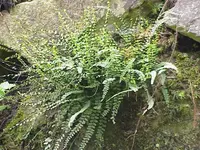
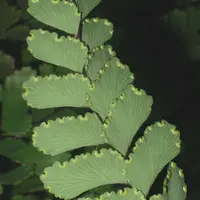
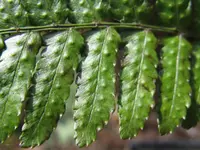
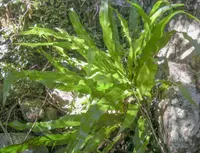
Maidenhair spleenwort, Asplenium trichomanes, is a small evergreen fern often found on shaded rock faces, stone walls, and cliffs. It forms neat, arching fronds with fine, rounded leaf segments along dark, wiry stems.
In nature, it grows in cool, humid crevices with good air movement and consistent moisture. Its compact size and slow, steady growth make it suitable for containers, terrariums, and shaded rock gardens.
The plant prefers stable moisture, good drainage, and soft, indirect light, which shapes how to care for maidenhair spleenwort successfully indoors or in sheltered outdoor spots.

Care Difficulty
Moderate Care

Light Preference
Partial Shade

Water Requirements
Keep Soil Moist

Temperature Preference
Cool Climate

Hardiness Zone
3–8

Soil Texture
Loamy, Rocky, Organic-rich

Soil pH
Acidic (5.5–6.5), Slightly acidic (6.5–7.0)

Soil Drainage
Moist but well-drained

Fertilization
Minimal (feed rarely)
Scan your plant to receive care tips personalized for your specific plant
Available on iOS and Android
This small fern prefers low to moderate light that mimics shaded rock crevices in nature.
This fern prefers consistently moist but not waterlogged conditions around its roots and growing surface.
This species prefers cool to mild temperatures and tolerates chilly conditions better than heat.
This fern prefers consistently moist air and reacts quickly to very dry conditions.
This fern needs a loose, moist, rocky-forest style substrate rather than dense potting soil.
This small fern is well suited to container growing, including on shaded patios or balconies.
This fern grows on low-nutrient substrates, so fertilizing Asplenium trichomanes should stay light and infrequent.
Pruning Asplenium trichomanes is minimal and focuses on hygiene rather than shaping.
This fern prefers stable conditions and shallow, snug rooting spaces, so repotting should be infrequent and gentle.
Asplenium trichomanes is most reliably propagated by careful division of established clumps rather than from spores.
This small fern is fairly cold hardy in the ground but container plants need some winter attention.

Plant Health Check
Not sure what's wrong with your plant? Check your plant's health inside the app.
This fern naturally grows in narrow crevices of calcareous or mildly acidic rocks, anchoring its roots in very thin, nutrient-poor substrates where many other plants cannot survive.
In many temperate regions the fronds remain green year-round, allowing the plant to photosynthesize through mild winters and quickly resume growth in early spring.
Populations from different parts of its broad distribution (North America, Europe, and Asia) show clear genetic and cytological differences, and some have been split into related species or subspecies by botanists.

This species often acts as a pioneer plant on bare rock faces, where its slowly accumulating leaf litter and root activity begin the process of soil formation that later allows mosses and other vascular plants to colonize the same habitat.
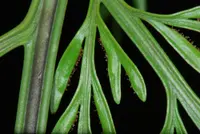
This fern does not produce showy flowers. Instead, it forms spores on the undersides of fronds for reproduction. Lack of blooms is normal and does not indicate poor health or incorrect care.
Keep your plants happy and healthy with plant identification, disease detection, and easy care guidance.