BotaN logo

Rough horsetail Care (Equisetum hyemale)

Also known as: Common Scouring-Rush, Scouring-Rush, Shave-Grass, Dutch Rush, tall scouringrush, Snakegrass, Indian Legos

About Rough horsetail

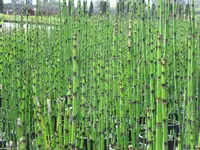
Rough horsetail (Equisetum hyemale) is a primitive, evergreen rush-like plant known for its upright, jointed, hollow stems. It lacks true leaves and flowers, relying on spores for reproduction.

In nature, it commonly grows along streambanks, wetlands, and damp ditches across North America, Europe, and parts of Asia. It spreads by rhizomes, forming dense, architectural clumps that can become invasive in open soil.

Equisetum hyemale prefers consistently moist conditions, from wet garden beds to shallow water, and tolerates a wide range of light from partial shade to full sun. Understanding this natural wetland habit is key to how to care for Rough horsetail in gardens or containers.

Main Plant Requirements

Care Difficulty

Moderate Care

Light Preference

Full Sun

Water Requirements

Aquatic

Temperature Preference

Cold Hardy

Hardiness Zone

4–9

Soil Texture

Loamy, Silty, Organic-rich

Soil pH

Acidic (5.5–6.5), Slightly acidic (6.5–7.0)

Soil Drainage

Waterlogged tolerant

Fertilization

Minimal (feed rarely)

Get Personalized Care Plan

Scan your plant to receive care tips personalized for your specific plant

Available on iOS and Android

How to Care for the Rough horsetail

This species is adapted to bright, open sites but also tolerates partial shade in many climates.

  • Provide 4–8 hours of light daily, with morning sun and light afternoon shade ideal in hot regions to reduce stem scorching.
  • Allow partial shade (2–4 hours of direct sun plus bright shade) in warm zones; stems stay green but may grow taller and looser.
  • Avoid intense, unfiltered afternoon sun in hot, dry areas, which can cause bleaching; in winter, ensure Rough horsetail still receives bright outdoor light.

Equisetum hyemale is a moisture-loving plant that prefers consistently wet conditions.

  • Maintain saturated soil or shallow standing water; do not allow the top layer to dry out, especially in summer, as stems quickly lose vigor.
  • Use heavy, clay or loam soil that holds water well; good drainage is less critical than for most plants, but avoid foul, stagnant conditions indoors or in containers.
  • In hot weather, watch for curling or browning tips as a sign of underwatering; pale, weak growth in low-oxygen, foul-smelling soil can indicate prolonged waterlogging stress.

This hardy rush-like plant tolerates a wide temperature range once established outdoors.

  • Optimal growth occurs around 60–75°F (16–24°C), especially during the main growing season in spring and early summer.
  • Mature clumps typically survive down to about -20°F (-29°C) in the ground, remaining evergreen or semi-evergreen in many cold climates.
  • Heat tolerance extends to about 90–95°F (32–35°C) if soil or water stay cool and constant; protect from extreme, dry heat combined with low moisture.

This species prefers constantly moist air but adapts to typical outdoor humidity ranges.

  • Aim for 50–80% humidity, matching the damp habitats where Rough horsetail naturally grows.
  • In sustained dry air below 40%, stems may brown at the tips and feel less turgid, indicating humidity stress.
  • Increase humidity by grouping plants near water features, using wide saucers of wet pebbles, or siting containers beside consistently damp soil.

This wetland species needs saturated, heavy soil rather than a fast-draining mix.

  • Use a dense mix such as 2 parts loam or heavy garden soil with 1 part compost to hold water around the roots.
  • Keep drainage very slow; containers can even sit in a shallow water tray so the lower mix remains constantly soggy.
  • A pH range of 6.0–7.5 suits Equisetum hyemale, so avoid strongly acidic or highly alkaline substrates.
  • Do not add large amounts of sand, perlite, or bark that increase drainage and drying, as this plant declines in drier, airy soils.

This species is suitable for containers, especially where spreading must be controlled.

  • Choose a deep, heavy pot to counterbalance tall, reed-like stems and reduce tipping in wind.
  • Select non-porous materials such as glazed ceramic or plastic to slow moisture loss from the constantly wet mix.
  • Use a wide container to allow rhizomes to spread horizontally while still restricting invasive growth compared with open ground.

This plant is adapted to nutrient-poor, wet habitats, so fertilizing Rough horsetail should be light and infrequent.

  • Use a balanced, low-strength liquid fertilizer (for example 10-10-10) at 1/4–1/2 label dilution if growth appears pale or weak.
  • Apply only during active growth in spring and early summer, then stop feeding by late summer.
  • In rich soil or natural ponds, skip added fertilizer to avoid overly aggressive spreading and water quality issues.

Pruning Equisetum hyemale focuses on tidying clumps and managing spread rather than shaping.

  • Best time is late winter or early spring before new shoots elongate.
  • Cut dead, broken, or discolored stems at the base with clean hand pruners or sharp scissors.
  • Thin out crowded or leaning stems to maintain a vertical, architectural look and improve air flow.
  • Remove unwanted rhizome shoots at the edges to limit spread into nearby planting areas.

This species is usually grown in the ground or pond margins, with transplanting done mainly to contain spread or refresh overcrowded stands.

  • Plan division or transplanting in early spring when new shoots start, or early fall in mild climates.
  • Look for dense, matted rhizomes, roots circling containers, or declining vigor as signs it needs more space.
  • Lift and split the rhizome mass into sections with several healthy stems and roots, trimming damaged parts.
  • Replant at the same depth, keep soil or pond substrate consistently wet, and shade lightly for 1–2 weeks to reduce stress.

Propagation of this plant is most reliable by division of the rhizomes rather than from spores or seeds.

  • Divide clumps in early spring when shoots are emerging and soil is workable.
  • Dig up a portion of the rhizome network and cut sections that each carry several buds and roots.
  • Replant divisions into saturated soil or shallow water with full sun to light shade conditions.
  • Keep the planting zone constantly moist and avoid strong disturbance until new shoots establish.

This rushlike species is cold hardy in much of the US and usually needs minimal winter care outdoors.

  • Tolerates freezing temperatures when roots are in the ground or submerged, though some stems may brown.
  • In very cold areas, add a 5–8 cm mulch layer around outdoor clumps to buffer root-zone temperature.
  • Move container-grown plants into a sheltered, frost-free but cool spot, keeping the substrate damp, not frozen.

Care Tips

Contain Rhizome Spread

Plant in a sturdy, bottomless container sunk into the ground or in a lined bed to confine the aggressive rhizomes while still allowing constant access to water.

Manage Standing Water

In ponds or water features, place pots on bricks so the crowns sit just at or slightly above the water surface, which reduces rot while still keeping the roots permanently wet.

Control Height Selectively

For tidier stands, cut the tallest, oldest culms at the base rather than shearing the whole clump, which keeps the architectural look while encouraging fresh vertical growth.

Use Physical Barriers

Install a 30–40 cm deep root barrier around planting areas near hardscape or lawn to prevent underground runners from invading nearby beds and structures.

Winter Appearance Management

In colder regions, remove only visibly damaged or flattened culms at the end of winter, leaving healthy green stems in place to photosynthesize and support spring regrowth when growing Rough horsetail.

Common Pests and Diseases

Rust fungus

This disease appears as orange-brown pustules or streaks on stems, sometimes with rough or powdery patches. Symptoms include weakened, discolored stems and slower growth in dense, wet stands.

Solution

Remove and discard the most affected stems to reduce spore load, and thin dense clumps to improve air movement and light penetration. Avoid overhead watering, rinse tools after cutting infected stems, and in severe, recurrent cases consider a labeled copper-based fungicide according to local regulations and product directions.

Stem blight

This disease causes black or dark brown lesions on the otherwise green stems, which can lead to dieback of individual culms. Symptoms include sections of stem that suddenly turn dull, brittle, and collapse, especially in poorly drained, stagnant conditions.

Solution

Cut out and dispose of infected stems at the base, then improve drainage and reduce organic debris around the planting to limit pathogen survival. Avoid heavy nitrogen fertilization, and if blight persists, use a registered ornamental fungicide on new growth, carefully following label instructions for Equisetum hyemale care.

Scale insects

These insects attach to stems as small, rounded or oval bumps that may be brown, gray, or tan and can cause yellowing, weak growth, and sticky residue. This pest tends to cluster on sheltered stem sections and at nodes.

Solution

Wipe stems with a soft cloth or sponge soaked in diluted insecticidal soap to remove visible scales, repeating every 7–10 days as needed. For dense outdoor plantings, a strong water spray can dislodge young crawlers, and horticultural oil treatments in cool, mild weather help smother remaining insects.

Aphids

These insects form soft clusters on tender stem tips and joints, sucking sap and causing distorted new growth and sticky honeydew. Symptoms include curling stem segments, slow growth, and sooty mold developing on the sugary residue.

Solution

Rinse stems thoroughly with a firm stream of water to knock off colonies, and prune the most heavily infested tips. Follow up with insecticidal soap or a light horticultural oil spray on all stem surfaces, repeating at short intervals until no new aphids appear.

Interesting Facts

Living plant fossil

This species is one of the few surviving members of a lineage that dominated Earth’s wetlands in the Paleozoic era, when its relatives grew as tree-sized plants. Its segmented, jointed stems closely resemble horsetail fossils over 300 million years old.

Silica-enriched stems

The dark green stems are heavily impregnated with silica, which makes them tough, abrasive, and resistant to decay. This high silica content led to traditional use as a natural scouring material for polishing metal and wood.

Natural wetland engineer

This horsetail spreads by strong rhizomes and forms dense stands along streams, ponds, and wetlands, where it helps stabilize soil and reduce erosion. The hollow, ridged stems tolerate periodic flooding and saturated soils that many other species cannot handle.

Botan icon

Did you know?

In some regions, this horsetail can accumulate and tolerate relatively high levels of certain heavy metals from wet, disturbed soils, which has led researchers to study it as a potential candidate for phytoremediation, the use of plants to help clean contaminated environments.

FAQs about Rough horsetail

This species spreads quickly through underground rhizomes and can become difficult to control in garden beds or ponds. Use root barriers or containers, and remove unwanted shoots regularly to prevent it from overtaking nearby planting areas.

Grow Healthy Plants with Botan Care

Keep your plants happy and healthy with plant identification, disease detection, and easy care guidance.

Botan plant care app — identify plants on mobile

Explore More Plants