Frond hydration routine
Mist the fronds lightly, then immediately run a small fan on low for 10–15 minutes so water does not sit on leaf surfaces and cause fungal spotting while still boosting local humidity.

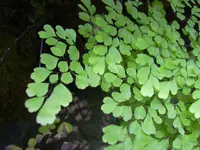
The Delta maidenhair fern, Adiantum raddianum, is a fine-textured tropical fern grown mainly as a houseplant or in shaded outdoor beds in mild climates. It forms soft, arching fronds with small, fan-shaped leaf segments held on thin, dark, wiry stems.
In nature it grows on moist rocks and forest floors in warm regions of South America, where humidity and airflow stay high and roots never dry out completely. Its delicate foliage is sensitive to dry air, sudden temperature changes, and neglect, so it is not the easiest fern for beginners.
Those who learn how to care for Delta maidenhair fern find it does best in stable, warm conditions with bright, indirect light, evenly moist soil, and consistently high humidity.

Care Difficulty
Hard Care

Light Preference
Bright Indirect Light

Water Requirements
Keep Soil Moist

Temperature Preference
Tropical / Frost Sensitive

Hardiness Zone
10–11

Soil Texture
Loamy, Peaty, Organic-rich

Soil pH
Acidic (5.5–6.5), Slightly acidic (6.5–7.0)

Soil Drainage
Moist but well-drained

Fertilization
Light (every 4–6 weeks)
Scan your plant to receive care tips personalized for your specific plant
Available on iOS and Android
This fern requires soft, indirect light that mimics a shaded forest floor.
This species needs consistently moist, never soggy, soil to maintain healthy fronds.
This fern prefers stable, mild temperatures without sudden fluctuations.
This fern needs consistently high humidity to keep its fine fronds from drying out.
This species prefers a consistently moist, airy, organic-rich mix that drains freely but never dries out hard.
This fern is well suited to container growing where moisture and humidity can be controlled closely.
This fern benefits from light, consistent feeding during the active growing season to support delicate frond production.
Adiantum raddianum responds well to light pruning that keeps the plant tidy and encourages fresh fronds.
This fern prefers slightly snug pots, so repot only when clear signs show the root system is crowded.
Division is the most reliable method for increasing Adiantum raddianum plants in home conditions.
This tropical fern is frost sensitive and needs mild, stable conditions through winter.

Plant Health Check
Not sure what's wrong with your plant? Check your plant's health inside the app.
This species is naturally native to the Atlantic forests of Brazil, where it often grows on shaded, moist rock faces and stream banks rather than on typical forest floor soil.
Its fronds are distinctly bipinnate, meaning each frond is divided into many small fan-shaped segments on thin, black stipes, giving it a fine, lace-like texture that is denser and more delicate than many other maidenhair ferns.
The thin lamina (leaf tissue) of this species loses moisture rapidly, so fronds are particularly prone to desiccation damage from dry air or heat, more so than many related ferns grown indoors.
Brown tips or fronds usually result from low humidity, missed waterings, or exposure to hot, dry air or drafts. Mineral buildup from hard tap water can also scorch tissue. Trim damaged fronds and correct the environmental stress.
Keep your plants happy and healthy with plant identification, disease detection, and easy care guidance.