BotaN logo

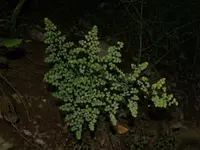
giant chainfern Care (Woodwardia fimbriata)

giant chainfern

About giant chainfern

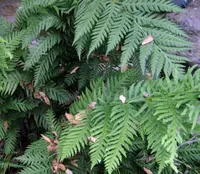
Giant chainfern, Woodwardia fimbriata, is a large evergreen fern valued for its bold, arching fronds and strong architectural form. It forms dense clumps that create a lush, woodland look.

This species is native to moist forests, stream banks, and shaded slopes along the western coast of North America. It thrives in consistently damp, humus-rich soil with shade to filtered light.

Giant chainfern is generally sturdy once established but can struggle in hot, dry, or windy sites. Understanding how to care for giant chainfern mainly involves keeping its roots cool, moist, and protected, similar to its natural habitat.

Main Plant Requirements

Care Difficulty

Moderate Care

Light Preference

Partial Shade

Water Requirements

Keep Soil Moist

Temperature Preference

Cold Hardy

Hardiness Zone

7–10

Soil Texture

Loamy, Silty, Organic-rich

Soil pH

Acidic (5.5–6.5), Slightly acidic (6.5–7.0)

Soil Drainage

Moist but well-drained

Fertilization

Minimal (feed rarely)

Get Personalized Care Plan

Scan your plant to receive care tips personalized for your specific plant

Available on iOS and Android

How to Care for the giant chainfern

Woodwardia fimbriata prefers cool, shaded woodland-style light conditions.

  • Provide bright shade or dappled light, with 1–3 hours of gentle morning sun and no harsh afternoon sun in most climates.
  • Place giant chainfern under high tree canopy, on a north or east side of structures, or where it receives filtered light all day.
  • Watch fronds for bleaching, crisp edges, or reddish scorch in summer as signs of too much sun, and for sparse, elongated fronds as a sign of too little light.

This fern thrives in consistently moist, humus-rich soil that never fully dries out.

  • Aim for soil that feels evenly damp 3–5 cm deep; rewater when the surface just begins to lose its sheen but is not yet dusty or cracked.
  • In spring and summer, increase watering during warm, windy, or drought periods; in cool, rainy seasons, reduce input but avoid allowing Woodwardia fimbriata to dry completely.
  • Watch for limp, browning frond tips and light soil as underwatering signs, and for yellowing fronds, sour smell, or standing water as signs of overwatering or poor drainage.

This species is adapted to cool, mild climates with moderate temperature swings.

  • Active growth is strongest around 55–75°F (13–24°C), with cool nights helping maintain firm, glossy fronds.
  • Mature plants tolerate brief drops near 10–15°F (-12 to -9°C) once established, but new plantings and young crowns benefit from mulch during freezes.
  • During heat above 85°F (29°C), provide extra shade and moisture, since prolonged hot, dry conditions can cause frond scorch, dormancy, or decline over several seasons.

This fern prefers consistently moist air similar to its native woodland habitats.

  • Aim for 50–70% humidity; it tolerates brief dips lower but fronds dry and brown at the tips in prolonged dry air.
  • Crisping frond edges, slow unfurling, and increased spider mite activity indicate humidity stress.
  • Raise humidity by grouping plants, placing pots above (not in) a pebble-and-water tray, or siting near a shaded water feature when caring for giant chainfern.

This species thrives in loose, moisture-retentive but aerated soil that mimics a damp forest floor.

  • Use a rich loamy mix with high organic matter, such as 50–60% composted bark or leaf mold blended with garden loam.
  • Ensure steady moisture with slow drainage, not waterlogging; add fine pine bark or coconut coir to hold water while keeping pores open.
  • Target slightly acidic to neutral pH around 5.5–7.0, avoiding strongly alkaline or salty substrates that damage roots.
  • For containers, combine compost, coir, and 10–20% perlite to improve aeration while preventing the root zone from becoming compacted.

This fern can grow in containers when the pot is deep, stable, and managed for even moisture.

  • Choose a wide, heavy container to counter the arching fronds that can make the plant lean or rock in strong wind.
  • Select a pot material that moderates evaporation, such as thick-walled clay or glazed ceramic, to keep the root zone evenly cool and damp.
  • Fill the container to just below the rim so irrigation water pools briefly on top, soaking the root ball evenly before draining out.

Woodwardia fimbriata prefers rich, moist soil and usually needs only light feeding in gardens with good organic matter.

  • Apply a thin layer of compost or well-rotted leaf mold around the root zone in early spring.
  • If growth is weak, use a balanced slow-release fertilizer (around 10-10-10) at half label rate once in spring.
  • In containers, feed with a balanced liquid fertilizer diluted to 1/4–1/2 strength every 4–6 weeks in the growing season.
  • Stop feeding giant chainfern in late summer and do not fertilize during winter dormancy.

Pruning Woodwardia fimbriata is mainly cosmetic and helps maintain a tidy, healthy clump.

  • Best time is late winter to early spring, before new fronds unfurl, or after fronds brown in fall.
  • Remove fully brown, dead, or damaged fronds at the base using clean, sharp pruning shears.
  • Thin out congested, overlapping fronds to improve air flow and reduce fungal problems.
  • Avoid cutting green, healthy fronds heavily, as this reduces photosynthesis and weakens the plant.

This fern is more often planted in the ground, but division and transplanting help manage size and renew crowded clumps.

  • Plan division or transplanting in early spring or early fall when temperatures are mild and soil is evenly moist.
  • Look for roots circling a container, slow growth, or a tight, woody center as signs the plant needs more space.
  • Divide clumps with a sharp knife or spade, keeping several healthy fronds and firm rhizomes on each section.
  • Replant at the same depth in shaded, consistently moist soil, water thoroughly, and keep evenly damp to reduce root stress.

Woodwardia fimbriata is most commonly propagated by division, with spore sowing reserved for more advanced growers.

  • Divide mature clumps in early spring or early fall, when soil is cool and moisture is reliable.
  • Lift the clump and cut it into sections, each with vigorous rhizomes and several healthy fronds.
  • Replant divisions immediately into shaded, humus-rich, consistently moist soil and water well.
  • For spores, collect mature, brown sori, sow on sterile, moist medium, and keep warm, humid, and out of direct sun.

This fern is generally cold hardy in much of its range and needs only modest winter care in the ground.

  • Tolerates light to moderate frost, but young or marginally hardy plants benefit from added protection below about 20°F.
  • Apply a 5–8 cm layer of mulch around the root zone in late fall, keeping it slightly away from crowns.
  • In very cold regions, grow in containers and move to a cool, frost-free, bright but indirect light space for winter.

Care Tips

Rhizome Crown Position

Set the rhizome so the crown sits just at or slightly above the soil line to prevent rot and allow new fronds to emerge freely.

Mulch With Purpose

Apply a 5–7 cm layer of fine bark or leaf mold around the plant, keeping it a few cm away from the crown, to stabilize soil moisture and keep surface roots cool.

Gradual Colony Expansion

Allow the fern to form a colony, then every 3–4 years divide and replant only the vigorous outer sections to maintain plant health and manage spread.

Frond Management

Remove only fully browned or damaged fronds at the base with clean, sharp pruners to reduce disease risk while preserving photosynthesis and energy reserves.

Seasonal Shade Adjustment

In hot-summer regions, use temporary shade cloth or plant near deciduous shrubs to reduce intense afternoon sun during peak heat, which supports long-term success when growing giant chainfern.

Common Pests and Diseases

Scale insects

This pest feeds on frond tissue and rachises, causing yellowing, stunted growth, and sticky honeydew that can lead to sooty mold on giant chainfern fronds.

Solution

Prune and discard heavily infested fronds, then wipe remaining scale with cotton pads dipped in 70% isopropyl alcohol or spray with a mild insecticidal soap, repeating every 7–10 days until crawlers are gone; increase airflow and avoid excess nitrogen fertilizer to reduce reinfestation.

Aphids

These insects cluster on young fronds and midribs, sucking sap and causing distortion, curling, and general decline, often accompanied by sticky honeydew.

Solution

Rinse colonies off with a firm stream of water, then treat remaining aphids with insecticidal soap or a horticultural oil labeled for ferns, ensuring thorough coverage of both frond surfaces and repeating at 5–7 day intervals until populations collapse.

Fern rust

This disease causes orange to brown pustules on the undersides of fronds, which may yellow and die back prematurely if infection is heavy.

Solution

Remove and dispose of infected fronds promptly, avoid wetting foliage when watering, improve spacing and airflow in shaded plantings, and in severe, recurring cases use a fungicide labeled for rust on ornamentals, applied according to label directions.

Rhizoctonia crown rot

This disease starts at the crown where fronds emerge, leading to browning at the bases, collapse of new growth, and eventual plant decline in poorly drained or overwatered sites.

Solution

Cut out and discard affected crown tissue and any dead fronds, improve drainage and avoid waterlogged soil, keep mulch slightly away from the crown, and if the problem persists, replant divisions in a new site with better drainage and sanitation of tools between plants.

Interesting Facts

Largest native chain fern

This species is the largest chain fern native to western North America, with individual fronds often reaching 1.5–2 m in length in optimal, consistently moist habitats.

Moist canyon specialist

It naturally occupies cool, shaded streambanks and coastal ravines from British Columbia to California, where it helps stabilize moist soils and benefits from constant seepage rather than standing water.

Evergreen in mild climates

In much of its Pacific coast range, this fern keeps its leathery fronds year-round, only replacing them gradually, but in colder inland sites it may die back and re-sprout from its rhizome in spring.

Botan icon

Did you know?

This fern often forms extensive clonal colonies through its creeping rhizomes, so what appears to be a dense patch of many plants along a stream or canyon wall is frequently a single genetic individual spreading over several meters.

FAQs about giant chainfern

Brown leaf tips or edges usually come from low humidity, inconsistent moisture, or excess fertilizer salts. Check soil moisture, flush the pot occasionally, trim damaged fronds, and avoid direct hot air or harsh midday sun exposure.

Grow Healthy Plants with Botan Care

Keep your plants happy and healthy with plant identification, disease detection, and easy care guidance.

Botan plant care app — identify plants on mobile

Explore More Plants