toothed clubmoss Care (Huperzia serrata)

toothed clubmoss

About toothed clubmoss

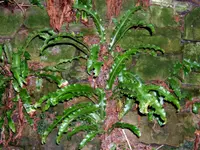
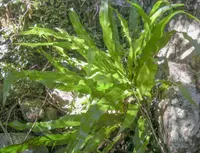
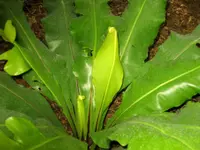
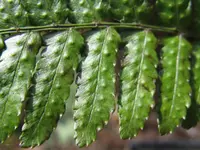
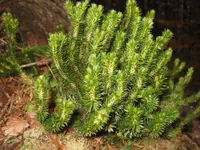
Toothed clubmoss, Huperzia serrata, is an evergreen, fern-like lycophyte often grown as an unusual foliage plant. It forms trailing or slightly upright stems densely lined with small, toothed leaves. In nature, it typically occurs in humid, shaded forests, often on rocks, tree trunks, or mossy ground in parts of Asia. This habitat preference means it favors consistent moisture and good air humidity, but dislikes waterlogging and harsh sun. Its slow growth and need for stable, gentle conditions can make it moderately challenging for beginners. Those learning how to care for toothed clubmoss should focus on providing soft, filtered light and an airy, mossy or bark-rich substrate.

Main Plant Requirements

Care Difficulty

Hard Care

Light Preference

Partial Shade

Water Requirements

Keep Soil Moist

Temperature Preference

Tropical / Frost Sensitive

Hardiness Zone

11–12

Soil Texture

Peaty, Organic-rich, Loamy

Soil pH

Acidic (5.5–6.5)

Soil Drainage

Moist but well-drained

Fertilization

Light (every 4–6 weeks)

Get Personalized Care Plan

Scan your plant to receive care tips personalized for your specific plant

Available on iOS and Android

How to Care for the toothed clubmoss

This species prefers soft, filtered light that mimics a shaded forest canopy.

  • Provide bright, indirect light or dappled shade, such as 2–3 hours of gentle morning sun followed by filtered light for the rest of the day.
  • Avoid harsh midday and afternoon sun; prolonged exposure can scorch foliage and cause bleaching, especially in toothed clubmoss grown in exposed spots.
  • If fronds elongate and turn pale, light is too low; move to a brighter, shaded position, especially during short winter days.

This plant prefers consistently moist conditions without waterlogging.

  • Water when the surface just begins to feel slightly dry, but before the top 1–2 cm fully dries, using small amounts to moisten evenly.
  • Use a loose, well-drained, organic-rich substrate so Huperzia serrata roots stay moist yet aerated and excess water can drain away quickly.
  • Reduce volume slightly in cooler months; yellowing, soft stems suggest overwatering, while crisp tips and wilting indicate underwatering or drought stress.

This species grows best in mild, frost-free conditions with stable temperatures.

  • Keep day temperatures around 65–80°F (18–27°C) for active growth, with only a slight drop at night if possible.
  • Protect from cold; growth slows below 55°F (13°C) and tissue damage can occur near 40°F (4°C), so avoid any frost exposure.
  • In hot periods above 85°F (29°C), increase air movement and humidity while keeping the root zone shaded to prevent heat stress and desiccation.

This species needs consistently high humidity to maintain healthy foliage and growth.

  • Aim for 60–80% humidity, as toothed clubmoss declines quickly in dry indoor air.
  • Crisping tips, dull fronds, and stalled growth indicate humidity stress rather than underwatering.
  • Use a room humidifier, enclosed terrarium, or humidity tray placed under but not touching the pot to raise moisture levels around the plant.

Huperzia serrata prefers a loose, moisture-retentive but airy mix rather than dense potting soil.

  • Use a mix of fine orchid bark, sphagnum moss, and perlite to create an organic-rich, fibrous structure.
  • Ensure very sharp drainage so the mix stays evenly damp but never waterlogged or compacted around the roots.
  • Target a slightly acidic pH around 5.5–6.5, similar to epiphytic fern or orchid substrates.
  • Avoid peat-heavy, clayey, or garden soils that hold standing water or collapse and reduce aeration.

This species is suitable for container growing when moisture and stability are managed carefully.

  • Choose a deep, relatively narrow pot or hanging basket to support its pendulous growth without crowding the base.
  • Select plastic or glazed ceramic containers to slow moisture loss while the airy mix prevents waterlogging.
  • Place the container where it will not be bumped, as the upright and trailing stems are brittle and can snap at the base.

Huperzia serrata is sensitive to excess nutrients and benefits from light, careful feeding only during active growth.

  • Use a balanced, water-soluble fertilizer (around 10-10-10) diluted to 1/4–1/2 strength for toothed clubmoss.
  • Apply every 4–6 weeks in spring and summer when growth is visible.
  • Avoid slow-release pellets that can concentrate salts around fine roots.
  • Stop feeding in autumn and winter to match reduced metabolic activity.

Pruning Huperzia serrata is minimal and focuses on cleanliness and maintaining a tidy shape.

  • Carry out light pruning in spring or early summer when the plant is actively growing.
  • Remove only dead, yellowing, or damaged fronds using sharp, clean scissors.
  • Trim overly long, straggling tips to keep a balanced, arching form.
  • Avoid heavy cutting into older stems, which can slow growth and cause dieback.

Huperzia serrata dislikes frequent disturbance, so repot or transplant only when clearly necessary.

  • Look for roots circling the pot, drying out quickly, or unexplained slow growth as signals to repot.
  • Plan repotting for spring, about every 3–4 years, choosing only a slightly larger container or mount.
  • Handle the root mass gently, keeping attached substrate intact to limit shock.
  • Water with lukewarm, low-mineral water after repotting and keep in shaded, stable conditions for 1–2 weeks.

Propagation of Huperzia serrata is slow and technically demanding, so it is not commonly done at home.

  • Specialized spore propagation requires sterile conditions and is usually performed by experienced growers or labs.
  • Vegetative division is sometimes possible only on large, well-established plants with natural branching.
  • If attempting division, do it in spring, separating a small section with both stems and healthy roots attached.
  • Provide high humidity, bright indirect light, and very stable moisture to reduce stress on new divisions.

Winter care focuses on keeping Huperzia serrata above freezing and in stable, humid conditions.

  • Treat as frost-sensitive and maintain indoor temperatures around 60–75°F in winter.
  • Move container plants indoors before night temperatures drop below 45°F.
  • Keep away from cold drafts, heaters, and very dry air; use a pebble tray or humidifier if humidity falls below 40–50%.
  • Water sparingly but do not let the root zone dry out completely during the cooler months.

Care Tips

Use Loose Mounts

Mount the plant on a slab of bark or in a slatted basket with long-fiber sphagnum loosely packed around the roots to mimic its epiphytic habit and keep air moving around the root zone.

Rotate Hanging Pots

If grown hanging, rotate the pot 90° every 2–3 weeks so the trailing stems receive even light exposure and develop a balanced, symmetrical form instead of leaning to one side.

Segment Propagation

For propagation, cut healthy, mid-aged stems into 5–8 cm segments, lay them horizontally on moist sphagnum, and keep in high humidity until new shoots form along the stem nodes.

Gentle Handling Only

Support stems with both hands when moving or repotting, as the brittle joints snap easily, and avoid combing or detangling the foliage to prevent mechanical damage.

Regular Pest Inspection

Inspect stem joints and inner foliage every 2–3 weeks for mealybugs or scale, and if found, isolate the plant and treat early with a cotton swab dipped in isopropyl alcohol to keep caring for toothed clubmoss manageable indoors.

Common Pests and Diseases

Scale insects

This pest feeds on sap along the stems and delicate leaves, often appearing as small brown or tan bumps. Symptoms include sticky honeydew, black sooty mold, and gradual yellowing or decline of shoots.

Solution

Remove heavily infested fronds and gently wipe remaining stems with a cotton pad dipped in 1:10 diluted rubbing alcohol or insecticidal soap, taking care not to break the brittle foliage. Improve air movement, avoid overfertilizing, and repeat spot treatments weekly until no new scale is seen.

Mealybugs

These insects hide in stem joints and among the overlapping leaf bases, leaving white cottony masses and sticky honeydew. Symptoms include distorted new growth and weakening of hanging chains or tufts.

Solution

Isolate the plant, then dab visible mealybugs with a cotton swab dipped in rubbing alcohol and rinse the foliage with lukewarm water to dislodge hidden insects. For persistent infestations, use a mild insecticidal soap or neem oil spray directed mainly at stems and leaf bases, repeating every 7–10 days until controlled.

Spider mites

This pest is favored by warm, dry indoor air and can be hard to see on the fine, overlapping foliage. Symptoms include dull, dusty-looking leaves, fine webbing in inner stems, and gradual bronzing or shedding of leaf tips.

Solution

Increase humidity to 60–70%, regularly mist-rinse the plant, and gently shower the foliage to wash mites off, protecting the potting mix from saturation. In more serious cases, apply a gentle miticidal or insecticidal soap spray to all plant surfaces every 5–7 days for several cycles, and improve air circulation while avoiding strong drafts.

Botrytis blight

This disease appears in cool, humid, and poorly ventilated conditions, especially when foliage stays wet for long periods. Symptoms include soft, water-soaked patches on stems or leaves that turn brown and may develop gray fuzzy mold.

Solution

Promptly remove and discard affected segments, using clean tools and avoiding contact with healthy tissue. Improve air movement, water early in the day at the root zone rather than over the foliage, reduce crowding around the plant, and keep humidity high but not stagnant; a fungicide labeled for botrytis on ornamentals can be used if cultural changes are not enough.

Leaf tip dieback

This physiological disorder is common when humidity is low, fertilizer is too strong, or water quality is poor. Symptoms include browning and drying of leaf tips along the pendent stems, often progressing inward if stress continues.

Solution

Reduce fertilizer strength to 1/4–1/2 of label rate during active growth, switch to low-mineral or filtered water, and maintain stable humidity around 60–70%. Trim only the dead tips with clean scissors, avoid sudden temperature or light changes, and follow consistent Huperzia serrata care to prevent recurrence.

Interesting Facts

Clubmoss but not moss

This species is a vascular plant related to ferns and lycophytes, not a true moss, and it reproduces through spores rather than seeds or flowers.

Natural tree percher

In its native East Asian range it often grows as an epiphyte on tree trunks and branches in humid forests, anchoring to bark while absorbing moisture and nutrients from rain and debris.

Source of huperzine A

The plant contains huperzine A, an alkaloid that inhibits the enzyme acetylcholinesterase, and extracts of standardized huperzine A have been studied in controlled research for effects on memory-related conditions.

Botan icon

Did you know?

Populations of Huperzia serrata have declined in parts of their native range due to overharvesting and habitat loss, leading to conservation concern and increased interest in cultivation and synthetic production of huperzine A as alternatives to wild collection.

FAQs about toothed clubmoss

Growth is slow to moderate. Expect only a few centimeters of extension each year, especially indoors. Stable moisture, cool to mild temperatures, and good humidity are key factors for growing toothed clubmoss at a reasonable rate.

Grow Healthy Plants with Botan Care

Keep your plants happy and healthy with plant identification, disease detection, and easy care guidance.


Botan plant care app — identify plants on mobile

Explore More Plants