Secure Mounting
Use stainless-steel screws with plastic-coated wire or soft plant ties to firmly attach the basal shield to a wooden board, avoiding pressure points on the fronds that can cause bruising or rot.

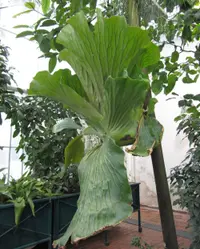
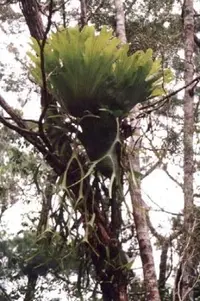
The Angola staghorn fern, Platycerium elephantotis, is an epiphytic fern that naturally grows attached to trees instead of rooting in the ground. It forms dramatic, rounded fronds that resemble elephant ears along with flat shield fronds that hug the mounting surface.
This species comes from warm, humid regions of Africa, so it prefers stable warmth, good air movement, and moisture without staying waterlogged. Its slow growth and need for mounting rather than potting make it a bit more advanced, but patient plant owners can learn how to care for Angola staghorn fern successfully.
Platycerium elephantotis adapts well indoors when given bright, indirect light and a free-draining, organic mounting medium or loose mix that allows air around the roots and fronds.

Care Difficulty
Moderate Care

Light Preference
Bright Indirect Light

Water Requirements
Moderate Water

Temperature Preference
Tropical / Frost Sensitive

Hardiness Zone
10–11

Soil Texture
Peaty, Organic-rich

Soil pH
Acidic (5.5–6.5)

Soil Drainage
Moist but well-drained

Fertilization
Light (every 4–6 weeks)
Scan your plant to receive care tips personalized for your specific plant
Available on iOS and Android
This fern thrives in bright, indirect light that mimics filtered forest canopy conditions.
This epiphytic fern prefers thorough but infrequent watering with time to dry slightly between soakings.
This tropical fern prefers consistently warm, frost-free conditions throughout the year.
This fern prefers moderately high humidity and reacts quickly to very dry air.
Platycerium elephantotis anchors best in a loose, airy, organic medium rather than dense garden soil.
This species adapts well to containers when mounted-style or shallow pot setups mimic its epiphytic habit.
Platycerium elephantotis benefits from light, consistent feeding during its active growing season.
Platycerium elephantotis needs only minimal pruning focused on health and cleanliness rather than shaping.
Platycerium elephantotis is usually mounted rather than potted, so transplanting focuses on refreshing its mount and medium.
Platycerium elephantotis is typically propagated by division of offshoots, as spore propagation is slow and technical for most home growers.
This tropical fern is not frost hardy and needs careful winter management in most temperate climates.

Plant Health Check
Not sure what's wrong with your plant? Check your plant's health inside the app.
This species develops unusually broad, rounded fertile fronds that resemble an elephant ear rather than the deeply forked antler-like fronds seen in most other staghorn ferns.
Its basal fronds form very large, overlapping shield-like plates that can cover substantial areas of a host surface, helping trap leaf litter and moisture that slowly feed the plant.
In addition to growing as an epiphyte on trees, this species is also known to grow terrestrially on rocks or on the ground in parts of its native range in tropical Africa.

Among commonly cultivated staghorn ferns, this species is considered one of the most heat-tolerant, remaining relatively stable in warm, humid lowland conditions where several other Platycerium species struggle.
Growth is moderate. In good conditions, new fronds appear each growing season and size increases noticeably over several years, not months. Mounted plants often take 3–5 years to develop a substantial, shielded clump.
Keep your plants happy and healthy with plant identification, disease detection, and easy care guidance.