BotaN logo

field horsetail Care (Equisetum arvense)

Also known as: Common Horsetail, scouring rush, mares tail
field horsetail

About field horsetail

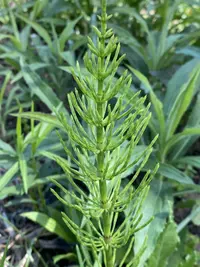
Field horsetail, Equisetum arvense, is an ancient, spore-producing plant related to ferns rather than flowering plants. It has jointed, hollow stems with narrow, brush-like side branches.

It typically forms dense patches in moist fields, ditches, stream banks, and other cool, temperate habitats across North America, Europe, and Asia.

This species spreads aggressively by deep rhizomes, which makes it persistent and sometimes invasive in gardens, but also very tough once established. Understanding how to care for field horsetail starts with recognizing its preference for consistently moist soils, full sun to partial shade, and low-nutrient, often sandy or gravelly ground.

Its strong spreading habit and tolerance of poor conditions make it easy to keep alive but harder to confine to a small space.

Main Plant Requirements

Care Difficulty

Moderate Care

Light Preference

Partial Sun

Water Requirements

Aquatic

Temperature Preference

Cold Hardy

Hardiness Zone

3–9

Soil Texture

Loamy, Silty, Organic-rich

Soil pH

Acidic (5.5–6.5), Slightly acidic (6.5–7.0)

Soil Drainage

Waterlogged tolerant

Fertilization

Minimal (feed rarely)

Get Personalized Care Plan

Scan your plant to receive care tips personalized for your specific plant

Available on iOS and Android

How to Care for the field horsetail

This species prefers consistent moisture with moderate light exposure along open streams, ditches, and wet meadows.

  • Provide 3–6 hours of direct morning sun with light afternoon shade; in cool, cloudy regions it tolerates full sun if soil stays wet.
  • In warmer areas, give field horsetail filtered light or partial shade to prevent scorched stems and excessive drying of wet soils.
  • Watch stems: pale, weak, elongated growth indicates too much shade, while brown, crispy tips suggest excess intense sun, especially in summer.

This rhizomatous plant is adapted to saturated, even standing, water in many habitats.

  • Maintain constantly wet to saturated soil; in natural ground, do not allow the top layer to dry out between rainfall or irrigation events.
  • In managed sites, aim for soil that feels very moist or mucky at 0–5 cm depth; slow drainage or shallow standing water is acceptable for Equisetum arvense.
  • Underwatering shows as sparse, stiff, brownish stems, while chronic foul odor and slimy, rotting roots indicate stagnant water with severe oxygen deprivation.

This temperate species tolerates a wide temperature range but grows most actively in mild conditions.

  • Optimal growth occurs around 60–75°F (16–24°C), with strong shoot production in spring and early summer as soils warm.
  • Mature plants survive winter cold down to about -20°F (-29°C) in frozen ground, resprouting from rhizomes once temperatures rise above freezing.
  • Heat tolerance is moderate; above 85°F (29°C), growth slows, so consistent moisture and partial shade reduce stress during hot, dry periods.

This species prefers consistently moist air but usually tolerates typical outdoor humidity levels.

  • Aim for 50–80% humidity in sheltered or container settings, matching its natural wetland habitats.
  • In very dry air, tips may brown and stems can feel brittle rather than pliable.
  • Increase humidity by siting field horsetail near ponds, water features, or damp mulched areas that slowly release moisture.

This rhizomatous species thrives in consistently wet, nutrient-rich substrates that do not dry out.

  • Use a heavy, organic-rich mix such as 2 parts loam, 1 part compost, and 1 part coarse sand to mimic marshy soil.
  • Allow slow drainage; the substrate should stay saturated or at least constantly damp, never fully drying between waterings.
  • Target slightly acidic to neutral pH around 5.5–7.0, which supports nutrient availability and healthy shoot growth in Equisetum arvense.
  • Avoid very light, fast-draining sandy mixes or raised beds that heat and dry quickly, as these reduce moisture retention and weaken the plant.

This species can be grown in containers, which also helps limit its spreading rhizomes.

  • Select a deep, sturdy pot to contain vigorous underground rhizomes and prevent the plant from becoming root-bound horizontally.
  • Choose a heavier material such as ceramic or thick plastic so the container remains stable as tall, jointed stems develop.
  • Provide a saucer or outer cachepot that allows a shallow water reservoir so the substrate stays consistently saturated without flooding the crown.

This species is adapted to nutrient-poor soils, so field horsetail usually needs little or no fertilizer.

Pruning Equisetum arvense focuses on containment and tidiness rather than plant health.

  • Cut out dead, damaged, or broken stems at ground level in late fall or early spring using sharp hand pruners.
  • Shear or mow dense patches to 2–5 cm to renew growth and maintain an even height in landscape settings.
  • Remove advancing stems at the edges of beds or paths to limit spread and keep a defined clump outline.
  • Disinfect tools before and after use when working in shared beds to reduce the risk of spreading pathogens.

Transplanting is mainly used to move or confine Equisetum arvense, which spreads strongly by rhizomes.

  • Transplant in early spring or early fall when temperatures are mild and soil is moist but not waterlogged.
  • Lift sections where rhizomes crowd, invade unwanted areas, or show slow, weak shoot growth in the center.
  • Divide dense clumps, keeping firm, white rhizomes with attached shoots, and replant at the same depth.
  • Water thoroughly after replanting, then keep soil evenly moist and shaded for 1–2 weeks to limit transplant shock.

Equisetum arvense is most often propagated by division of its underground rhizomes rather than by spores.

  • Divide established clumps in early spring just as new sterile shoots emerge.
  • Dig up a portion of the patch and separate firm rhizome pieces with several buds or attached stems.
  • Replant divisions into consistently moist, sandy or loamy soil, burying rhizomes just below the surface.
  • Water well after planting and keep the area evenly moist until new top growth shows strong expansion.

This hardy perennial tolerates freezing conditions and usually needs minimal winter care outdoors.

  • In USDA zones roughly 3–9, rhizomes overwinter in soil while above-ground stems may die back.
  • In cold regions, a 3–5 cm layer of mulch over the root zone helps moderate freeze–thaw cycles.
  • Container plants can be sunk into the ground or moved to a cold, frost-free garage to protect roots from extreme freezing.

Care Tips

Contain Rhizome Spread

Install a 30–40 cm deep root barrier or use a large bottomless container sunk into the ground to confine the rhizomes and prevent this plant from aggressively invading nearby beds or lawn.

Sectional Harvest Management

When harvesting for crafts or herbal use, cut only the top 1/3 of fertile, healthy stems from different clumps so the plant keeps enough foliage to recharge its rhizomes and remain vigorous.

Moisture Gradient Planting

Create a gentle slope or shallow swale so some parts stay wetter than others, which lets the plant choose its preferred moisture niche and reduces stress during short dry spells when growing field horsetail.

Targeted Weed Suppression

Use the dense, established patches as a living barrier along pond edges or difficult wet corners to outcompete problem weeds, but regularly edge the patch to keep it within its designated zone.

Seasonal Stem Clean‑Up

In late winter, cut back old, browned stems at ground level and remove debris to lower fungal spore load and encourage a clean flush of new sterile shoots in spring.

Common Pests and Diseases

Rust fungus

This disease causes orange to brown powdery pustules on stems and fertile shoots, sometimes leading to weakened, thinning stands. Symptoms include discolored streaks and a dusty spore layer that rubs off on fingers or clothing.

Solution

Remove and destroy heavily infected stems to reduce spore load, and avoid overhead irrigation to keep foliage dry. If rust recurs and causes serious damage, apply a sulfur-based fungicide labeled for ornamental ferns and related plants, following label directions and ensuring good air movement around the colony.

Stem blight

This disease leads to dark, water-soaked or blackened lesions on stems that later turn dry and brittle. Symptoms include sudden collapse or dieback of individual shoots within dense patches.

Solution

Cut out and discard affected stems at ground level and thin overly crowded clumps to improve airflow and faster drying after rain. In persistently wet sites, adjust irrigation, improve drainage if possible, and consider a preventative fungicide labeled for foliar blights if losses are significant.

Aphids

These insects cluster on tender shoots and branch joints, sucking sap and causing distortion, yellowing, or sticky honeydew deposits on stems. This pest can attract sooty mold growth on the honeydew, giving parts of the plant a dark, dirty appearance.

Solution

Wash colonies off with a strong but controlled stream of water, repeating every few days as needed. For persistent infestations, use insecticidal soap or a light horticultural oil, coating stems thoroughly while avoiding applications during high heat above 85°F.

Spider mites

These pests feed on plant juices and cause fine stippling, dulling, or bronzing of stems, especially during hot, dry weather. Symptoms include very fine webbing between branches or at stem joints and general loss of vigor in affected patches.

Solution

Increase humidity and hose down stems regularly, focusing on the undersides and joint areas to dislodge mites. For heavier infestations, apply insecticidal soap or a miticidal horticultural oil, repeating at 7–10 day intervals and monitoring closely as part of overall Equisetum arvense care instructions.

Interesting Facts

Living fossil lineage

Field horsetail belongs to one of the oldest surviving vascular plant lineages, with close relatives known from fossils dating back over 300 million years to the late Paleozoic period.

Silica-rich stems

Its stems accumulate high levels of silica in the outer tissues, giving them a rough, abrasive texture that historically led to use as a natural scouring material for polishing metal and wood.

Dual stem types

This species produces two distinct stem forms each year: fertile, unbranched brownish shoots in early spring that bear cone-like spore structures, followed later by sterile, green, highly branched shoots that conduct most of the photosynthesis.

Botan icon

Did you know?

Field horsetail reproduces both by microscopic spores and by extensive underground rhizomes that can reach several meters in length, which allows a single clone to persist and spread in the same site for many decades.

FAQs about field horsetail

This species spreads very aggressively through deep, creeping rhizomes and spores. It can quickly colonize beds, lawns, and damp areas. Use root barriers, containers, or regular mechanical removal to keep growth within a controlled area when growing field horsetail.

Grow Healthy Plants with Botan Care

Keep your plants happy and healthy with plant identification, disease detection, and easy care guidance.

Botan plant care app — identify plants on mobile

Explore More Plants