peltate tonguefern Care (Elaphoglossum peltatum)

peltate tonguefern

About peltate tonguefern

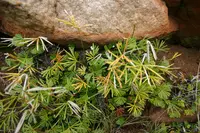
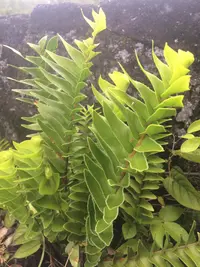
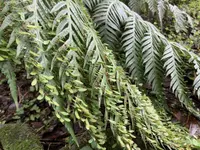
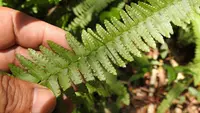
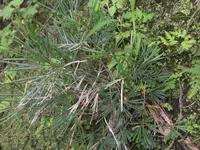
Elaphoglossum peltatum is an epiphytic fern, meaning it often grows on trees rather than in soil. It forms graceful rosettes of simple, strap-like fronds that create a soft, arching clump.

This species is native to humid tropical forests of Central and South America, where it thrives in shaded, moist, mossy habitats. Its need for steady moisture, good air circulation, and high humidity makes it moderately challenging for beginners.

Understanding how to care for Elaphoglossum peltatum starts with providing stable indoor conditions that mimic a cool, shaded forest environment with gentle light and evenly moist, airy substrate.

Main Plant Requirements

Care Difficulty

Hard Care

Light Preference

Partial Shade

Water Requirements

Keep Soil Moist

Temperature Preference

Tropical / Frost Sensitive

Hardiness Zone

11–12

Soil Texture

Peaty, Organic-rich, Loamy

Soil pH

Strongly acidic (4.5–5.5), Acidic (5.5–6.5)

Soil Drainage

Moist but well-drained

Fertilization

Light (every 4–6 weeks)

Get Personalized Care Plan

Scan your plant to receive care tips personalized for your specific plant

Available on iOS and Android

How to Care for the peltate tonguefern

This epiphytic fern prefers soft, forest-like light that mimics its natural canopy habitat.

  • Provide 6–8 hours of bright, filtered light each day, such as dappled shade under taller plants or sheer-curtain light near an east-facing window.
  • Allow gentle morning sun only; avoid direct midday or afternoon sun, which can scorch fronds and cause pale, crispy patches on Elaphoglossum peltatum.
  • In winter, move slightly closer to the light source or thin overhead shade to compensate for shorter days while still avoiding harsh direct rays.

This fern needs steadily moist conditions without becoming waterlogged.

  • Water when the top 1–2 cm of the substrate feels just barely dry, aiming to keep the root zone evenly damp rather than cycling between wet and dry.
  • Use a loose, fast-draining mix on a mount or in a basket so excess water drains freely, preventing sour smells, blackened rhizomes, or mushy roots from overwatering.
  • Reduce watering slightly in cooler months, but never let the root area fully dry; drooping, curling fronds signal thirst, while yellowing, limp fronds suggest excess moisture.

This species thrives in stable, warm, humid conditions similar to a tropical understory.

  • Aim for 65–80°F (18–27°C) for active growth; short dips to 60°F (16°C) are tolerated but may slow new fronds.
  • Protect from cold; sustained temperatures below 55°F (13°C) can damage tissue, and frost quickly kills exposed fronds and rhizomes.
  • In hot periods above 85°F (29°C), increase air movement and humidity while keeping the substrate moist, and shield the plant from hot, dry winds or heat-reflective surfaces.

This fern needs high humidity to stay healthy indoors.

  • Aim for 70–90% humidity; it declines quickly in typical 30–50% household air.
  • Crisping frond tips, rolling edges, and stalled growth signal humidity stress.
  • Use a closed terrarium, greenhouse cabinet, or cool-mist humidifier rather than misting, which raises humidity only briefly.

This species needs a loose, humus-rich, fast-draining medium rather than dense potting soil.

  • Use a mix of about 40% fine orchid bark, 30% peat or coco coir, and 30% perlite or pumice for a spongy yet airy structure.
  • Aim for slightly acidic conditions, roughly pH 5.0–6.5, similar to decomposing leaf litter on forest branches.
  • Ensure excess water drains in seconds; water should not pool on the surface or remain in a saucer.
  • Avoid heavy garden soil, clayey textures, or mixes with high sand content that compact or dry into hard clumps around Elaphoglossum peltatum roots.

This fern is suitable for container growing when the pot supports its shallow, rhizomatous root system.

  • Choose a wide, shallow pot so the creeping rhizomes can spread horizontally without deep, compacted substrate.
  • Use a stable, heavier container material if the fronds arch over the rim, to prevent tipping after watering.
  • Elevate the pot on pot feet or a grid so drainage holes stay clear and air can reach the bottom of the root zone.

This epiphytic fern grows slowly and only needs light feeding in controlled cultivation.

  • Use a balanced, dilute liquid fertilizer (around 10-10-10 or similar) at 1/4 strength for Elaphoglossum peltatum during active spring–summer growth.
  • Apply every 4–6 weeks, always onto pre-moistened substrate to avoid root and rhizome burn.
  • Skip fertilizer in autumn–winter or when growth pauses, relying on organic matter already in the mix.
  • For very sensitive plants, use a weak compost tea or slow-release organic pellets sparingly instead of stronger synthetic products.

This fern needs minimal pruning focused on hygiene rather than shaping.

  • Best time for any pruning on Elaphoglossum peltatum is late winter to early spring, before strong new growth begins.
  • Remove only dead, yellowing, or damaged fronds at the base using clean, sharp scissors or small pruning shears.
  • Cutting away decaying fronds improves air movement, reduces fungal issues, and keeps the plant visually tidy.
  • Avoid heavy cutting into healthy rhizomes, since this can slow growth and increase infection risk.

Handling the root system gently is essential when moving this fern to a new container or mount.

  • Repot or remount when roots circle the pot, the substrate breaks down, or growth becomes noticeably slower.
  • Plan repotting for late winter or early spring, about every 2–3 years, using a very loose, airy, orchid-style mix.
  • Lift the plant carefully, tease roots apart only slightly, and trim rotten or mushy sections with sterile scissors.
  • Set roots onto fresh medium, keep the rhizome just above soggy areas, water thoroughly, then maintain high humidity to limit stress.

This species is usually propagated by careful rhizome division rather than from spores in home settings.

  • Divide Elaphoglossum peltatum in late spring when new growth is visible and conditions are warm and humid.
  • Select a healthy rhizome section with several fronds and its own root mass for each division.
  • Plant divisions in a fine, well-drained, moist medium and keep humidity high (60–80%) with bright, indirect light.
  • Avoid waterlogging; gentle bottom warmth and stable moisture support root establishment over several weeks.

This tropical fern is frost-sensitive and needs mild, stable conditions in winter.

  • Move container-grown Elaphoglossum peltatum indoors before temperatures fall below 50°F, keeping it away from cold drafts.
  • Maintain indoor temperatures around 60–75°F with bright, indirect light and consistent humidity above 50%.
  • Reduce watering slightly in winter, allowing the medium to stay lightly moist but never saturated or completely dry.
  • If grown outdoors in very mild climates, place extra organic mulch around the root zone and shield from cold winds and radiational cooling.

Care Tips

Mounting technique

Attach the rhizomes to a cork slab or tree-fern plaque with sphagnum moss and soft ties, keeping the growing tips exposed so new fronds can spread freely and dry quickly after watering.

Airflow management

Place a small fan on a low setting nearby, not directly at the fronds, to keep gentle air movement that reduces fungal issues while preserving humidity around the plant.

Moss maintenance

Rinse and replace surface sphagnum moss every 6–12 months to prevent salt buildup and decay that can damage the shallow rhizomes.

Water-quality control

Use rainwater, distilled, or reverse-osmosis water, and occasionally flush the mount or pot thoroughly to remove dissolved mineral salts that can burn the fine roots.

Seasonal light shift

In winter, move the plant slightly closer to the window or use a dim grow light to compensate for weaker natural light, but return it to a shadier position in spring as the sun intensity increases when caring for Elaphoglossum peltatum.

Common Pests and Diseases

Scale insects

These insects attach to the fronds and rhizomes, forming small brown or tan bumps that suck sap and cause yellowing, thinning, and premature frond drop.

Solution

Isolate the plant, then gently scrape or wipe insects off fronds and rhizomes with a cotton pad dipped in 70% isopropyl alcohol, followed by a thorough lukewarm water rinse; repeat weekly until no new scale appears and slightly increase humidity and air movement to reduce future outbreaks while maintaining stable, moderate temperatures for consistent Elaphoglossum peltatum care instructions.

Rhizoctonia leaf spot

This disease causes irregular brown to dark lesions on fronds, often starting where water sits, and can lead to frond distortion or dieback in persistently wet, warm conditions.

Solution

Remove and discard affected fronds, keep foliage as dry as possible by watering at the substrate level, improve air circulation around the plant, and if spots continue to spread, apply a broad-spectrum fungicide labeled for ferns according to label directions.

Bacterial blight

This disease produces water-soaked, translucent spots on fronds that may turn dark and spread rapidly along the blade, often following extended leaf wetness or overhead misting.

Solution

Promptly cut off and discard infected fronds, avoid overhead watering and frequent misting, increase spacing and airflow, and keep the plant in a warm, stable environment while allowing the substrate surface to dry slightly between waterings to reduce bacterial spread.

Fungus gnat larvae

These insects live in overly moist, organic-rich substrates, where larvae feed on fine roots and rhizome tissue, leading to slow growth, weak new fronds, and sometimes sudden decline in young plants.

Solution

Allow the top 1–2 cm of the substrate to dry slightly between waterings, use yellow sticky traps for adults, and apply a biological control such as Bacillus thuringiensis israelensis (BTI) or beneficial nematodes to target larvae while avoiding heavy, continuously wet mixes.

Interesting Facts

Shield-shaped sterile fronds

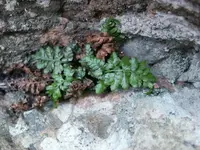
This species produces rounded to shield-shaped sterile fronds that hug the substrate closely, contrasting with its longer fertile fronds that rise above and carry the spore-bearing tissue.

Epiphytic cloud-forest fern

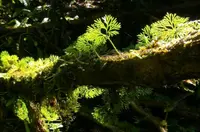
It naturally grows as an epiphyte on tree trunks and branches in humid montane cloud forests of Central and South America, relying on frequent mist and fog rather than soil moisture around roots.

Distinct spore-bearing band

The underside of mature fertile fronds typically shows a continuous brown band of sporangia instead of discrete sori, a characteristic feature used by pteridologists to recognize this species.

Botan icon

Did you know?

This species often forms dense mats on moss-covered branches, where accumulated leaf litter and trapped moisture create a miniature forest floor habitat that supports small invertebrates and other epiphytic organisms.

FAQs about peltate tonguefern

Growth is generally slow to moderate. New fronds appear gradually through the growing season, and a small plant may take several years to form a dense clump. Consistent moisture, humidity, and stable temperatures support faster, healthier development.

Grow Healthy Plants with Botan Care

Keep your plants happy and healthy with plant identification, disease detection, and easy care guidance.

Botan plant care app — identify plants on mobile

Explore More Plants