Staggered succession planting
Start a small batch of plants in modules every 2–3 weeks in late winter to early spring so that, once transplanted outside, flowering and pollen availability are spread over a longer seasonal window.

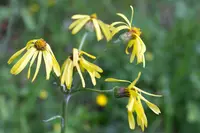
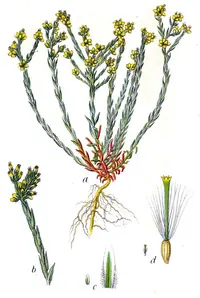
Tephroseris helenitis is a herbaceous perennial from the daisy family, forming upright clumps with bright yellow, daisy-like flower heads on slender stems. Its foliage is usually lance-shaped to oval, with a somewhat soft texture, creating a loose, natural look in mixed borders or wild-style plantings.
This species is native to parts of Europe, where it grows in meadows, open woodland edges, and damp grasslands. It generally prefers moist, well-drained soil and a position with good light but not extreme heat.
Gardeners often find it moderately easy to grow if soil does not dry out for long periods. Understanding how to care for Tephroseris helenitis mainly involves providing consistent moisture and avoiding very poor, compacted soils.

Care Difficulty
Moderate Care

Light Preference
Partial Sun

Water Requirements
Moderate Water

Temperature Preference
Cool Climate

Hardiness Zone
5–8

Soil Texture
Loamy, Silty, Organic-rich

Soil pH
Acidic (5.5–6.5), Slightly acidic (6.5–7.0)

Soil Drainage
Moist but well-drained

Fertilization
Minimal (feed rarely)
Scan your plant to receive care tips personalized for your specific plant
Available on iOS and Android
This meadow perennial prefers bright outdoor conditions with moderate direct sun for strong flowering.
This plant favors consistently moist but not waterlogged soil, reflecting its natural wet meadow habitats.
This hardy perennial is adapted to cool to mild climates and tolerates winter cold in the ground.
This species is adapted to outdoor conditions and does not have demanding humidity needs in typical temperate climates.
This plant prefers moist, well‑drained, fertile soil that stays cool around the roots.
This species can be grown in containers if moisture and stability are carefully managed.
This species grows in modest soils and usually needs only light feeding in gardens or containers.
Pruning is simple and mainly supports flowering performance and plant tidiness.
This perennial is more often transplanted in beds than kept long term in containers.
Propagation is usually done by seed or by careful division of established clumps.
This hardy perennial usually survives typical temperate winters with minimal attention.

Plant Health Check
Not sure what's wrong with your plant? Check your plant's health inside the app.
This species is strongly linked to nutrient-poor, often acidic grasslands and meadows in parts of central and western Europe, where it can indicate relatively low-intensity land use and limited fertilization.
Natural populations occur mainly in montane to subalpine zones, often between forest and open highland habitats, where cool summers and good light support robust rosette and flower stem development.
The yellow composite flower heads provide accessible nectar and pollen for a range of flies, beetles, and small bees that are adapted to cooler, wind-exposed sites in its native range.
This species is a short-lived perennial. It usually flowers for several seasons if conditions stay cool and moist, then often declines. Allowing some plants to self-seed helps maintain a stable clump over time.
Keep your plants happy and healthy with plant identification, disease detection, and easy care guidance.