Staggered Succession Sowing
For a longer flower display, sow small patches every 2–3 weeks in early spring so older plants can be cut back or removed as new cohorts come into bloom.

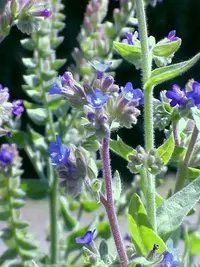
Common bugloss (Anchusa officinalis) is a short-lived perennial or biennial herb in the borage family, valued mainly for its vivid blue flowers. It typically forms upright, bristly stems with narrow, rough leaves and loose clusters of small star-shaped blooms that attract bees and other pollinators. In the wild it is found in dry grasslands, field margins, and roadsides across Europe and parts of western Asia, and it has naturalized in some regions of North America. This species prefers full sun, relatively dry conditions, and well-drained, often poor soils, which makes it fairly undemanding once established and informs how to care for common bugloss.

Care Difficulty
Moderate Care

Light Preference
Full Sun

Water Requirements
Moderate Water

Temperature Preference
Cold Hardy

Hardiness Zone
3–8

Soil Texture
Sandy, Loamy, Rocky

Soil pH
Slightly acidic (6.5–7.0), Slightly alkaline (7.0–7.5)

Soil Drainage
Well-drained

Fertilization
Minimal (feed rarely)
Scan your plant to receive care tips personalized for your specific plant
Available on iOS and Android
Anchusa officinalis performs best in open, bright sites with strong sun exposure.
Anchusa officinalis prefers evenly moist but never waterlogged soil once established outdoors.
This species is a hardy perennial that tolerates a wide range of outdoor temperatures in temperate climates.
Anchusa officinalis handles a wide humidity range and rarely needs special humidity care.
Anchusa officinalis prefers lean, well-drained soil and is sensitive to persistent wetness.
This species can be grown in containers, but it performs best in deep, free-draining pots outdoors.
Anchusa officinalis grows well in average soil and only needs light feeding to support flowering.
Pruning Anchusa officinalis is mainly used to tidy plants and extend the flowering display.
This deep-rooted species is usually grown in the ground, so focus on careful transplanting rather than frequent repotting.
Anchusa officinalis is most commonly propagated from seed, with division or cuttings used less often.
Anchusa officinalis is generally cold hardy in temperate climates and needs only minimal winter care.

Plant Health Check
Not sure what's wrong with your plant? Check your plant's health inside the app.
The plant’s intense blue flower color comes from anthocyanin pigments stabilized by the slightly alkaline conditions often found in its calyx and epidermal cells, which helps the blue remain vivid rather than fading to purple.
Its leaves and stems are densely covered with stiff hairs (trichomes) that reduce herbivory by making the foliage abrasive and less palatable to grazing animals and some insects.
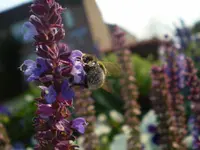
The tubular flowers produce accessible nectar and are visited by a wide range of bees, hoverflies, and other pollinating insects, making the species a notable nectar source in disturbed and roadside habitats across much of Europe and introduced regions.

Historically, the deep blue flowers of this species were used as a minor, short-lived fabric and ink dye in parts of Europe before more stable blue dyes such as indigo became widely available, although the color tended to fade quickly with washing and light exposure.
Lack of flowers often results from too much shade, overly rich nitrogen fertilizer, or plants that are still immature. Ensure enough sun, avoid heavy feeding, and deadhead spent spikes to encourage further blooming in the season.
Keep your plants happy and healthy with plant identification, disease detection, and easy care guidance.