inland leatherfern Care (Acrostichum danaeifolium)

Also known as: Giant leather fern
inland leatherfern

About inland leatherfern

Inland leatherfern, Acrostichum danaeifolium, is a large, semi-aquatic fern native to tropical and subtropical wetlands of the Americas. It often grows along riverbanks, marsh edges, and mangrove margins.

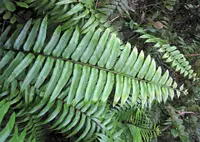
This fern forms dense clumps with tall, upright fronds that have a thick, leathery texture and a glossy green surface. The fronds can look more like tough leaves than delicate fern foliage.

It prefers consistently moist to wet conditions and tolerates occasional flooding and some salt, which makes it unusual among ferns. In cultivation, it is moderately challenging because it needs high moisture and humidity, so understanding how to care for inland leatherfern is important for long-term success.

Main Plant Requirements

Care Difficulty

Moderate Care

Light Preference

Partial Sun

Water Requirements

Aquatic

Temperature Preference

Tropical / Frost Sensitive

Hardiness Zone

9–11

Soil Texture

Loamy, Silty, Organic-rich

Soil pH

Acidic (5.5–6.5), Slightly acidic (6.5–7.0)

Soil Drainage

Waterlogged tolerant

Fertilization

Minimal (feed rarely)

Get Personalized Care Plan

Scan your plant to receive care tips personalized for your specific plant

Available on iOS and Android

How to Care for the inland leatherfern

This large wetland fern thrives in bright, warm conditions but is sensitive to harsh, drying sun.

  • Provide 3–6 hours of gentle morning sun with dappled or filtered light the rest of the day; avoid intense afternoon sun that can scorch fronds.
  • Tolerates partial shade, but in deep shade fronds become sparse and elongated, a sign that inland leatherfern needs more light.
  • In hot summers, increase shade during midday; in cooler seasons, allow more direct morning or late-afternoon sun to support growth.

This species prefers constantly moist to saturated conditions that mimic its marsh and mangrove habitats.

  • Keep soil or substrate consistently wet; the surface should never fully dry, and standing water around roots is acceptable if water is not stagnant and anaerobic.
  • In warm months, check moisture daily; wilting, crisping frond tips, or shrinking fronds indicate insufficient water, while sour smell or black, mushy roots suggest chronic waterlogging without oxygen.
  • During cooler months, maintain high moisture but reduce added water slightly if growth slows, always ensuring heavy, organic-rich soil still drains enough to prevent foul, stagnant conditions.

This tropical fern prefers warm, frost-free conditions for stable growth.

  • Ideal growth occurs at 70–86°F (21–30°C), which supports active frond production and strong rhizomes.
  • The plant tolerates brief drops to about 40°F (4°C) but suffers damage near freezing; any frost can kill young fronds.
  • In hot periods above 90°F (32°C), provide high humidity, ample water, and some shade to prevent heat stress, while in cooler seasons growth slows but remains stable if kept above 55°F (13°C).

This semi-aquatic fern requires very high humidity to perform well in cultivation.

  • Aim for 70–100% humidity, mimicking swamp or marsh conditions, and avoid locations with strong air currents or heating vents.
  • Tolerates brief dips to 50–60% but fronds may brown at tips and edges if air stays much drier.
  • Watch for crisping pinnae, stalled frond expansion, and curled new growth as humidity stress signs, then increase ambient moisture with trays of water or nearby humidifiers.

This species prefers saturated, organic-rich soil that stays consistently wet and does not dry out.

  • Use a heavy, peat- or coco-based mix with abundant compost and leaf mold to mimic muddy, marsh-like conditions for Acrostichum danaeifolium.
  • Allow only very slow drainage; the root zone should stay waterlogged or at least constantly moist, unlike typical potted houseplants.
  • Maintain slightly acidic to neutral pH around 6.0–7.0, adding peat or pine bark fines if tap water is strongly alkaline.
  • Avoid coarse, fast-draining sandy or gritty mixes and do not allow the substrate to dry, crack, or pull away from the container sides.

This fern can be grown in containers if the setup allows permanently wet, heavy substrate.

  • Choose a deep, wide, and heavy pot to anchor the vigorous, tall fronds and prevent tipping in wind or shallow water features.
  • If using drainage holes, sit the pot in an outer, watertight cachepot or tray kept topped up so the lower root zone remains submerged.
  • Select non-porous materials like glazed ceramic or plastic to slow evaporation and help maintain a consistently saturated root environment.

This wetland fern benefits from light, targeted feeding in containers or managed plantings, while established plants in rich soil often need no additional fertilizer.

  • Use a balanced liquid fertilizer (for example 10-10-10) at 1/4–1/2 strength for inland leatherfern grown in pots or nutrient-poor beds.
  • Feed every 4–6 weeks during the warm growing season when fronds are actively expanding.
  • Pause or reduce feeding to 1 light application in midwinter for plants in warm, frost-free climates.
  • In organic gardens, incorporate a thin layer of compost around the root zone instead of frequent synthetic fertilizer applications.

Pruning Acrostichum danaeifolium is mainly hygienic, aimed at removing old fronds and maintaining safe access in wet planting areas.

  • Best timing is late winter or early spring before strong new growth, or after storm damage at any time.
  • Cut dead, diseased, salt-burned, or severely damaged fronds at the base to reduce pest and disease habitat.
  • Thin a few crowded outer fronds to improve air movement and keep the clump within its allotted space.
  • Use clean, sharp pruners or loppers; disinfect blades when removing diseased tissue to avoid spreading problems.

This large marsh fern is usually transplanted outdoors rather than grown long term in small containers, due to its robust rhizomes and size.

  • Transplant clumps in warm spring when soil is moist and water levels are stable, reducing shock to the root system.
  • Move plants when growth slows, rhizomes crowd the planting zone, or roots circle and press against container walls.
  • Lift with a wide root ball, keep roots constantly moist, and replant at the same depth in organic, water-retentive soil.
  • Water thoroughly after transplanting and maintain consistently saturated conditions until new fronds emerge and stiffen.

Propagation of this species is possible but usually carried out in managed wetland or nursery settings rather than casual home culture.

  • Division of established rhizome clumps in warm spring is the most practical approach for Acrostichum danaeifolium care.
  • Select a vigorous clump, slice it into sections with several healthy fronds and firm rhizome portions each.
  • Replant divisions immediately into saturated, organic-rich soil, keeping rhizomes just below the surface.
  • Maintain high humidity, constant moisture, and warm temperatures (around 70–80°F) until strong new fronds develop.

This tropical to subtropical fern has low frost tolerance and needs attention in regions with cool or freezing winters.

  • In mild, frost-free climates, routine care is usually enough, though short cool spells may slow growth.
  • In areas with light frost, apply a 5–8 cm mulch around the root zone to buffer short temperature dips.
  • Container plants in cooler climates should be moved indoors or into a heated greenhouse before temperatures approach 40°F.

Care Tips

Rhizome Edge Space

When planting, keep the creeping rhizomes 5–8 cm back from the container rim or pond edge so new fronds have room to emerge and arch without kinking or breaking against hard borders.

Shallow Water Setup

For bog or pond margins, stand the pot so that only the lower 2–5 cm of the container is submerged, which keeps roots saturated while preventing the crown from rotting under constant water.

Salinity Management

In coastal areas, flush the planting zone with fresh water after storm-driven salt spray or brackish flooding, since inland leatherfern tolerates some salinity but grows better when excess salts are leached from the root zone.

Wind-Shelter Support

In exposed sites, place a low, open mesh or discreet bamboo grid behind the plant to support tall fronds and reduce snapping in strong winds, especially during the first 1–2 years of establishment.

Frond Thinning Routine

Once or twice a year, remove only the oldest, most crowded fronds at the base to improve air movement through the clump, which helps limit scale insects and fungal spotting when growing inland leatherfern in dense plantings.

Common Pests and Diseases

Fern aphids

This pest feeds on the soft rachis and young fronds, causing distortion, yellowing, and sticky honeydew that can support sooty mold growth.

Solution

Prune and discard heavily infested fronds, then wash remaining foliage with a firm stream of water to remove colonies; in persistent cases, apply an insecticidal soap or horticultural oil labeled for ferns, making sure to coat the underside of the fronds and repeat every 7–10 days as needed.

Scale insects

These insects attach along the midribs and stipes of inland leatherfern, appearing as small bumps that suck sap and weaken the plant over time.

Solution

Gently scrape or wipe visible scales from the fronds and stems with a cotton pad dipped in isopropyl alcohol, then follow with a horticultural oil spray that thoroughly wets all plant surfaces, repeating applications according to label directions until new growth emerges clean.

Leaf spot fungi

This disease produces round to irregular brown or black spots on fronds, often with a yellow halo, and may cause premature frond dieback in warm, humid conditions.

Solution

Remove and discard affected fronds to reduce inoculum, avoid overhead watering that keeps foliage wet, increase spacing and airflow, and if spotting continues, use a copper-based fungicide or another fern-safe fungicide applied at the first sign of new lesions.

Rhizoctonia crown rot

This disease attacks the crown and lower stipes in saturated, poorly drained sites, leading to browning at the base, frond collapse, and a rotting crown that may have reddish-brown lesions.

Solution

Improve drainage by reducing prolonged flooding in planted areas, remove and destroy affected crown tissue and dead fronds, and in high-value plantings consider a soil-directed fungicide labeled for Rhizoctonia, applied along with long-term changes to water management to prevent recurrence.

Interesting Facts

Large coastal fern

This species is one of the largest New World ferns, with leathery fronds that can reach about 3 m tall in favorable tropical and subtropical wetlands.

Salt-tolerant wetland specialist

It naturally colonizes mangrove fringes, brackish swamps, and tidal canals, showing a higher tolerance to saline and waterlogged soils than most ferns.

Pioneer in disturbed mangroves

After mangrove clearing or disturbance, this fern often forms dense monospecific stands, stabilizing soft, muddy substrates and influencing how woody mangrove species recolonize the area.

Botan icon

Did you know?

In parts of the Caribbean and Central America, the young, tightly coiled frond tips of this fern are traditionally harvested and eaten as vegetables, similar to other fiddlehead ferns, making it an unusual example of a large coastal fern with a locally used edible stage.

FAQs about inland leatherfern

Growth is moderate. In consistently wet, warm conditions it may add 15–30 cm of height per year. Poor drainage, cool temperatures, or low humidity noticeably slow growth, so site choice strongly affects how quickly the clump enlarges.

Grow Healthy Plants with Botan Care

Keep your plants happy and healthy with plant identification, disease detection, and easy care guidance.

Botan plant care app — identify plants on mobile

Explore More Plants