Hoya nicholsoniae Care

Hoya nicholsoniae

About Hoya nicholsoniae

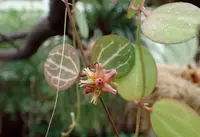
Hoya nicholsoniae is a tropical vining houseplant known for its elongated, softly textured leaves and clusters of fragrant, waxy flowers. It belongs to the dogbane family, Apocynaceae, and is grown mainly for its foliage and scent.

In nature, it is found in rainforest habitats of Papua New Guinea, where it often grows as an epiphyte, anchoring to trees rather than soil. The plant tends to climb or trail, making it suitable for hanging baskets or trellises indoors.

It is considered moderately easy to grow if its basic needs are met. Bright filtered light, a loose, fast-draining potting mix, and steady, moderate moisture help illustrate how to care for Hoya nicholsoniae without much difficulty.

Main Plant Requirements

Care Difficulty

Moderate Care

Light Preference

Bright Indirect Light

Water Requirements

Moderate Water

Temperature Preference

Tropical / Frost Sensitive

Hardiness Zone

11–12

Soil Texture

Loamy, Sandy, Organic-rich

Soil pH

Acidic (5.5–6.5), Slightly acidic (6.5–7.0)

Soil Drainage

Well-drained

Fertilization

Light (every 4–6 weeks)

Get Personalized Care Plan

Scan your plant to receive care tips personalized for your specific plant

Available on iOS and Android

How to Care for the Hoya nicholsoniae

This species prefers bright, filtered light that mimics dappled forest conditions.

  • Provide 6–8 hours of bright, indirect light daily, such as near an east or bright north window, or under sheer curtains by a south window.
  • Tolerates light partial shade, but flowering may decrease if light is below roughly 4–5 hours of bright, indirect exposure each day.
  • Protect from harsh midday and afternoon sun, which can cause leaf scorch and yellowing; in summer, shift slightly farther from hot windows or add light filtering.

Watering should balance slight drought tolerance with avoidance of prolonged wet soil.

  • Allow the top 2–4 cm of soil to dry before watering, using a finger check rather than a fixed schedule, as pot size and light affect drying time.
  • In spring and summer, water more frequently as growth and evaporation increase; in fall and winter, extend the drying period between waterings.
  • Use a sharply draining mix and a pot with drainage; watch for puckering, soft leaves (underwatering) or mushy stems, black spots, and sour smell (overwatering).

Stable, warm conditions support steady growth and flowering for Hoya nicholsoniae.

  • Aim for 65–80°F (18–27°C) for best growth, with slightly cooler nights improving overall vigor.
  • Avoid exposure below 55°F (13°C); short drops to 50°F (10°C) may be survived but can slow growth and increase rot risk in wet soil.
  • Protect from frost, cold drafts, and hot, dry air above 90°F (32°C); in heat waves, increase air movement and shade from intense afternoon sun to prevent stress.

This species benefits from elevated humidity but adapts to typical home levels if other care is stable.

  • Aim for 50–70% humidity to support steady growth and reduce leaf desiccation.
  • It tolerates 35–40% for short periods, but new leaves may emerge smaller and edges may crisp.
  • Humidity stress shows as curled, thin, or papery leaves; increase humidity with a nearby humidifier or clustered plants, not constant misting.

Use a loose, airy mix that drains rapidly yet retains some moisture around the roots.

  • A mix of roughly 40% fine bark, 30% perlite or pumice, and 30% peat or coco coir offers structure, aeration, and moderate water retention.
  • Aim for slightly acidic to neutral pH, about 6.0–7.0, which supports nutrient availability for Hoya nicholsoniae.
  • Chunky components such as orchid bark and coarse perlite keep roots oxygenated and reduce the risk of rot in dense containers.
  • Avoid heavy garden soil, peat-only mixes, or compacted substrates that stay wet for more than 2–3 days after watering.

This species is well suited to container growing in homes and sheltered outdoor spaces.

  • Choose a pot only 2–4 cm wider than the root ball so the mix dries predictably between waterings.
  • Select a stable, heavier pot if using a trellis, as vines and foliage can make the plant top-heavy over time.
  • Use a container material that matches your environment: porous terracotta for wetter homes, or glazed ceramic/plastic where conditions are already dry.

This species responds well to light, consistent feeding during its active growing season.

  • Use a balanced liquid fertilizer (for example 10-10-10 or 20-20-20) at 1/4–1/2 strength for Hoya nicholsoniae.
  • Apply every 4–6 weeks in spring and summer, on already-moist soil to avoid root burn.
  • Optionally use a slow-release fertilizer or a thin layer of high-quality compost once in spring.
  • Stop or greatly reduce feeding in fall and winter when growth slows.

Pruning helps manage size and encourage denser growth without harming flowering performance.

  • Lightly trim Hoya nicholsoniae in late winter or early spring before vigorous new growth begins.
  • Remove dead, damaged, or crossing stems with clean, sharp scissors or pruning shears.
  • Shorten overly long vines to shape the plant and encourage side shoots for a fuller look.
  • Avoid cutting off old flowering spurs, since hoyas often rebloom from the same sites.

This vine prefers slightly snug containers and does not need frequent repotting.

  • Repot Hoya nicholsoniae every 2–3 years, or when roots circle the pot, push through drainage holes, or growth slows noticeably.
  • Plan to repot in spring, using a fresh, airy mix with good drainage to mimic epiphytic conditions.
  • Move to a pot only 2–5 cm wider to avoid excess wet substrate around the roots.
  • Water lightly after repotting, keep in bright indirect light, and avoid heavy feeding for 2–3 weeks to limit root stress.

Propagation is most successful from stem cuttings taken during active growth.

  • Take 7–12 cm stem cuttings of Hoya nicholsoniae in late spring or summer, including at least 2 nodes.
  • Remove lower leaves and place cuttings in moist, airy mix or water, keeping nodes just buried or submerged.
  • Maintain 70–80°F, high humidity, and bright indirect light to support root formation.
  • Once roots reach 2–3 cm, pot into a small, free-draining mix and avoid overwatering while new growth establishes.

This tropical species is frost-sensitive and needs mild, stable winter conditions.

  • Keep Hoya nicholsoniae indoors or in a heated space where temperatures stay above 55°F.
  • Provide bright indirect light and slightly drier soil, allowing the top layer to dry more between waterings.
  • Avoid cold drafts, sudden temperature drops, and contact with cold window glass.
  • Do not repot or heavily prune in winter to minimize stress during its semi-resting phase.

Care Tips

Provide climbing support

Install a slim moss pole, ladder, or wire trellis and loosely tie new vines as they elongate, which encourages stronger growth, better light exposure for each leaf, and more reliable flowering over time.

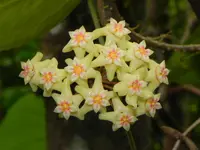
Encourage flowering cycles

After blooms fade, leave the spent flower spurs (peduncles) intact instead of pruning them off, since this species often reblooms from the same structures when light and nutrition are adequate.

Use airy top dressing

Add a thin layer of chunky orchid bark or pumice on top of the potting mix to keep the crown slightly drier, reduce fungus gnat issues, and make watering more even without suffocating surface roots.

Rotate for balanced vines

Turn the pot 90° every 2–3 weeks so all sides face the light across the season, which prevents one-sided, leggy growth and keeps vines and leaves more symmetrical when growing Hoya nicholsoniae.

Inspect tendrils early

Check new leafless tendrils weekly and gently redirect them onto the support before they harden, since early guidance avoids brittle stems, accidental snapping, and awkward, tangled growth later.

Common Pests and Diseases

Mealybugs

This pest is attracted to the waxy leaves and leaf axils, where it feeds on sap and produces white cottony clusters and sticky honeydew. Symptoms include slow growth, distorted new leaves, and sooty mold developing on the honeydew.

Solution

Isolate the plant, then dab visible insects with cotton swabs dipped in 70% isopropyl alcohol and wipe leaf undersides and stems. Follow with a thorough wash under lukewarm water and repeat alcohol swabs weekly; for heavier infestations, use a neem oil or insecticidal soap spray, ensuring good coverage in crevices while maintaining bright light and good air movement.

Spider mites

These insects thrive in warm, dry indoor air and can cause very fine webbing, stippled leaves, and a dull, dusty appearance, especially on thinner foliage. Symptoms include yellowing, speckling, and premature leaf drop, often starting on older leaves.

Solution

Increase humidity around the plant, then rinse foliage thoroughly in the shower or sink, focusing on leaf undersides to remove mites and webbing. Repeat strong water sprays every few days and, if needed, apply insecticidal soap or neem oil, making sure the plant dries quickly to reduce fungal risk.

Soft scale

This pest appears as small, rounded or oval brown bumps on stems and leaf veins that do not move when touched. Symptoms include sticky honeydew, sooty mold on leaves, and reduced vigor as the plant loses sap over time.

Solution

Gently scrape or rub off scale insects with a fingernail or soft cloth, then wipe stems and leaves with 70% isopropyl alcohol to remove remaining juveniles. Inspect weekly and repeat manual removal; persistent cases may need several rounds of neem oil or horticultural oil applied to fully coat stems and undersides of leaves.

Sooty mold

This disease develops on honeydew left by sap‑sucking insects, forming black, sootlike growth on leaves and stems. Symptoms include leaves that look dirty or blackened and a reduction in photosynthesis, even though the fungus does not invade plant tissues directly.

Solution

First control the underlying insect infestation such as mealybugs or scale, then gently wash leaves with lukewarm water and a small amount of mild, plant‑safe soap to remove fungal deposits. Improve airflow, avoid crowding plants, and keep foliage dry between cleanings to reduce recurrence as part of broader Hoya nicholsoniae care.

Interesting Facts

Variable leaf forms

This species shows notable natural variation in leaf shape and venation, ranging from narrower, lance-shaped leaves to broader, more oval forms, all with characteristic darker network-like veins. These differences are linked to individual clones and growing conditions rather than to separate species.

Distinctive honey fragrance

Its umbels of small, reflexed flowers produce a sweet, honeylike scent that is especially noticeable in the evening and night. The fragrance is thought to attract nocturnal pollinators such as moths in its native habitat.

New Guinea rainforest origins

Hoya nicholsoniae is native to lowland and montane rainforests of Papua New Guinea, where it grows as an epiphyte on trees. It uses its roots mainly for anchoring on bark while collecting moisture and nutrients from rain, debris, and the surrounding humid air.

FAQs about Hoya nicholsoniae

Lack of flowering usually relates to plant immaturity, insufficient light intensity, or frequent repotting. Keeping older stems with spent peduncles, providing stable conditions, and avoiding heavy pruning of flowering spurs encourages bud formation over time.

Grow Healthy Plants with Botan Care

Keep your plants happy and healthy with plant identification, disease detection, and easy care guidance.

Botan plant care app — identify plants on mobile

Explore More Plants