Latin American orchid Care (Oncidium ensatum)

Also known as: Florida oncidium
Latin American orchid

About Latin American orchid

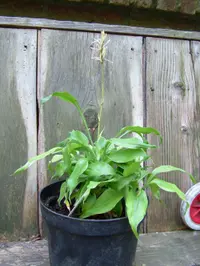
Oncidium ensatum is an epiphytic orchid, meaning it grows on trees rather than in soil, using its roots mainly for anchoring and moisture uptake. It forms graceful clumps of narrow, strap-like leaves and tall, airy flower spikes that can carry many small, delicate blooms. In nature, this species occurs in warm, humid regions of Latin America, often in bright but filtered forest light. Its growth habit and need for consistent humidity make it moderately challenging for beginners, but manageable for growers who can provide stable conditions. Understanding how to care for Latin American orchid helps keep this plant healthy, especially by balancing light, moisture, and airflow.

Main Plant Requirements

Care Difficulty

Moderate Care

Light Preference

Partial Shade

Water Requirements

Moderate Water

Temperature Preference

Tropical / Frost Sensitive

Hardiness Zone

10–11

Soil Texture

Loamy, Organic-rich

Soil pH

Acidic (5.5–6.5)

Soil Drainage

Moist but well-drained

Fertilization

Light (every 4–6 weeks)

Get Personalized Care Plan

Scan your plant to receive care tips personalized for your specific plant

Available on iOS and Android

How to Care for the Latin American orchid

Oncidium ensatum prefers bright, filtered light that mimics light woodland shade.

  • Provide 4–6 hours of soft morning sun with dappled or filtered light the rest of the day, especially in warm climates where midday sun is intense.
  • Allow partial shade, such as light under trees or 30–50% shade cloth, as this Latin American orchid can scorch in strong afternoon sun.
  • Watch leaf color: medium green indicates correct light, dark green suggests insufficient light, and yellowed or scorched patches signal too much direct sun.

Oncidium ensatum prefers evenly moist but never waterlogged conditions.

  • Water when the top 2–3 cm of the root zone feel just barely dry, using thorough soakings that drain freely away from the roots.
  • In warm active growth, expect more frequent watering, while in cooler seasons or slower growth, allow a slightly drier interval between waterings.
  • Watch for signs: limp or wrinkled pseudobulbs and thin leaves suggest underwatering, while blackened roots, sour smell, or yellow, soft leaves point to overwatering and poor drainage.

This orchid thrives in warm, frost-free conditions with moderate day–night variation.

  • Aim for 65–80°F (18–27°C) by day and 55–65°F (13–18°C) at night to support steady growth and flowering.
  • Protect from cold below 45°F (7°C), since foliage is damaged by near-freezing temperatures and the plant is not frost tolerant.
  • In hot weather above 90°F (32°C), increase shade, airflow, and humidity to reduce heat stress and prevent leaf scorch or stalled growth.

This species prefers moderately humid air and reacts quickly to very dry conditions.

  • Aim for 50–70% humidity, avoiding long periods below 40% around the foliage.
  • Leaves folding, accordion pleating, or crisp brown tips indicate humidity stress rather than underwatering.
  • Use a pebble tray, room humidifier, or group plants to raise humidity instead of misting the leaves heavily.

Use a very airy, fast-draining orchid substrate rather than standard potting soil.

  • Choose a chunky mix based on medium bark with added perlite and a small amount of sphagnum moss for moisture retention.
  • Ensure water runs through freely; the roots must dry slightly between waterings to prevent rot.
  • Keep pH slightly acidic to neutral, around 5.5–7.0, which supports nutrient uptake for Oncidium ensatum.
  • Avoid dense, peat-heavy or garden soil mixes that stay wet and cut off air to the roots; add extra bark or pumice to improve aeration.

This orchid adapts well to container growing when the pot supports its fine, spreading root system.

  • Select a pot only 2–3 cm wider than the root mass so the medium does not stay wet for excessive periods.
  • Use a sturdy, heavier container if the plant becomes top-heavy to prevent tipping when the pseudobulbs elongate.
  • Choose slotted or net-style orchid pots to improve side aeration and speed up moisture loss from the mix after watering.

Oncidium ensatum benefits from light, consistent feeding that mimics its naturally lean, epiphytic habitat.

  • Use a balanced liquid orchid fertilizer (around 20-20-20) diluted to 1/4–1/2 strength for this Latin American orchid.
  • Feed every 2–3 weeks during active growth in spring and summer, always on moist medium to prevent root burn.
  • Reduce feeding to monthly or stop entirely in fall and winter if growth slows noticeably.
  • Avoid compost or heavy slow-release products that can stay too wet and accumulate salts around the roots.

Pruning Oncidium ensatum focuses on hygiene and directing energy to healthy growth and flowering.

  • Best timing is after flowering finishes, when spent spikes and dry sheaths are easy to identify.
  • Remove dead, damaged, or shriveled pseudobulbs and leaves with clean, sharp scissors or pruners to limit disease.
  • Cut flower spikes back to the base once they brown, encouraging the plant to channel resources into new pseudobulbs.
  • Avoid cutting firm, green pseudobulbs, which store water and nutrients and support future growth.

This species prefers slightly tight conditions and only needs repotting or transplanting when the root system is clearly overcrowded or declining.

  • Look for roots circling the container, creeping far beyond the pot, or medium breaking down and staying soggy as signs to repot.
  • Plan to repot every 2–3 years, ideally in late winter or early spring just before new root and shoot growth starts.
  • Gently loosen and trim dead, mushy roots, then place Oncidium ensatum into fresh, airy orchid bark, keeping the base just above the medium.
  • Water lightly after repotting, maintain high humidity, and shade from strong sun for 1–2 weeks to reduce transplant stress.

Propagation of Oncidium ensatum is most reliable by careful division of mature clumps rather than by seed.

  • Divide in late winter or early spring when repotting, once the plant has at least several healthy pseudobulbs.
  • Use a sterile knife to separate sections with 3–4 firm pseudobulbs and active roots per division.
  • Pot each division into fresh, free-draining orchid mix, keeping rhizomes just at the surface for good air flow.
  • Provide bright, indirect light, 65–80°F temperatures, and consistently lightly moist medium to support new root and shoot development.

Oncidium ensatum is frost-sensitive and needs protection in regions with cold winters.

  • Maintain temperatures above 50°F; prolonged exposure near or below freezing can damage pseudobulbs and roots.
  • Move container plants indoors or into a greenhouse before the first frost, providing bright, filtered light.
  • Reduce watering in winter, allowing the medium to dry slightly more between waterings while avoiding complete desiccation.
  • In mild climates where plants grow outdoors, add a loose, dry mulch around the root zone, keeping it off the pseudobulbs.

Care Tips

Rhizome Positioning

Mount or pot the plant so the rhizome sits just at the surface, with new growths directed toward open space, which lets future pseudobulbs develop without crowding or needing immediate division.

Anchoring Aerial Roots

Gently secure wandering roots against the mount or medium with soft ties or sphagnum moss strands so they can attach firmly, which improves water uptake and plant stability over time.

Gradual Light Hardening

When shifting to brighter conditions, increase light in small steps over 2–3 weeks to avoid leaf scorch and to encourage sturdier, more compact growth suited to growing Latin American orchid in high light.

Targeted Airflow Management

Place a small fan on a low, indirect setting to move air across the foliage and root zone, which helps dry the plant between waterings and reduces fungal spotting on the long, strap-like leaves.

Timing Division Wisely

Only divide clumps right after flowering when new root tips start to emerge, keeping at least 3–4 healthy pseudobulbs per division so each section has enough stored energy to re-establish quickly.

Common Pests and Diseases

Scale insects

This pest attaches to pseudobulbs and leaf bases, sucking sap and weakening the plant over time. Symptoms include sticky honeydew, sooty mold on leaves, and small brown or tan bumps that do not brush off easily.

Solution

Remove heavily infested leaves or sheaths and gently scrape visible scale with a cotton swab dipped in isopropyl alcohol. Improve air movement around the foliage and use repeated applications of a light horticultural oil or insecticidal soap, making sure to target leaf undersides and the bases of pseudobulbs.

Spider mites

These insects favor the thinner leaves and fine roots of this species, especially in warm, dry, still air. Symptoms include stippled or silvery leaves, fine webbing, and gradual leaf yellowing or drop.

Solution

Rinse foliage thoroughly under a gentle shower, including leaf undersides and axils, to physically remove mites. Increase humidity to 50–60%, improve air circulation, and if needed apply insecticidal soap or a miticide labeled for orchids in repeated treatments to break the life cycle.

Mealybugs

This pest hides in the tight leaf axils and at the base of pseudobulbs, where it feeds on sap and can cause stunting and leaf deformities. Symptoms include white cottony clusters, sticky residue, and distorted new growth.

Solution

Inspect and manually remove visible mealybugs with cotton swabs dipped in isopropyl alcohol, taking care to reach crevices between leaves and pseudobulbs. Isolate the plant, repeat alcohol or insecticidal soap treatments weekly until no new insects appear, and avoid overfertilizing, which encourages soft, susceptible growth.

Bacterial brown spot

This disease produces soft, water-soaked patches on leaves that quickly turn brown and can spread along the thin foliage. Symptoms include a foul smell, oozing lesions, and rapid tissue collapse, especially after overhead watering in warm, stagnant conditions.

Solution

Remove affected leaves or tissue with sterile tools, cutting well into healthy tissue, and discard all infected material. Keep foliage dry, water early in the day, increase airflow, and use a copper-based bactericide labeled for orchids if new spots continue to appear, avoiding direct spray on very tender new growth.

Leaf tip blight

This disease affects the narrow leaves, causing progressive browning from the tips downward, often starting where water lingers. Symptoms include tan to dark-brown necrotic tips, sometimes with a slight yellow halo and a sharp boundary between healthy and dead tissue.

Solution

Trim off affected leaf tips with sterile scissors, making a clean angled cut into healthy tissue to halt progression. Reduce leaf wetness, keep humidity moderate with good air circulation, and, if spreading persists, apply a systemic fungicide suitable for orchids according to label directions as part of broader Oncidium ensatum care instructions.

Interesting Facts

Seasonally leafless habit

This species often sheds many of its long, narrow leaves during the dry season in its native range, entering a semi-deciduous state while surviving on stored reserves in its pseudobulbs.

Creekside and riverbank specialist

In nature it commonly grows as a terrestrial or lithophytic orchid along moist stream banks and rocky slopes in Mesoamerica, rather than as a tree-dwelling epiphyte like many other Oncidium species.

Fragrant yellow sprays

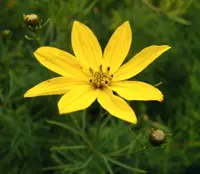
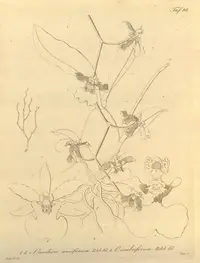
The plant produces airy, many-flowered inflorescences with small yellow to yellow-brown blossoms that can be lightly fragrant, forming open sprays adapted to attract diverse insect pollinators in bright, exposed sites.

Botan icon

Did you know?

Oncidium ensatum has a native distribution that stretches from Mexico through Central America into parts of northern South America, making it one of the more wide-ranging members of its genus across lowland to mid-elevation tropical habitats.

FAQs about Latin American orchid

Lack of blooms often comes from insufficient light, too-warm nights, or skipping a slight winter rest. Provide bright but indirect light, cooler nights around winter, and avoid heavy fertilizing then to encourage flower spikes.

Grow Healthy Plants with Botan Care

Keep your plants happy and healthy with plant identification, disease detection, and easy care guidance.

Botan plant care app — identify plants on mobile

Explore More Plants