Dorstenia brasiliensis Care

Dorstenia brasiliensis

About Dorstenia brasiliensis

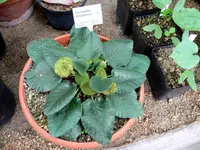
Dorstenia brasiliensis is a small, unusual succulent-like plant in the fig family, grown mainly for its curious star-shaped flower discs. It typically forms a low, compact clump with fleshy stems and broad, slightly crinkled leaves.

This species is native to Brazil, where it grows in warm, shaded forest environments. Its preference for moderate warmth, stable moisture, and bright shade makes it suitable for indoor culture.

The plant is generally forgiving if kept away from strong direct sun and waterlogged soil. For growers interested in how to care for Dorstenia brasiliensis, its modest size and slow growth make it manageable even in small spaces.

Main Plant Requirements

Care Difficulty

Moderate Care

Light Preference

Bright Indirect Light

Water Requirements

Moderate Water

Temperature Preference

Tropical / Frost Sensitive

Hardiness Zone

11–12

Soil Texture

Loamy, Sandy, Organic-rich

Soil pH

Acidic (5.5–6.5), Slightly acidic (6.5–7.0)

Soil Drainage

Moist but well-drained

Fertilization

Light (every 4–6 weeks)

Get Personalized Care Plan

Scan your plant to receive care tips personalized for your specific plant

Available on iOS and Android

How to Care for the Dorstenia brasiliensis

This species prefers bright, indirect light that mimics dappled forest shade.

  • Provide 4–6 hours of bright, filtered light daily, such as near an east window or under light shade outdoors.
  • Tolerates partial shade, but in very low light leaves stretch, flatten, and flowering declines over several months.
  • Protect Dorstenia brasiliensis from harsh midday and afternoon sun; strong sun through glass can scorch leaves within hours, especially in summer.

This plant prefers lightly moist but never soggy soil.

  • Water when the top 2–3 cm of soil feels dry, letting excess drain completely to protect the shallow, fleshy roots from rot.
  • In spring and summer, expect more frequent watering; in fall and winter, extend the interval as growth slows and the surface dries more slowly.
  • Overwatering shows as yellowing, soft leaves and a sour soil smell; underwatering causes limp, thin leaves and dry, shrinking soil that pulls from the pot edges.

Stable, warm conditions support steady growth and flowering.

  • Aim for 70–80°F (21–27°C) for best growth, with slightly cooler nights down to about 65°F (18°C).
  • Avoid temperatures below 55°F (13°C); brief dips may stunt growth, and any frost can permanently damage or kill the plant.
  • In hot spells above 86°F (30°C), increase shade and airflow, and avoid placing the plant near heat-reflective surfaces such as bare concrete or west-facing glass.

This species handles typical indoor humidity but benefits from moderately moist air.

  • Aim for 40–60% humidity, which matches most living spaces and keeps leaves from drying at the edges.
  • It tolerates brief drier spells, but persistently very dry air plus warm temperatures may cause leaf curl and browning tips.
  • Increase humidity locally with a nearby tray of moist pebbles or by grouping plants, avoiding direct misting onto foliage.

This species prefers a loose, fast-draining, slightly organic mix that never stays wet for long.

  • Use a mix of 40% cactus or succulent substrate, 40% fine bark or coco coir, and 20% perlite or pumice for strong drainage and aeration.
  • Aim for slightly acidic to neutral pH around 6.0–7.0, avoiding very alkaline mixes that can limit nutrient uptake.
  • Ensure the mix feels gritty rather than sticky; add more perlite or pumice if water takes longer than a few minutes to drain through.
  • Avoid heavy garden soil, high-clay mixes, or pots without drainage, as these promote root rot and weaken Dorstenia brasiliensis.

This compact species is well suited to container growing.

  • Choose a shallow to medium-depth pot, as the relatively fine root system spreads more sideways than downward.
  • Select a slightly heavier material such as ceramic or clay if the plant’s top growth makes lightweight plastic pots unstable.
  • Leave a small dry gap at the pot rim so top watering does not overflow and can drain quickly without pooling around the stem.

Feeding is modest but beneficial for container-grown Dorstenia brasiliensis during active growth.

  • Use a balanced liquid fertilizer (for example 10-10-10 or 20-20-20) diluted to 25–50% strength.
  • Apply every 4–6 weeks in spring and summer when growth is visible.
  • Avoid heavy organic compost; use a lean, free-draining substrate instead.
  • Stop feeding in fall and winter, when growth slows, to prevent soft, weak tissue.

Pruning needs are light and mainly hygienic for Dorstenia brasiliensis.

  • Best time is late winter to early spring, just before new growth starts.
  • Remove yellowing, dead, or damaged leaves with clean, sharp scissors or small snips.
  • Trim leggy stems lightly to maintain a compact shape and encourage branching.
  • Avoid heavy cutting; take a little at a time and monitor the plant’s response.

This species prefers a stable pot but benefits from occasional repotting into fresh, fast-draining mix.

  • Repot every 2–3 years or when roots circle the pot or emerge from drainage holes.
  • Schedule repotting in spring, at the start of active growth, to reduce recovery time.
  • Move up only 1 pot size, using a gritty, well-aerated mix to prevent waterlogging.
  • Handle the fleshy roots gently, keep the root ball mostly intact, and water lightly after repotting.

Propagation of Dorstenia brasiliensis is most practical from seeds under warm, stable indoor conditions.

  • Collect mature seeds and sow them on the surface of a fine, well-draining mix.
  • Maintain 72–80°F, high humidity, and bright, indirect light for consistent germination.
  • Barely cover seeds, keep the medium evenly moist but never soggy.
  • Use a ventilated humidity dome or clear cover to stabilize moisture while allowing some air exchange.

This tropical species is frost-sensitive and needs warm, sheltered conditions in winter.

  • Keep indoor temperatures above 60°F, ideally 65–75°F, with good airflow and light.
  • Bring any outdoor containers inside before nights drop below 55°F.
  • Water more sparingly in winter, allowing the mix to dry slightly deeper between waterings.
  • Avoid cold drafts and unheated windowsills that can chill the roots and foliage.

Care Tips

Control self-seeding

Place the pot inside a taller decorative cachepot or use a clear cover around the rim to catch the explosively ejected seeds and prevent unwanted seedlings in nearby pots.

Rotate for even growth

Turn the pot by 90° every 1–2 weeks so the rosette develops evenly and does not lean or twist toward the light source over time.

Use shallow containers

Choose a wide, shallow pot rather than a deep one to match the plant’s relatively shallow root system and reduce the risk of stale, waterlogged lower soil layers.

Monitor seedling density

If seedlings sprout densely in the same pot, thin them early with small scissors so that remaining plants have enough light and airflow to avoid weak, stretched growth.

Inspect hidden pests

Regularly lift and gently flex the wavy leaves to check the undersides and the stem base for early signs of mites or scale, which are easier to manage when found at the start while caring for Dorstenia brasiliensis.

Common Pests and Diseases

Mealybugs

This pest feeds on plant sap and often hides in leaf bases and along the caudex, leaving white, cottony masses and sticky honeydew. Symptoms include slow growth, deformed new leaves, and occasional sooty mold on the honeydew deposits.

Solution

Isolate the plant, then dab visible insects with cotton swabs soaked in 70% isopropyl alcohol and gently wipe leaf bases and stems. Repeat weekly checks, rinse the plant with lukewarm water, and use a labeled insecticidal soap or horticultural oil on all above‑ground parts, making sure the mix does not sit in the crown or on the caudex for long.

Spider mites

These insects thrive in warm, dry indoor air and cause fine stippling, pale patches on leaves, and very fine webbing between petioles and leaf undersides. Symptoms include dull, tired-looking foliage that can yellow and drop if the infestation is heavy.

Solution

Increase humidity around the plant, then rinse foliage thoroughly under a gentle stream of lukewarm water, paying attention to leaf undersides. Follow with repeated applications of insecticidal soap or a light horticultural oil every 5–7 days for several cycles, keeping the plant out of direct sun during and right after treatment to avoid leaf burn.

Scale insects

This pest appears as small, brown or tan bumps on stems, leaf petioles, and sometimes along the caudex, remaining fixed in place while feeding on sap. Symptoms include sticky honeydew, weak new growth, and gradual decline of the plant if populations build up.

Solution

Manually remove visible scale with a fingernail or soft toothbrush and cotton swabs dipped in 70% isopropyl alcohol, taking care not to damage the fleshy caudex. After mechanical removal, apply insecticidal soap or horticultural oil to all infested surfaces and repeat at 7–10 day intervals while monitoring for new crawlers.

Crown and caudex rot

This disease affects the junction between the stem, leaves, and swollen caudex, often starting after chronic overwatering or cold, wet soil. Symptoms include soft, discolored tissue at the crown, a mushy caudex, leaf yellowing, and a foul odor from the affected area.

Solution

Immediately remove the plant from its pot, cut away all soft and darkened tissue with a sterile blade, and let remaining healthy tissue dry in a shaded, airy place for 1–2 days. Repot into a very fast-draining, mostly mineral mix, water sparingly, and maintain warm, stable temperatures to reduce stress and improve recovery as part of long-term Dorstenia brasiliensis care.

Fungal leaf spots

This disease develops as small, water-soaked or brown spots on the fleshy leaves, sometimes with a yellow halo, favored by high humidity and poor air circulation. Symptoms include multiple lesions that can merge, leading to partial leaf death and premature leaf drop.

Solution

Remove and discard affected leaves, then improve air movement and avoid wetting the foliage during watering. If new spots continue to appear, treat with a mild, labeled fungicide suitable for succulents and maintain a regular cycle of drying between waterings to limit further spread.

Interesting Facts

Explosive seed dispersal

This species uses a ballistic dispersal mechanism, where its flattened fruiting structures suddenly release and fling tiny seeds outward when mature, helping colonize nearby soil quickly in humid forest floors.

Unusual flower structure

The flowers sit on a flattened, star-shaped disc called a hypanthodium, with many tiny individual flowers packed on the surface rather than having a single showy blossom, which is typical for the Moraceae family.

Shade-adapted forest herb

In its native range in Brazil, this plant grows mainly as a small understory herb in moist, shaded Atlantic forest habitats, adapted to filtered light and consistently warm, humid conditions.

Botan icon

Did you know?

The species is considered one of the more commonly cultivated Dorstenia in botanical collections because its compact size, distinctive starry inflorescences, and relatively forgiving requirements make it a practical model for studying Dorstenia brasiliensis care instructions under controlled conditions.

FAQs about Dorstenia brasiliensis

This species often produces its unusual, disk-like inflorescences repeatedly through the growing season rather than in one flush. Individual flower heads are short-lived, but new ones form regularly if the plant is actively growing and conditions stay stable.

Grow Healthy Plants with Botan Care

Keep your plants happy and healthy with plant identification, disease detection, and easy care guidance.

Botan plant care app — identify plants on mobile

Explore More Plants