Egyptian white water-lily Care (Nymphaea lotus)

Also known as: tiger lotus, white lotus, Night Waterlily, White Egyptian Lotus, Egyptian Lily, Egyptian Water Lily, Lotus, Lotus Lily, Scared Lotus
Egyptian white water-lily

About Egyptian white water-lily

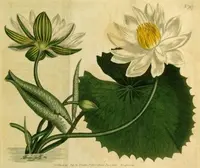
The Egyptian white water-lily, Nymphaea lotus, is an aquatic flowering plant that grows rooted in mud with floating, rounded leaves and showy white night-blooming flowers. It forms calm, spreading colonies on still or slow-moving freshwater, such as ponds, lakes, and quiet river edges in parts of Africa and the Nile region.

Its growth habit is relatively steady and predictable, but it needs stable warm water and enough space at the surface to thrive. Gardeners who learn how to care for Egyptian white water-lily find it moderately easy in outdoor ponds, provided it receives plenty of light, nutrient-rich, mucky substrate, and consistently still, clean water.

Main Plant Requirements

Care Difficulty

Moderate Care

Light Preference

Full Sun

Water Requirements

Aquatic

Temperature Preference

Tropical / Frost Sensitive

Hardiness Zone

10–12

Soil Texture

Loamy, Silty, Organic-rich

Soil pH

Slightly acidic (6.5–7.0), Neutral (7.0)

Soil Drainage

Waterlogged tolerant

Fertilization

Moderate (every 2–4 weeks)

Get Personalized Care Plan

Scan your plant to receive care tips personalized for your specific plant

Available on iOS and Android

How to Care for the Egyptian white water-lily

This tropical water lily needs strong light to flower and maintain compact, healthy leaves.

  • Provide 6–8 hours of direct sun daily; full morning sun with some light afternoon shade suits most ponds.
  • Tolerates partial shade (4–5 hours sun), but flowering of Egyptian white water-lily decreases and leaves may lengthen toward light.
  • Avoid placing it under dense trees or tall structures; persistent low light leads to small, pale leaves, while intense, all‑day midsummer sun in very shallow water can overheat and stress the plant.

As an aquatic species, this plant depends on stable water depth and quality rather than typical soil watering cycles.

  • Grow in still or very slow‑moving water, ideally 30–60 cm deep above the rhizome, so the crown stays submerged but leaves can reach the surface.
  • Watch leaf condition: drooping or scorched edges in hot weather can signal water that is too shallow or warming too much; yellowing, rotting crowns suggest stagnant, foul water.
  • Use heavy loam or clay pond soil under the water, never fluffy potting mix; excess organic matter decomposes, reduces oxygen, and can cause Nymphaea lotus roots and rhizomes to rot.

This species prefers consistently warm conditions and is sensitive to cold and frost.

  • Ideal growth occurs around 75–86°F (24–30°C); water within this range promotes strong leaf production and reliable flowering.
  • Tolerates short dips to about 59°F (15°C) but growth slows; exposure below 50°F (10°C) or any frost can damage leaves and may kill the rhizome.
  • In hot spells above 90°F (32°C), deeper water or partial afternoon shade helps buffer temperature swings and prevents overheating of the root zone.

Humidity is rarely limiting for this aquatic species if the water level and temperature are stable.

Nymphaea lotus grows best rooted in dense, mineral-heavy aquatic substrate rather than loose, fluffy mixes.

  • Use heavy loam or clayey garden soil rich in fine minerals, not peat-based potting mix that floats or clouds the water.
  • Aim for slow-draining substrate under water, but avoid soft muck that lets rhizomes sink too deep and suffocate.
  • Maintain slightly acidic to neutral conditions, roughly pH 6.5–7.5, as strongly alkaline substrates can stunt growth.
  • Cap the soil with 2–3 cm of rinsed gravel or coarse sand to limit floating debris and keep roots anchored.

This species is well suited to container culture in ponds or large water tubs.

  • Choose a wide, shallow container to give rhizomes lateral space while keeping leaves near the water surface for light access.
  • Use a sturdy, relatively heavy container so the plant mass does not tip or shift when leaves spread across the water.
  • If using porous materials like unglazed terracotta, expect faster water exchange through the walls and adjust water depth and topping-up accordingly.

Nymphaea lotus benefits from moderate feeding during its active warm-season growth, especially in containers.

  • Use aquatic slow-release fertilizer tablets or baskets with low-phosphorus, balanced NPK, pressed into the potting medium near the roots.
  • Feed every 4–6 weeks during the growing season while leaves and flowers are actively produced.
  • Apply at half to two-thirds of the label rate to limit algae and leaf burn in ponds.
  • Stop feeding in late fall and during winter dormancy, resuming only when new growth resumes on Egyptian white water-lily.

Pruning Nymphaea lotus focuses on removing old foliage to maintain water quality and support flowering.

  • Inspect plants weekly in the growing season and cut off yellowing, torn, or decaying leaves at the base with clean scissors or pond shears.
  • Remove spent flower stalks down to the crown to reduce seed set and encourage repeated blooming.
  • Thin congested leaves so some water surface remains open, improving light penetration and air exchange.
  • Disinfect cutting tools if working between different ponds to limit disease spread.

Container-grown Nymphaea lotus benefits from occasional division and replanting to maintain vigor and flowering.

  • Plan to lift and replant every 2–3 years in late spring when water has warmed and new growth starts.
  • Look for crowded rhizomes, roots circling the container, weak flowering, or many small leaves as signals for transplanting.
  • Gently lift the rhizome, rinse off soil, trim damaged roots, and divide into firm sections, each with several growing points.
  • Replant divisions in wide, shallow aquatic baskets with heavy loam, water thoroughly, and keep water depth stable to reduce stress.

Nymphaea lotus is most commonly propagated by division of its rhizomes rather than by seed for home growers.

  • Divide established clumps in late spring or early summer when plants show active growth.
  • Lift the rhizome, cut it into sections with at least 1–2 strong buds and healthy roots using a clean, sharp knife.
  • Dust cut surfaces with powdered charcoal or a mild fungicide if available to limit rot.
  • Replant divisions in warm, still water with 15–30 cm of water above the soil surface to support rooting.

Nymphaea lotus is frost-sensitive and needs protection in regions with freezing winters.

  • In mild climates where water does not freeze solid, allow foliage to die back naturally and leave rhizomes in place.
  • In colder zones, move pond baskets to the deepest, non-freezing part of the pond or into a cool indoor tank.
  • For container plants outdoors, lift and overwinter in an unfrozen aquarium or tub at 68–75°F with strong light.

Care Tips

Basket planting method

Plant rhizomes in a wide, shallow aquatic basket lined with burlap or fine mesh so you can lift the whole plant easily for division, inspection, or repositioning without disturbing the pond bottom.

Leaf density control

Routinely thin older or crowded floating leaves by cutting them at the base under water to improve light penetration, reduce algae growth, and maintain good water circulation around the plant.

Seasonal tuber storage

In colder climates, lift mature tubers in fall, rinse gently, and store them in slightly damp sand or peat at 40–50°F, then replant in spring to protect plants from frost damage.

Fish and plant balance

Maintain a moderate fish load and provide some submerged plants or hiding spots so fish do not overgraze young lotus leaves and flower buds, especially in smaller ornamental ponds.

Water quality monitoring

Use a simple pond test kit to track pH, hardness, and nitrate levels, and make small, regular water changes if needed, since stable, clean water is one of the most important factors in caring for Egyptian white water-lily.

Common Pests and Diseases

Aphids

These insects cluster on young pads, buds, and flower stalks, sucking sap and causing curling, yellowing, and sticky honeydew on the leaves and nearby hardscape. This pest can also attract sooty mold fungi that grow on the sugary deposits.

Solution

Remove heavily infested pads and buds and discard them away from the pond. For mild infestations, rinse colonies off pads with a strong hose jet or dip cut leaves in water with a few drops of mild liquid soap, then rinse in clean water; for larger ponds, introduce biological control such as lady beetles or lacewing larvae and avoid overfertilizing, which encourages soft, aphid-prone growth.

Water lily beetle

This pest chews irregular holes and notches in floating pads, and larvae may skeletonize leaf tissue, leaving only veins and thin, translucent areas. Symptoms include reduced photosynthesis and weakened plants that produce fewer flowers.

Solution

Hand-pick adult beetles from pads and drop them into soapy water, and trim off leaves with heavy feeding damage to remove larvae and eggs. Encourage aquatic predators such as fish where appropriate, avoid leaving floating plant debris where beetles can shelter, and monitor new pads regularly during warm months to catch damage early.

Leaf miners

These insects create winding, pale tunnels inside the leaf tissue of water lily pads, which can merge into larger dead patches. This pest weakens leaves, making them more prone to tearing and early decline.

Solution

Cut and remove affected pads showing extensive mining so larvae are removed from the pond system, then dispose of them in the trash rather than compost. Regularly inspect new leaves, remove damaged ones promptly, and maintain balanced pond ecology with fish or other predators that may consume larvae at the water surface.

Crown rot

This disease affects the rhizome and crown at the base of the leaf stalks, causing soft, foul-smelling, dark tissue and sudden collapse of pads. Symptoms include leaves yellowing from the center of the plant outward and a mushy, disintegrating rhizome when inspected.

Solution

Remove and discard all affected rhizome sections and any rotting pads as soon as symptoms are seen, keeping only firm, white internal tissue. Improve water quality by avoiding excess organic debris and overfertilization, keep planting depth appropriate so the crown is not buried too deeply, and replant only healthy divisions in clean containers or pond sections to support long-term Nymphaea lotus care.

Leaf spot

This disease causes small brown, tan, or dark purple spots on pads that may enlarge and develop yellow halos, sometimes leading to tearing or loss of older leaves. Symptoms include scattered lesions across the leaf surface while new leaves emerge healthy at first.

Solution

Prune and remove affected leaves promptly to reduce spore spread, and discard them rather than composting. Maintain good water quality with regular removal of decaying organic matter, avoid crowding plants so pads have space and light, and limit overhead splashing from fountains that can spread spores from leaf to leaf.

Interesting Facts

Night‑blooming strategy

This species opens its fragrant white flowers at night, synchronized with nocturnal pollinators such as moths and certain beetles, then closes them again during the day.

Ancient Nile symbol

Native to the Nile and other African freshwater systems, it appears in ancient Egyptian art and temple carvings as a symbol of creation, rebirth, and the emergence of order from watery chaos.

Adapted underwater leaves

Its submerged leaves are thin and flexible with a large air space system, which helps the plant transport oxygen from the surface leaves and flowers down to the rhizome rooted in often low-oxygen mud.

Botan icon

Did you know?

Archaeobotanical studies have found seeds and floral remains of Nymphaea lotus in Egyptian tombs and ritual contexts, indicating it was intentionally gathered and used in religious offerings for thousands of years.

FAQs about Egyptian white water-lily

Lack of flowers usually comes from insufficient warmth, shallow or nutrient-poor water, or the plant being too young. Ensure stable warm conditions, adequate depth, and a balanced aquatic fertilizer during the growing season to support flowering.

Grow Healthy Plants with Botan Care

Keep your plants happy and healthy with plant identification, disease detection, and easy care guidance.

Botan plant care app — identify plants on mobile

Explore More Plants